
Last updated November 15, 2026
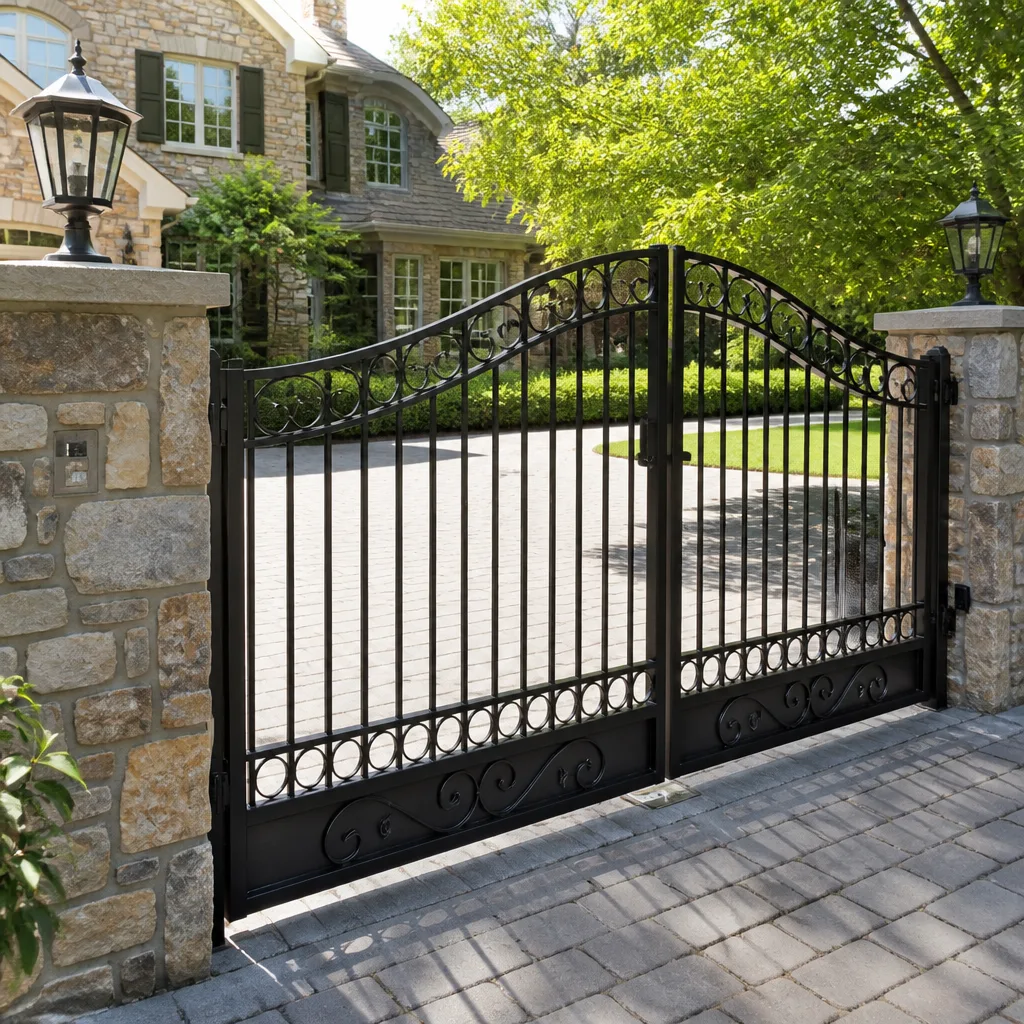 Wrought iron
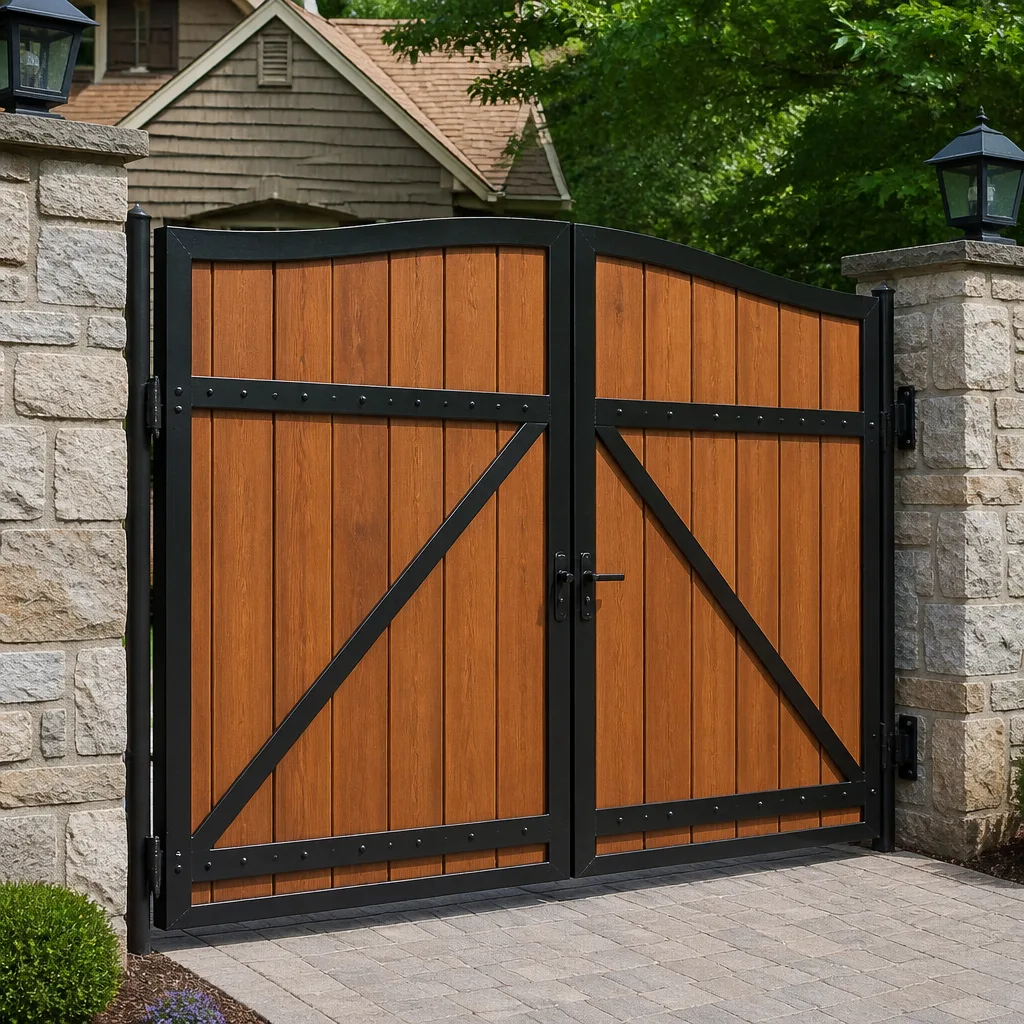 Wood & steel frame
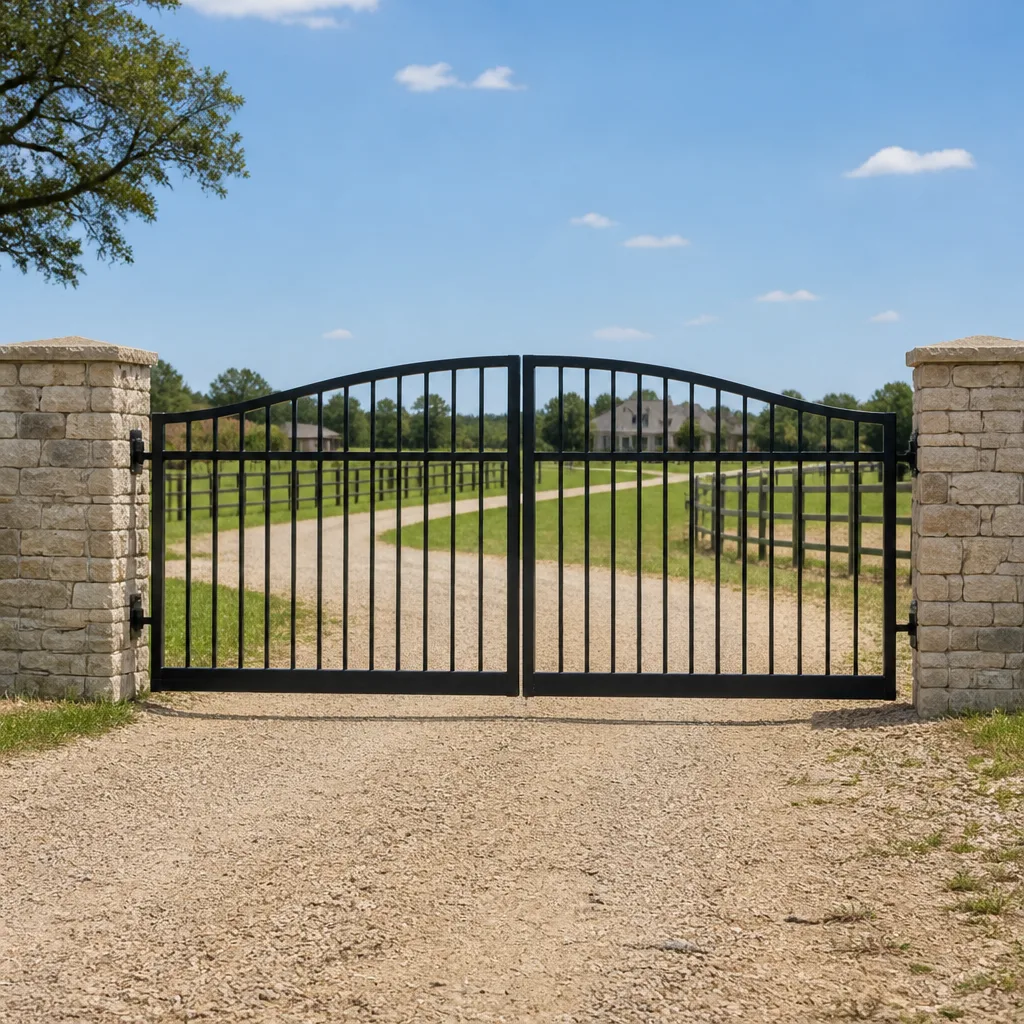 Farm & ranch
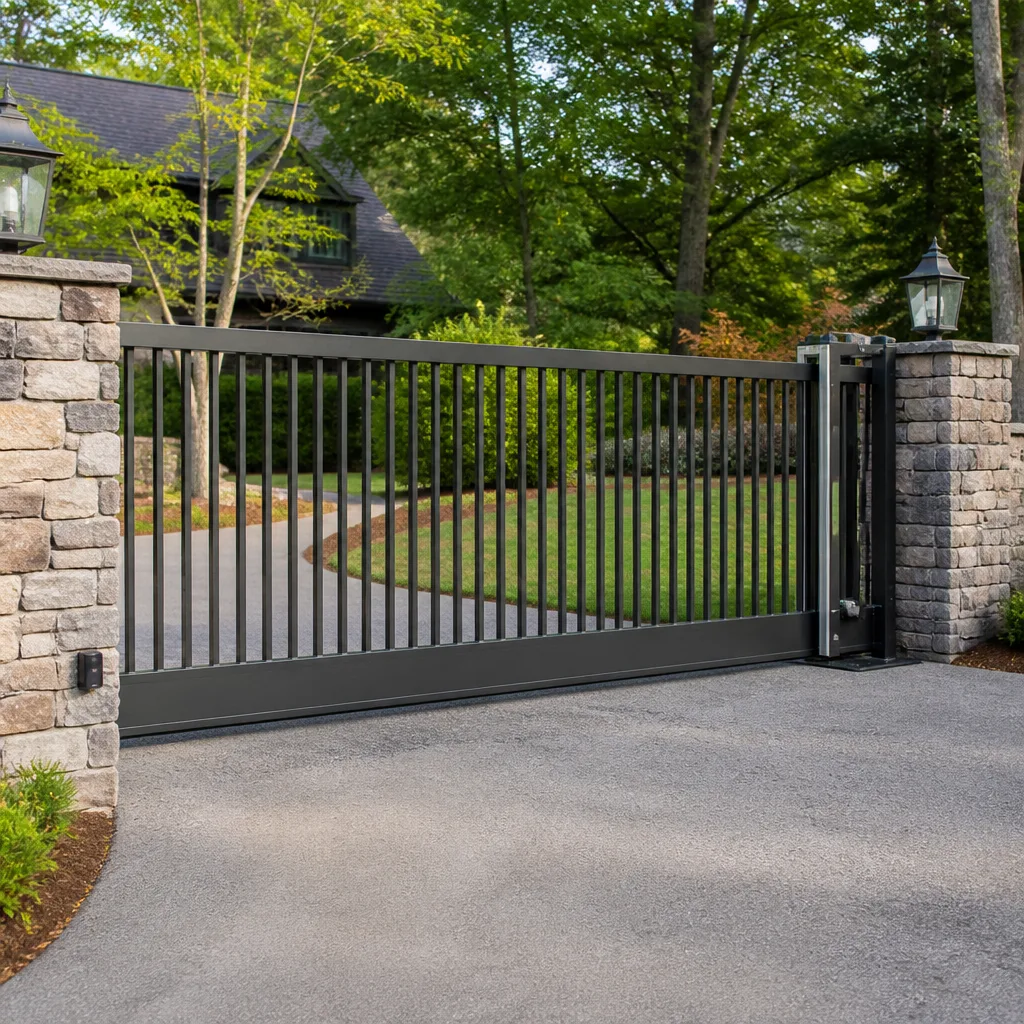 Sliding driveway gates
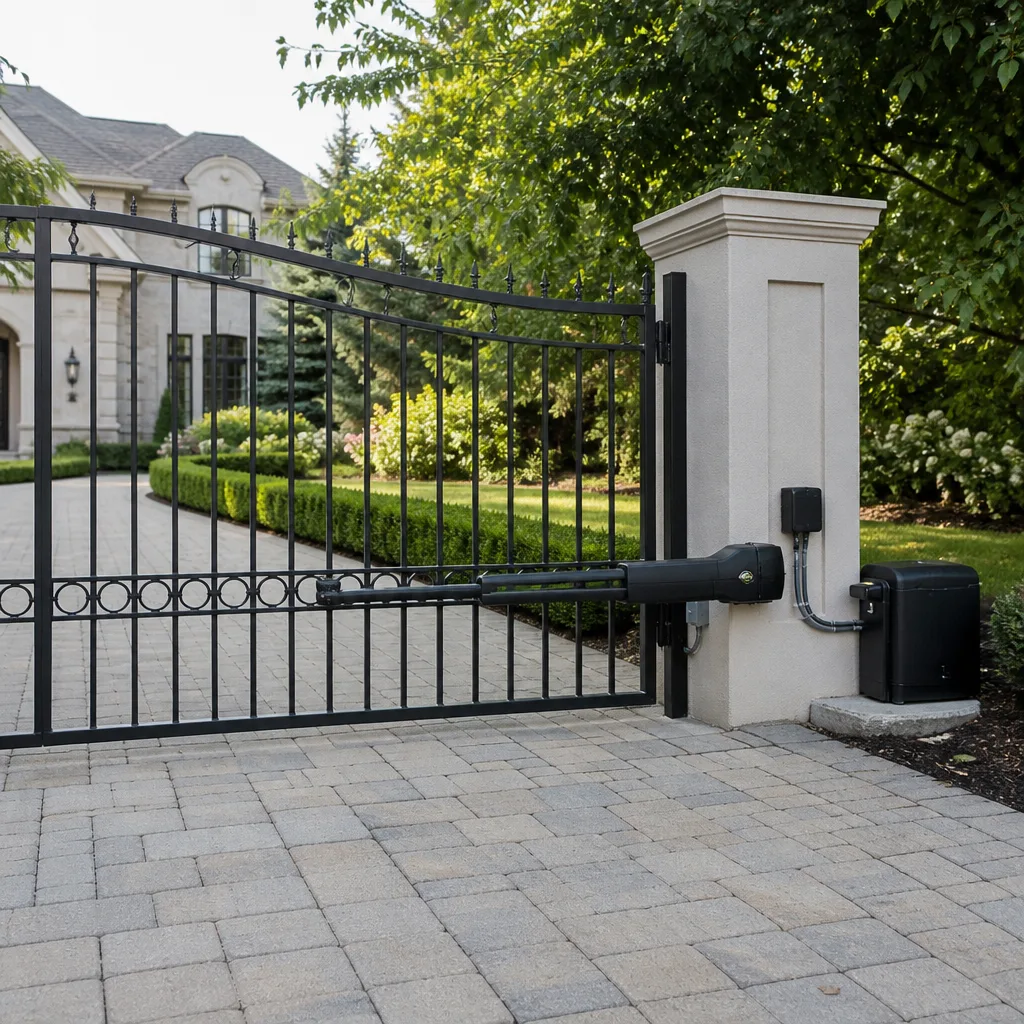 LiftMaster operators
Free on-site gate assessment - hinges, posts, and your LiftMaster or Nice gate operator checked before anything is quoted
The assessment is free and the quote is the invoice.
Get your free estimateGate Repair Emergency Preparedness Guide for Ventura Homes
Most gate failures we see during a real emergency aren’t mechanical. They’re informational. The motor is fine, the battery is fine, the gate itself is fine; what’s missing is someone in the house who knows where the manual release is, which way it travels, and how to move a heavy gate panel safely on their own. That gap tends to surface at the worst possible moment, which is exactly why a little preparation now beats a scramble later. This guide walks through the specific emergencies that hit Ventura, how to test your system before you need it, and what to put on a one-page reference card the whole household can use.
Quick Answer
Being gate-ready in Ventura means three things: you know where your manual release is and have tested it, your backup battery has been checked under load, and you know whether your gate is set up to fail safe (open for evacuation) or fail secure (locked for security). Every prep step in this guide falls into one of those buckets. Testing takes about twenty minutes and should happen seasonally, before fire season and before the first winter storm.
Styles & brands we work with
- Wrought iron
- Wood & steel frame
- Farm & ranch
- Sliding driveway gates
- LiftMaster operators
Table of Contents
- Why Gate Readiness Matters in Ventura
- Locating and Testing Your Manual Release
- Battery Backup: Capacity, Testing, and End-of-Life
- Fail-Safe vs. Fail-Secure: Which One Do You Have?
- When a Power Surge Leaves Your Gate Stuck Open
- Red Flag Wind Events and Gate Panels
- Building Your One-Page Gate Emergency Card
- A Seasonal Gate Prep Checklist
Why Gate Readiness Matters in Ventura
Ventura sits in a place where two very different emergencies are part of ordinary life: wildfire-driven evacuations, and winter storm systems that knock out power for hours. Both put pressure on the same piece of equipment at the front of your property. An automated gate that can’t be opened by anyone in the household is an evacuation bottleneck. An automated gate that fails and hangs open after a power event is a security hole. Neither one requires a broken motor. Both are common.
We work on gates across Ventura every week, and the pattern is consistent: the systems that come through an emergency cleanly are the ones the owner had tested at least once. The manual release on a LiftMaster or FAAC operator that’s been sitting untouched for a couple of years can be stiff, seized, or blocked by landscaping that grew in around it. The backup battery that lights up the panel looks fine but drops out after thirty seconds under real load. None of that shows up until you need it.
The good news is that this kind of readiness is cheap and quick. You’re not buying anything new. You’re learning your own system and confirming it does what it’s supposed to. When something does need a technician, Ventura Gate Repair handles the brand-specific diagnosis, but the checklist below is something any careful homeowner can do without tools beyond a flashlight and maybe a screwdriver.
Locating and Testing Your Manual Release
Every automated gate that swings or slides has a manual release. On a swing gate it’s usually a keyed lever on the operator housing that disengages the arm from the motor; on a slide gate it’s typically a release lever or a chain-drive override on the operator body. The problem is that on a lot of Ventura properties, the operator is behind a hedge, under a vine, or inside a housing that has been painted over since installation. Find it now, while it’s daylight and nothing is on fire.
- Locate the operator housing for your gate. For a swing gate, it’s the box attached to the post near the hinge; for a slide gate, it’s the motor housing at one end of the track.
- Identify the release mechanism. On LiftMaster residential units it’s typically a keyed release lever on the operator; on FAAC and BFT units it’s usually a lever or a keyed cylinder on the side of the motor housing. If you’re not sure, check the housing for a small keyed cover.
- Insert the key (most operators ship with one, and it may be hanging inside the control box). Turn and pull the lever.
- Manually move the gate through its full travel by hand. It should move smoothly. If it binds, catches, or wants to swing back, stop; that’s a mechanical issue to note for repair, not something to force.
- Re-engage the release and confirm the gate cycles normally with the remote or keypad.
- Practice the sequence with everyone in the household, in the dark if you can, so it’s muscle memory.
If the manual release won’t budge or the gate won’t move once released, don’t force it; call a gate specialist. The worst outcome in an evacuation is a gate that has been jammed by a homeowner trying to muscle a seized release at the wrong moment. Gate repair for a seized release is a small job; a bent operating arm from forcing it is bigger.
Battery Backup: Capacity, Testing, and End-of-Life
A backup battery is the single most misunderstood component on a residential gate. Most homeowners assume it works because the operator panel shows a green light. In our experience, that light confirms the battery is connected, not that it holds a charge. The only reliable test is a load test, and you want to run it before the grid does it for you.
Capacity matters by gate type and use. A lighter residential swing gate running on a Linear or Ghost Controls operator needs less reserve than a heavy commercial-class slide gate on a FAAC or DoorKing. What matters for your house is whether the battery can move the gate through a few full cycles with the power off. That’s the realistic scenario in a Ventura outage: you need the gate to open for the car, or stay closed while you’re away, more than once.
To test under load:
- With the gate closed, kill power at the dedicated breaker that feeds the operator. Don’t use a switch inside the panel; use the breaker, so you’re testing the real outage condition.
- Use the remote or keypad to open the gate. It should move at normal speed, not slowly or in fits.
- Close it, open it, close it again, and open a third time. Three full cycles on battery is a reasonable minimum for a residential gate.
- Restore power at the breaker and confirm the operator recharges the battery (most panels have a charging indicator).
Sealed lead-acid batteries used in most residential operators typically reach end-of-life in three to five years, and they tend to die quietly. If your battery is older than that or fails the three-cycle test, replace it; it’s an inexpensive part and the easiest prep item on this list. If the operator will not cycle on battery at all, or the panel throws a battery fault, call us and we’ll diagnose the charging circuit versus the battery itself. Electrical work on the operator’s power side is not a homeowner job.
Fail-Safe vs. Fail-Secure: Which One Do You Have?
Here’s the question that decides what your gate does in a power failure: does it open, or does it stay locked? Both are valid choices, and the right one depends on what the gate protects.
- Fail-safe means the gate opens (or releases to manual) on power loss. This is what you want on an evacuation route, a residential driveway where children or elderly family live, and anywhere a stuck-closed gate could trap someone. It’s the right default for most Ventura homes that rely on the gate for access.
- Fail-secure means the gate stays locked and closed on power loss. This is what property managers choose for gated communities, storage yards, and commercial lots where the gate is the primary security barrier and access can be controlled another way, like a guard or a keyed pedestrian gate.
Many operators, including several common LiftMaster and FAAC models, ship with a fail-safe default but can be configured either way. You can often tell which mode you’re in by reading the operator manual’s DIP switch or parameter table, but the fastest verification is a live test: kill the breaker, then try to open the gate with the remote. If it opens, you’re fail-safe; if it stays locked, you’re fail-secure.
The important part is that you know which one you have and that it matches your situation. A homeowner who discovers on an evacuation night that their gate was configured fail-secure by a previous installer is in a genuinely dangerous spot. If you’re not sure how your system is set, this is exactly the kind of thing a gate specialist can confirm in a short visit. Our technicians have up to 8 years of experience across residential and commercial operators, and the configuration check is part of a routine service call.
When a Power Surge Leaves Your Gate Stuck Open
Winter storms and grid switching in Ventura can send a surge through the same circuit your operator shares with landscape lighting or a garage subpanel. The result we see most often is a gate that hangs fully open and won’t respond to the remote, the keypad, or the manual release in the way it should. The motor may be dead, the control board may be fried, or the operator may have gone into a fault state. You won’t know which until someone looks at it.
While you wait for repair, treat the open gate as a real security gap:
- If the gate is on a track and can be rolled closed by hand, close it and block it in place with a wheel chock or a heavy object until it’s repaired. Don’t lock a slide gate to the track in a way that could trap someone inside.
- If it’s a swing gate, close it and use a chain or a strap through the gate and around the post, with a padlock. It won’t stop a determined person, but it stops the casual one.
- Move any vehicles inside the gate if you can, especially overnight.
- Add outdoor lighting to the open span if you have it, or park a vehicle in the driveway to make the house look occupied.
- Don’t try to wire around the control board or bypass safety edges to close the gate. That’s how people get hurt.
When you call, tell us the operator brand if you know it (it’s on the housing) and what happened right before the gate stopped. Electric gate repair on a surge-damaged board is often a same-day fix if you call early; the diagnosis is faster when we know the brand and the symptom.
Red Flag Wind Events and Gate Panels
Ventura’s wind events are the other half of the emergency picture. A heavy swing gate panel is a sail, and wind-driven gusts put real stress on hinge plates, hinges, and the operator arm. Lighter residential arms on a Ghost Controls or Mighty Mule operator are rated for typical wind loads but not for a sustained gust hitting a panel broadside while it’s partway open. The failures that follow a wind event are usually hinge-plate fatigue, bent operator arms, and slide gates lifted off their track.
Prep for wind is mostly about inspection, not hardware. Walk the gate before fire season and check:
- Hinge plates: look for cracks, elongated screw holes, or rust blooming around the fasteners. Any of those means a hinge is close to failing.
- The operator arm: check for bends or play at the connection points.
- The slide track: look for debris, lifted edges, or guide rollers that have worn flat.
- Panel attachment: posts should hold without wobble when you push the gate gently at the outer edge.
If you find a hinge plate that’s cracked or a slide gate that’s riding high, stop using the automation until it’s fixed. A gate panel that comes off its track or falls while someone is walking through is a serious injury, and the operator doesn’t know the difference between a gate and a person. A gate this heavy should be handled by a trained technician, not adjusted on the fly. If your gate needs new hinges, a track repair, or fresh hardware, we can quote that in a single visit.
Building Your One-Page Gate Emergency Card
This is the step that makes everything else work during an emergency. When the power is out and the sky is orange, nobody wants to search for a manual. A single laminated card taped inside a kitchen cabinet or on the inside of the garage door solves that.
The card should include:
- The operator brand and model (read it off the housing, photograph it, print the photo on the card).
- Where the manual release is and which way to turn or pull the key.
- Where the key to the release is stored.
- Whether the gate is fail-safe or fail-secure.
- The location of the dedicated breaker that feeds the operator.
- Where the backup battery is and how old it is (write the install date on the battery).
- Our phone number: (833) 361-4971.
- Any gate-related quirks – a slow right swing hinge, a sticky track, a remote that only works from close range.
Make two copies. One for the house, one for the glove box. Practice the manual release sequence with everyone who drives, including anyone who might house-sit or stay over during an evacuation.
A Seasonal Gate Prep Checklist
Twice a year is plenty, but the timing matters in Ventura. Do a spring pass before fire season (roughly April or May) and a fall pass before the winter storm window (October or November). Each pass should take twenty to thirty minutes.
- Spring pass: test the manual release, run the three-cycle battery test, inspect hinges and the operator arm, clear vegetation away from the operator and the release.
- Fall pass: test the manual release again, re-run the battery test, confirm the fail-safe/fail-secure setting, inspect the track and rollers on slide gates, and check the control board for any new faults or LED codes.
If you’re in a neighborhood where power outages are common, or your gate has been running on the same battery for more than a couple of years, add a battery replacement to the fall pass. We’re happy to quote a full seasonal check on any brand we work on. For a prepared Ventura homeowner, the difference between a small prep routine and no prep routine is the difference between a gate that works during an emergency and one that doesn’t.
Common Mistakes to Avoid
- Assuming the green light means the battery is good. It only confirms the battery is connected. The three-cycle load test is the only reliable check, and skipping it is the most common reason a Ventura gate dies in an outage.
- Never testing the manual release. A release that hasn’t been exercised in two years can be seized, and you don’t want to discover that during an evacuation. Test it every spring and every fall.
- Not knowing fail-safe vs. fail-secure. A gate configured fail-secure by a previous installer can trap a household during an emergency. Verify the setting with a live test, not a manual read.
- Forcing a stuck release or gate panel. Leverage on a seized release or a jammed slide gate bends operator arms and hinge plates, turning a small fix into a bigger one. Stop and call.
- Letting landscaping grow over the operator. Hedge growth and vines block access to the release and hide developing rust. Keep a foot of clearance around the operator housing year-round.
- Ignoring wind-event damage. A small crack in a hinge plate after a gust is the beginning of a gate panel failure. Inspect hinges and track within a week of any significant wind event.
- Storing the release key somewhere “safe” you can’t reach. Keep it on a hook inside the garage or on the same keyring as your house key. The card should tell you where it is.
See the difference
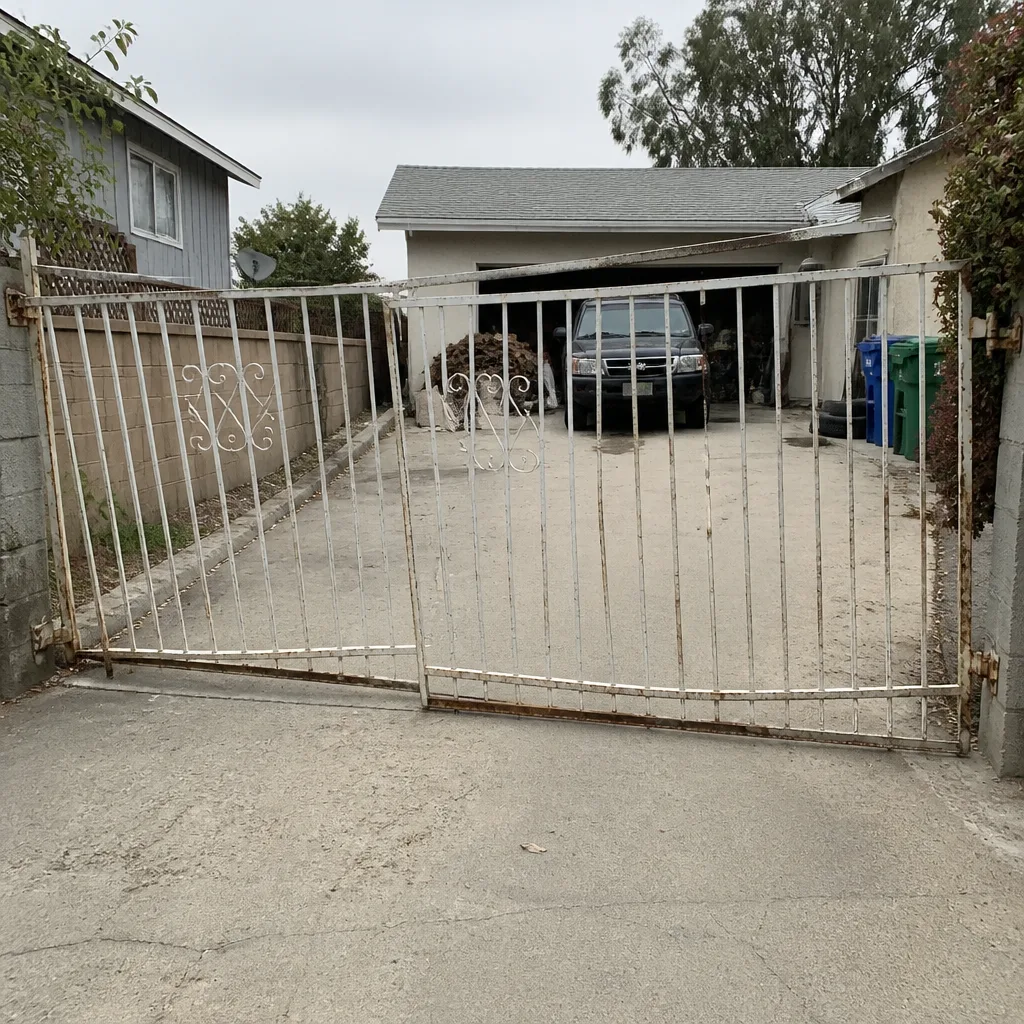 Before
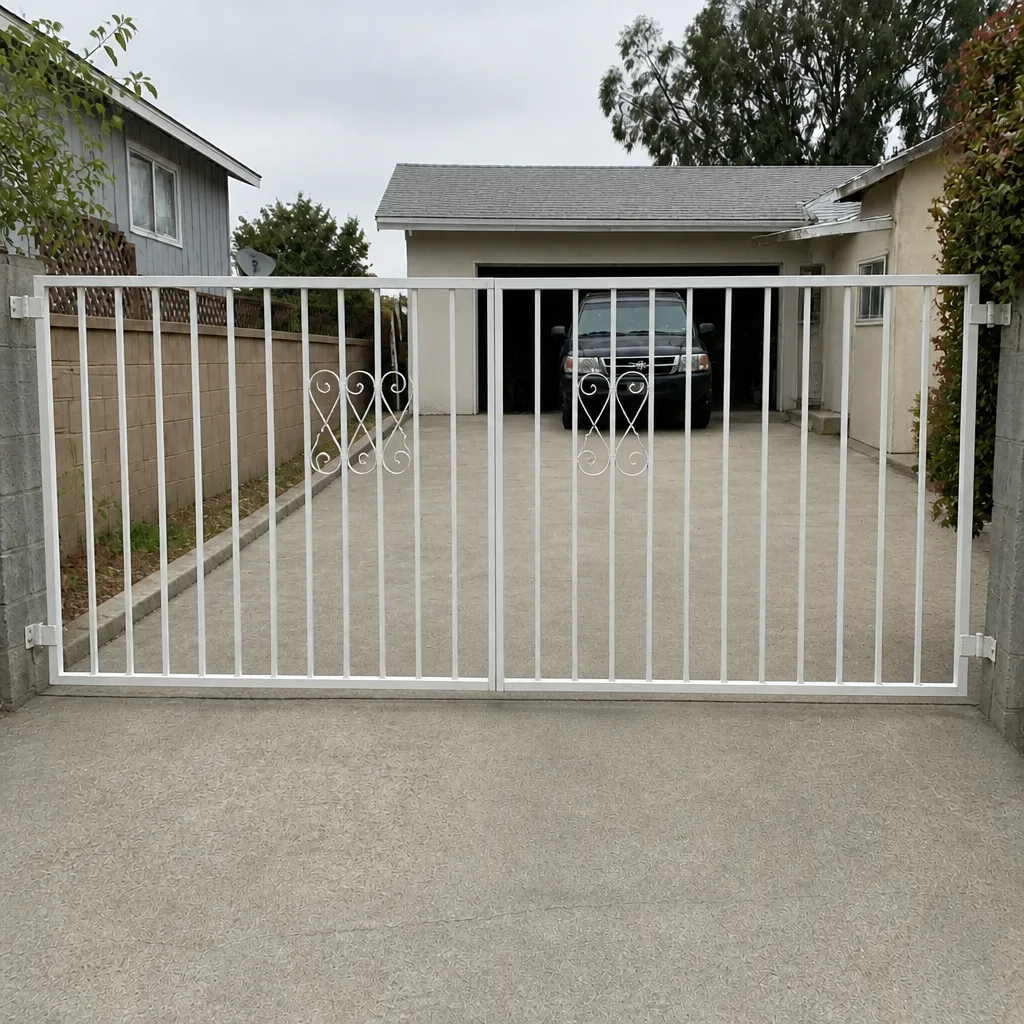 After
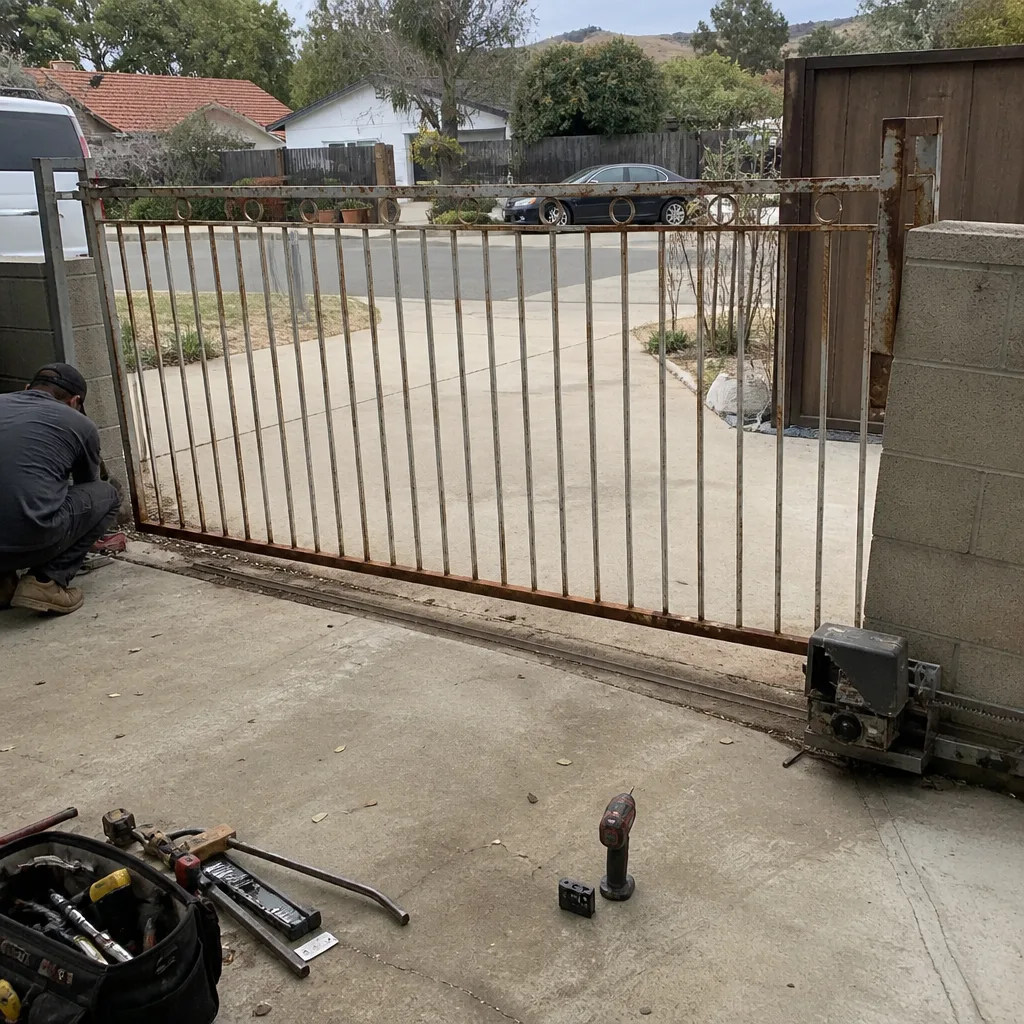 Before
 After
 Before
 After
When to Call a Professional
Some gate problems are prep and some are repair. Call a professional when the manual release won’t move, when the gate won’t cycle on battery at all, when the control board shows a fault or the operator responds to nothing, when a hinge plate is cracked or an operator arm is bent, when a slide gate has come off its track, or when you’re not sure which fail-safe mode you’re in and want it confirmed. Also call if you notice any new binding, grinding, or slowdown that started after a spring wind event or a power surge; those are early signs of a mechanical or board problem that gets more expensive if you keep running the gate. Some things shouldn’t wait for an emergency. Ventura Gate Repair offers free estimates in Ventura; call (833) 361-4971.
Frequently Asked Questions
Locate and test the manual release. That’s the single highest-value twenty minutes you can spend on gate readiness, and it’s the step most homeowners skip. Call (833) 361-4971 for an exact quote on any repair – estimates are free.
Run a live test: kill the operator’s dedicated breaker and try to open the gate with the remote. If it opens, it’s fail-safe; if it stays locked, it’s fail-secure. Reading the manual is unreliable because previous installers sometimes change the setting. Call (833) 361-4971 for an exact quote on a configuration check – estimates are free.
Sealed lead-acid batteries in residential operators typically last three to five years, and they die quietly. Test yours with the three-cycle load test each season and replace it when it fails. Call (833) 361-4971 for an exact quote on a replacement – estimates are free.
Often yes. Surge damage to a control board is a common same-day repair if you call early, and the operator brand on the housing helps us diagnose faster. We answer 24/7, with fast dispatch from 7am to 7pm. Call (833) 361-4971 for an exact quote – estimates are free.
Very likely. We work on LiftMaster, FAAC, BFT, Linear, Viking, Ghost Controls, DoorKing, Elite, and Mighty Mule operators, covering both residential and commercial systems. Diagnostics are faster because we already know the brand. Call (833) 361-4971 for an exact quote – estimates are free.
Operator brand and model, location and direction of the manual release, where the key is stored, fail-safe or fail-secure setting, breaker location, battery install date, our number, and any known quirks in your gate. Keep one in the house and one in the car. Call (833) 361-4971 for an exact quote on any repair – estimates are free.
The Bottom Line
Gate emergency prep in Ventura comes down to three things you can do yourself: find and test the manual release, load-test the backup battery, and confirm whether your gate is fail-safe or fail-secure. Everything else – the seasonal inspection, the reference card, the wind-event walk-around – falls out of those three habits. Do them twice a year and you’ll be ready for the outages and wind events that come with living here. When something does need a specialist, a gate-only shop diagnoses faster and gets you back in service sooner. That’s the whole job for us, on the equipment your house actually has.
If you’d rather have a trained eye confirm all of this on your gate, or you need a repair or a new installation, call Ventura Gate Repair at (833) 361-4971 for a free estimate in Ventura. We answer 24/7. Fast dispatch from 7am to 7pm, Sunday through Friday. Automated or manual, residential or commercial, we work on your brand and we stand behind the written quote.
Written by the team at Ventura Gate Repair.