
Last updated November 15, 2026
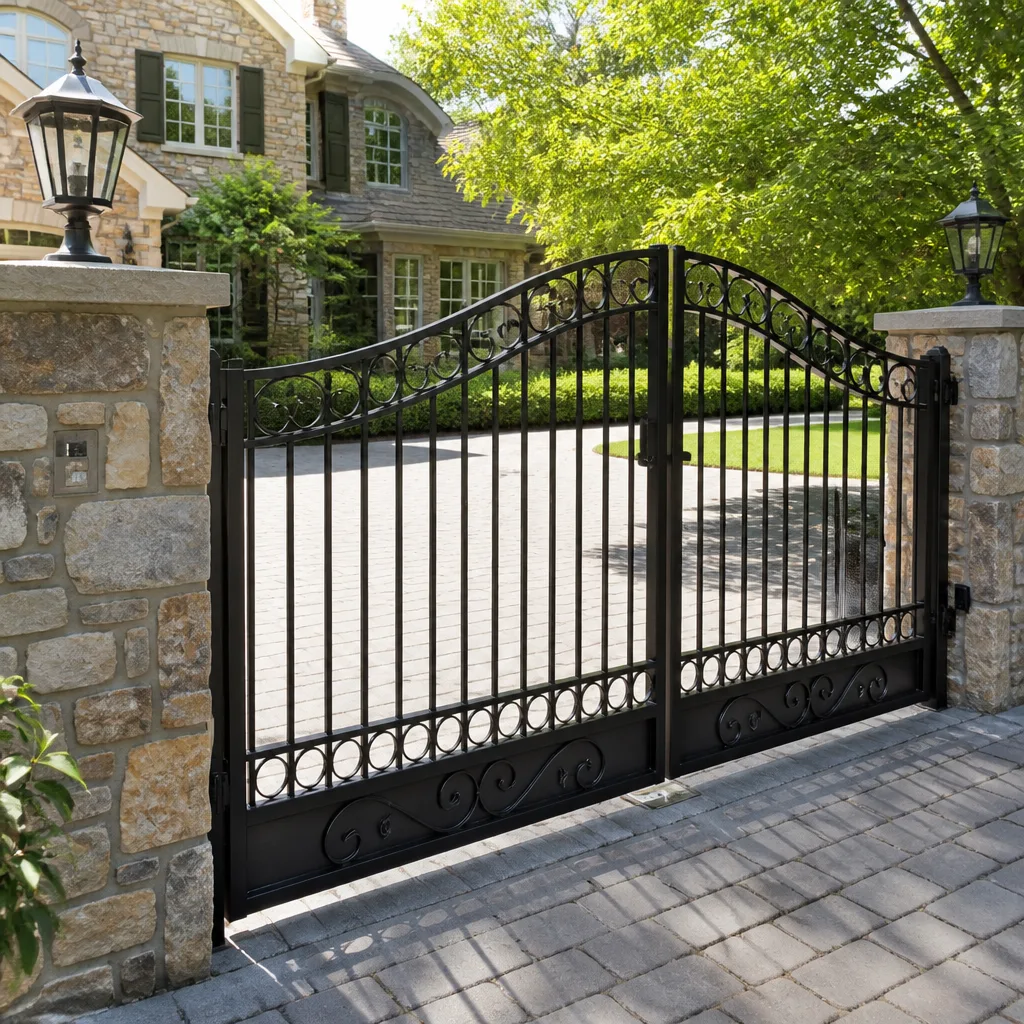 Wrought iron
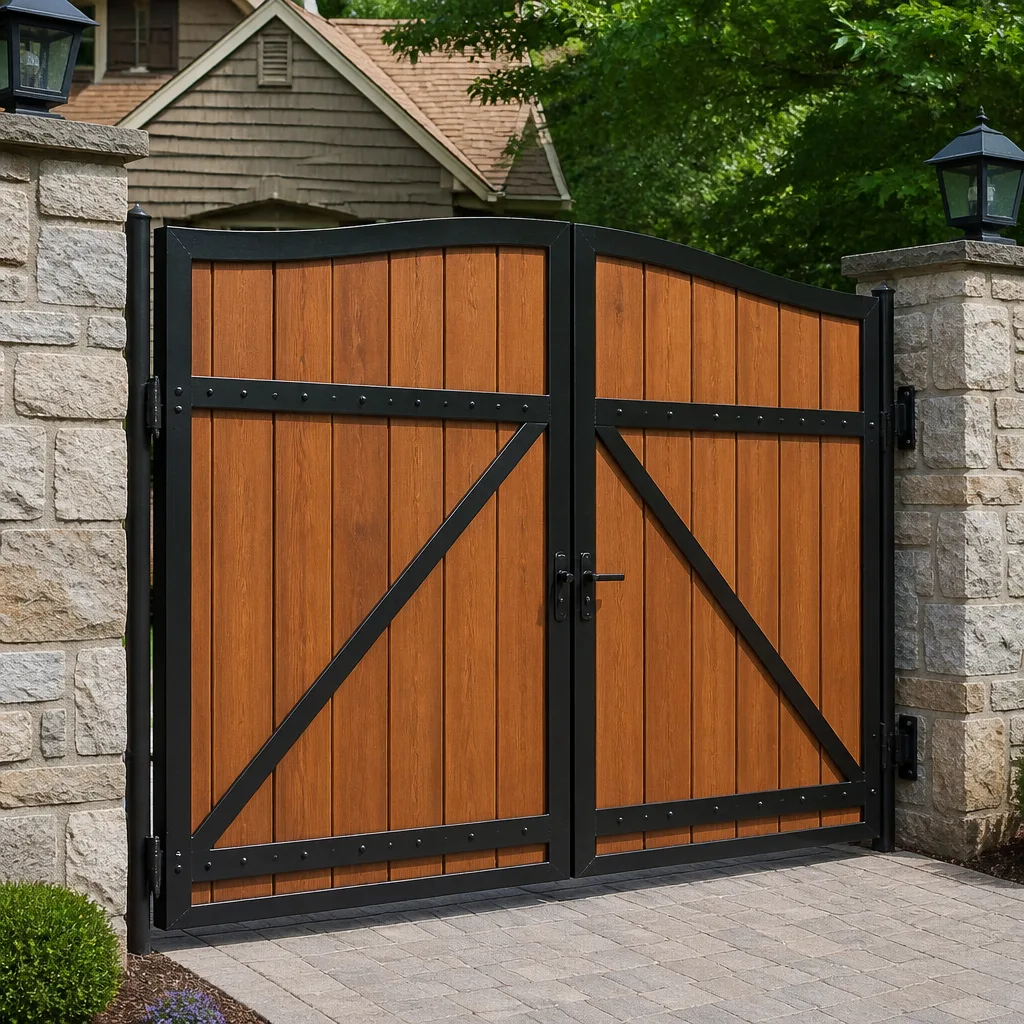 Wood & steel frame
 Farm & ranch
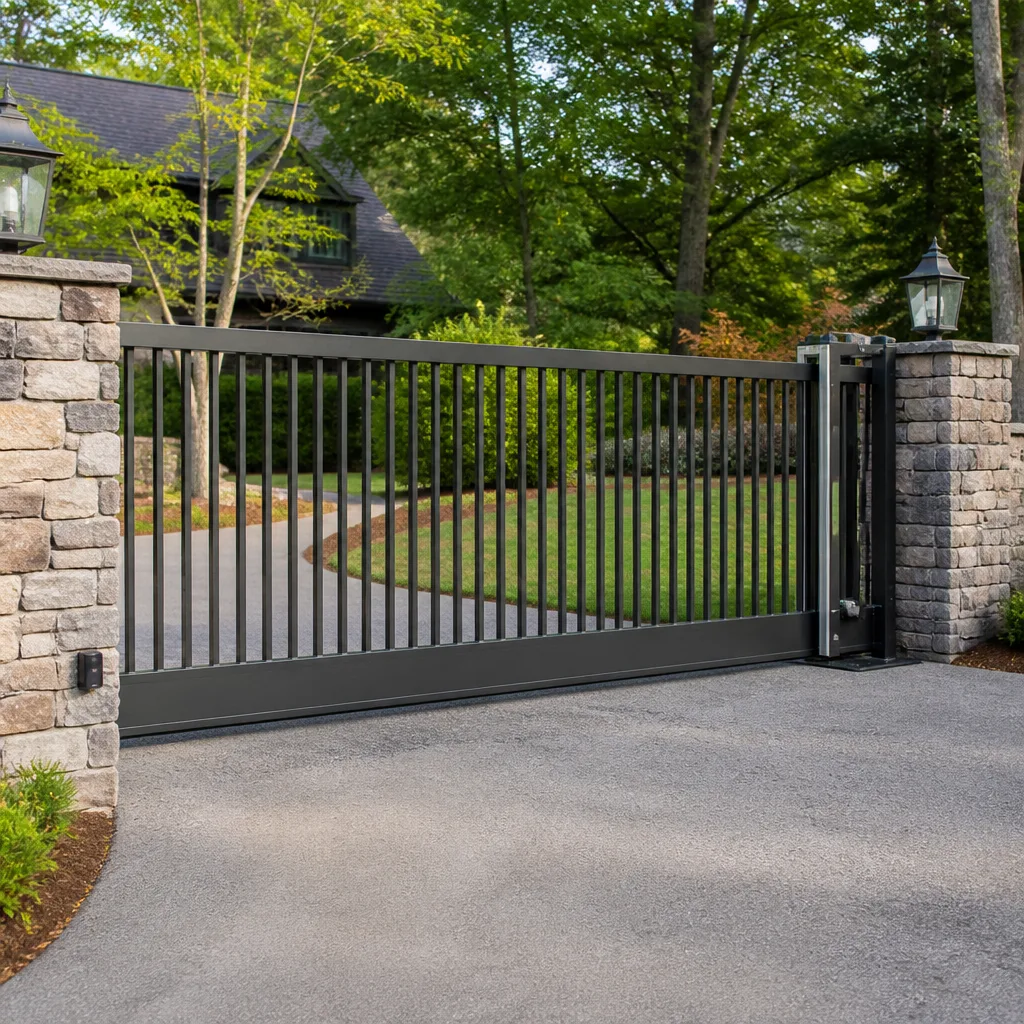 Sliding driveway gates
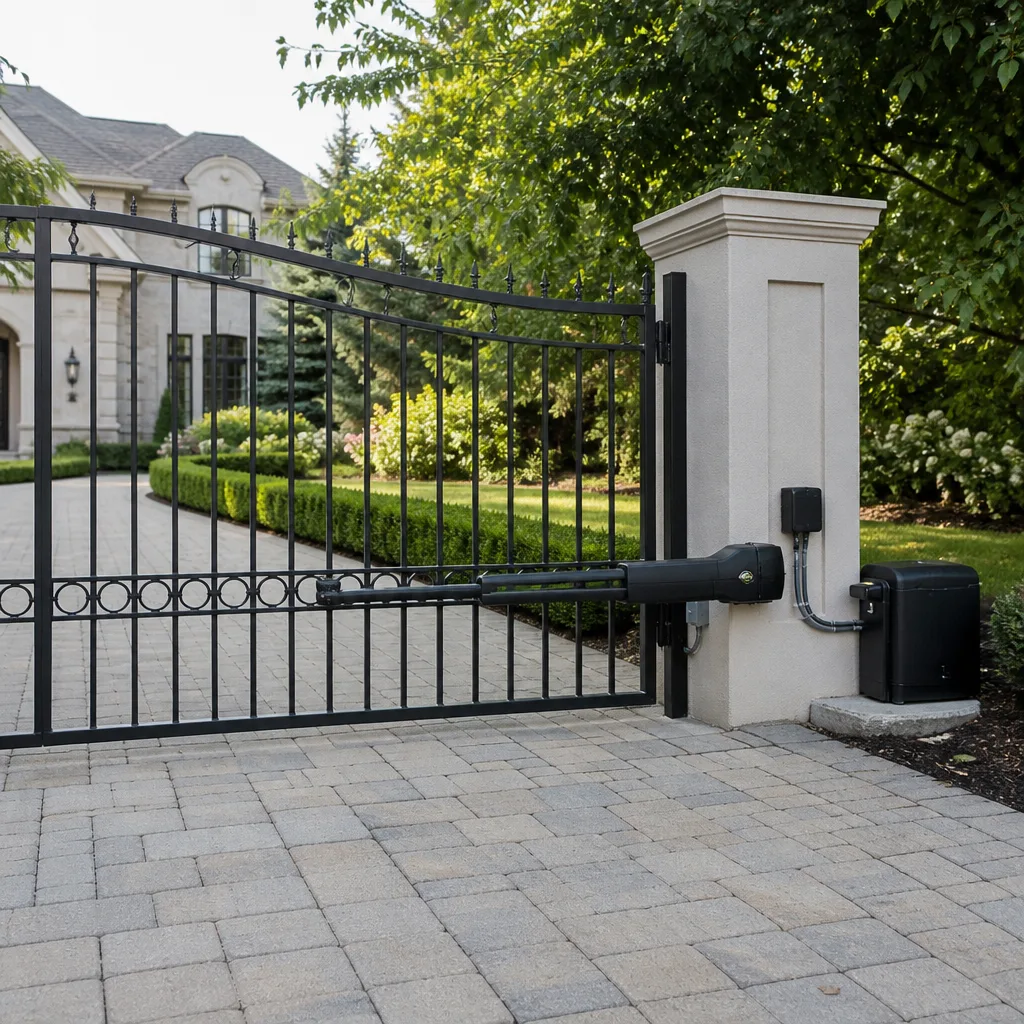 LiftMaster operators
Free on-site gate assessment - hinges, posts, and your LiftMaster or Nice gate operator checked before anything is quoted
The assessment is free and the quote is the invoice.
Get your free estimateGate Repair Permits, Codes & Inspections in Ventura, CA: What You Need to Know
Most gate work in Ventura doesn’t require a permit. That’s the part people get wrong in both directions. A homeowner swaps a failed operator for a new one of the same type, assumes a permit must be involved, and stalls for weeks. Or someone bolts automation onto a gate that’s been swinging manually for years, assumes no one cares, and creates a real problem. The truth sits in the trigger, not the task. Motor-for-motor replacement is usually routine service. Turning a manual gate into an automatic one is construction, and construction gets inspected. This guide walks through exactly where that line falls under Ventura rules, what inspectors look for, how HOA approvals stack on top, and how to clean up unpermitted work before it follows you into escrow.
Quick Answer
In Ventura, like-for-like gate repair and operator replacement generally don’t require a building permit. Installing new automation on a manual gate, changing the structure, running new power to a gate, or altering the footprint almost always does. A permitted job has to meet UL 325 entrapment-protection standards, and a city inspector verifies the safety devices before signing off. If work was done without a permit, it can usually be retroactively permitted, but expect plan review, inspection access, and corrections.
Styles & brands we work with
- Wrought iron
- Wood & steel frame
- Farm & ranch
- Sliding driveway gates
- LiftMaster operators
Table of Contents
- When Does Gate Work Need a Permit in Ventura?
- What UL 325 Means and What Inspectors Actually Check
- HOA Rules That Stack on Top of Ventura Code
- How Unpermitted Gate Work Surfaces in Escrow
- How to Retroactively Permit Gate Work
- What Permit-Related Gate Work Typically Costs
- Hiring a Gate Specialist vs. a Handyman
- Common Mistakes to Avoid
When Does Gate Work Need a Permit in Ventura?
The dividing line is whether you’re replacing what’s already there or adding something new. Ventura’s building department cares about the second one.
A permit is typically not required when:
- You replace a failed operator with a new unit of the same class (residential-grade for residential-grade, commercial for commercial), mounted in the same location with the same swing or slide pattern.
- You repair or replace mechanical hardware: hinges, latches, rollers, tracks, stops, and chain or rack components.
- You swap a control board, receiver, or remote on an existing permitted installation.
- You replace a gate leaf with a new one built to the same dimensions and weight.
A permit is typically required when:
- You convert a manual gate to an automatic one. This is the big trigger. New electrical work, new operator, new safety devices, and a new UL 325 compliance obligation all land in one job.
- You change the gate’s size, weight class, or footprint, or alter the supporting posts or columns.
- You run new electrical service to the gate location. Electrical work gets its own permit and its own inspection.
- You add access control infrastructure: keypads wired into the structure, vehicle safety loops cut into pavement, intercom systems tied into the gate operator.
- You install a new gate where none existed.
Because gates are all we work on, we see this distinction play out constantly in Ventura. A homeowner with a dead LiftMaster operator on a midtown property needs a swap, not a permit. A landlord in Pierpont adding a first-time automatic gate for a rental entrance needs permits, inspections, and a plan review pass. Same city, same gate, completely different process. Call (833) 361-4971 and we’ll tell you which bucket you’re in before anyone touches a tool.
Why the Trigger Matters More Than the Task
The permit question is really a liability question. A permit means a neutral third party confirmed the installation meets the safety code. Without that confirmation, if the gate later injures someone, you’re relying on your own documentation. We’ll get into that in the escrow section, because it’s the part most homeowners don’t think about until it’s too late.
What UL 325 Means and What Inspectors Actually Check
UL 325 is the safety standard for automatic gate operators, and it’s the backbone of every inspection. The standard requires entrapment protection – devices that detect something in the gate’s path and stop or reverse the movement before anyone gets hurt.
When a Ventura inspector shows up for a gate automation final, they’re not measuring motor specs. They’re checking the safety devices. Specifically:
- Photoelectric sensors (the “safety eyes”) – Are they installed, correctly aligned, and positioned so a person or vehicle can’t slip through the beam’s blind spot? Inspectors test them by blocking the path mid-travel and watching the gate reverse.
- Edge sensors on the gate leaf – Are the contact-sensing edges present on the leading edge and wired into the operator? On commercial and HOA-grade gates, this is a standard check.
- Safety loops – For vehicle gates, are the buried or surface-mounted loops detecting a car in the closed zone? Inspectors walk a vehicle or test target across the loop and confirm the gate won’t close on it.
- Operator class – Residential versus commercial operators have different UL 325 requirements. Inspectors confirm the installed operator matches the gate’s duty cycle and traffic. A residential-grade operator on a high-traffic commercial entrance fails.
- Warning signage – The standard requires visible warning placards on both sides of the gate. Missing signage is one of the most common corrections.
- Manual release – Every automatic operator needs a documented manual release in case of power failure. Inspectors check it works.
Why We Can Verify This Before the Inspector Arrives
We’re familiar with residential-grade operators like Mighty Mule and Ghost Controls, and with commercial-grade systems from FAAC, BFT, and DoorKing. When we finish a permitted installation, we run our own safety-device test before we call for inspection, and we walk the homeowner through what the inspector will test. That’s how you avoid a fail and a re-inspection fee. Our technicians have up to 8 years of experience, and every one of them works on gate systems only – not a dozen other trades.
A Safety Note
Automatic gates are heavy moving machinery, and the entrapment zone is genuinely dangerous, especially for children and pets. Never disable a safety sensor to “make the gate work right,” and never bypass a safety loop because it’s inconvenient. If your gate keeps reversing, that’s a sensor issue to diagnose, not a sensor to unplug. We answer 24/7 if a gate safety device is failing and you need to know whether to shut the gate off – call (833) 361-4971.
HOA Rules That Stack on Top of Ventura Code
City permits are one layer. HOA architectural review is a separate layer, and in many Ventura neighborhoods it’s stricter than the code.
If your property sits inside a common-interest community, adding new automation, changing a gate’s color or finish, altering its height, or replacing a visible gate assembly usually triggers the HOA’s architectural review committee. That review can take weeks longer than the city permit, and it may add requirements the city doesn’t care about: specific operator brands to match neighboring gates, paint or stain specs, screening and landscaping restrictions, even noise limits on the operator.
Common HOA overlays we deal with in Ventura:
- Brand conformity – HOAs sometimes require the same operator class or brand across shared entrances so community remote management stays unified. If your HOA runs DoorKing at the shared gate, matching it matters.
- Appearance requirements – Operator housing, post caps, and hardware finishes often need to match a community standard.
- Access-control integration – Some HOAs require new gates to integrate with the community’s shared keypad or vehicle-tag system, which constrains which operator brand you can install.
- Impact on shared infrastructure – If your gate opens onto a shared drive or common area, the HOA may require an easement or maintenance agreement.
The Practical Sequence
If you’re in an HOA, the order is HOA approval first, then the city permit, then installation, then inspection. Reversing the first two steps is a common and expensive mistake – we’ve seen homeowners pull a city permit, install, then get told by the HOA to change the operator. If you’re unsure whether your property has a governing architectural committee, your title documents or closing package will say. Ask before the work starts, not after. Our electric gate repair team can often flag HOA-relevant constraints during a free on-site estimate.
How Unpermitted Gate Work Surfaces in Escrow
Unpermitted gate automation has a way of appearing at the worst possible time: during a sale.
In California, a seller must disclose known improvements and any known permit status. When a buyer runs a permit history on a property, unpermitted work often surfaces in one of three ways:
- The seller’s disclosure reveals the work but not a permit.
- The buyer’s inspector notes an automatic gate and asks whether a permit was pulled.
- The title company or city records pull turns up no permit for the electrical work that clearly exists at the gate.
Once unpermitted work is identified, buyers typically do one of three things: demand the seller permit it retroactively, demand a price reduction, or walk. Retroactive permitting takes time, and it can’t always be completed before the close of escrow.
The Insurance Angle
The consequences of unpermitted gate work aren’t just transactional – they can be catastrophic. If an automatic gate installed without permits later injures someone, a homeowner’s insurance carrier may deny a claim based on the unpermitted work. Coverage disputes turn on the question of whether the property owner maintained the installation to code, and unpermitted work makes that answer hard. This is the single strongest reason to permit new automation. A permit costs a fraction of what a denied claim costs.
What to Do If You’re Buying a Property With an Automatic Gate
Ask for the permit history before you remove contingencies. If the seller can’t produce one, get a written quote for retroactive permitting and factor it into the negotiation. Don’t rely on a verbal “it was fine” – ask for documentation, or ask for a price credit and permit it yourself after close.
How to Retroactively Permit Gate Work
Retroactive permitting – sometimes called “as-built” permitting – is the process for legalizing gate work that was already done without a permit. In most Ventura cases it’s doable, but it’s a formal process, not an amnesty.
The typical sequence:
- Contact the Ventura building department. Explain what was installed, when, and by whom. Ask what documentation they’ll need for an as-built permit.
- Gather documentation. Manufacturer spec sheets for the operator, safety device list, electrical work details, and photos of the installation. If a licensed electrician did the power run, their permit record may exist separately.
- Submit an as-built permit application. This is a permit application describing work already completed. It goes through plan review, and reviewers may flag corrections: missing safety devices, a mismatch between the operator class and the gate duty, or inadequate electrical detail.
- Complete corrections. If the original installation didn’t include UL 325-compliant safety devices – and this is common with older DIY automation – you’ll need to add them. That means sensors, edges, or loops that probably weren’t there before.
- Schedule the inspection. The inspector will test the same safety devices any new installation requires. Expect the same walkthrough a fresh install gets.
- Close the permit. Once the inspection passes, the permit is closed and the work is legal.
What Retroactive Permitting Costs
Nobody can quote the city’s permit fee for you without knowing the scope – call the building department and ask. What we can tell you is that retroactive permitting usually costs more than permitting at the time of installation, because corrections are baked into the process. If the original job skipped safety devices, retroactive permitting means adding them. If the electrical work was done without a permit, that may need its own retroactive electrical permit and inspection. Budget for the correction work, not just the filing fee.
When Retroactive Permitting Isn’t a Good Idea
If the installation is fundamentally non-compliant – wrong operator class for the gate’s weight, gate structure that can’t safely support an operator, or electrical work that shouldn’t be left in place – the cleanest path may be removing and reinstalling correctly under a fresh permit. We’ll tell you honestly which path makes sense. Call (833) 361-4971. We answer 24/7. Fast dispatch from 7am to 7pm, Sunday through Friday.
What Permit-Related Gate Work Typically Costs
Permit fees themselves are set by the city and scale with project valuation, so the best number to get is from the Ventura building department directly. What we can give you are typical ranges for the gate work itself, quoted per job before any work starts.
| Work | Typical Estimate | Permit Note |
|---|---|---|
| Operator replacement, same class | Varies by operator brand and gate type | Usually no permit required |
| Manual-to-automatic conversion, residential | Quoted per job after on-site estimate | Permit and inspection typically required |
| Manual-to-automatic conversion, commercial/HOA | Quoted per job after on-site estimate | Permit, inspection, often HOA approval |
| Adding UL 325 safety devices to an existing install | Quoted per job after on-site estimate | Required for retroactive permitting |
| Retroactive permitting and corrections | Quoted per job after on-site estimate | City permit fee paid separately |
| New gate installation | Quoted per job after on-site estimate | Permit and inspection required |
We don’t set prices before we’ve seen the gate. A 12-foot residential swing gate and a 20-foot commercial slide gate are different jobs with different operators, different electrical needs, and different safety-device requirements. Our on-site estimates are free, and the written estimate we hand you is the price you pay. That price is quoted and agreed before any work starts – we don’t surprise customers with a bigger invoice after the fact.
Why On-Site Estimates Matter for Permitted Work
A permitted installation has more moving parts than a repair. Operator selection, power run routing, safety device placement, and inspection-readiness all depend on the physical site. A phone estimate can’t account for the condition of the posts, the slope of the drive, or the age of the electrical circuit. Free on-site estimates are how we keep our pricing honest.
Hiring a Gate Specialist vs. a Handyman
Most permit trouble comes from the same origin: someone who does gates occasionally, not as a specialty. Nothing against a handyman – a gate operator on a UL 325-compliant installation isn’t a handyman job.
Here’s what a gate specialist brings that a generalist often can’t:
- Brand fluency. We work with nine operator brands daily: LiftMaster, FAAC, BFT, Linear, Viking, Ghost Controls, DoorKing, Elite, and Mighty Mule. We don’t look up the manual on the job. We know which operators meet which UL 325 requirements, which are approved for residential versus commercial duty, and which integrate cleanly with a customer’s existing access control.
- UL 325 competence. We know what an inspector will test, and we design installations that pass the first time instead of the third.
- Permit handling. We can tell you which jobs need a permit, help you gather the documentation for plan review, and verify the installation meets the code before an inspector walks the property.
- Full lifecycle coverage. One company handles the repair today and the installation when you’re ready to upgrade. No second company needed.
When your gate stops and you need it back in service, a generalist will guess. We diagnose. The difference shows up on the invoice. You can reach our gate repair team at (833) 361-4971 for an exact quote. Estimates are free.
What to Ask Any Contractor Before You Hire
- Do you handle the permit, or do I?
- Are you familiar with UL 325 requirements for the operator you’re recommending?
- Will you walk the installation with me before you call for inspection?
- What’s your process if the inspector flags a correction?
- Can you show me example installations you’ve done with this operator brand?
Any contractor who hesitates on the first two questions is telling you something. Listen.
Common Mistakes to Avoid
- Assuming “no permit needed” for automation. This is the biggest mistake in Ventura. Motor-for-motor swaps are usually permit-free, manual-to-auto conversions are usually not. Confirm before you buy the operator.
- Skipping HOA review because the city approved it. City approval and HOA approval are two separate processes. A city-approved installation can still be rejected by an architectural committee, and the rejection comes after the work is done. Get both approvals, in the right order.
- Disabling safety sensors to stop a nuisance reverse. A gate that reverses at random has a sensor, alignment, or wiring issue to diagnose. Unplugging the safety device makes the gate silent and dangerous – and it fails UL 325 immediately.
- Not documenting the installation. Save the operator spec sheet, the safety device list, the electrical work records, and the final inspection sign-off. If you sell the property, that documentation is your defense against an escrow problem.
- Hiring whoever’s cheapest for a permitted job. A low bid that skips permits, safety devices, or proper electrical work isn’t cheaper – it’s a liability waiting for an incident. The cheapest permitted job costs a fraction of one denied insurance claim.
- Waiting until escrow to deal with unpermitted work. Retroactive permitting takes time. If you know your gate was installed without a permit, start the process now, not during a sale.
- Using a residential-grade operator on a commercial entrance. UL 325 treats residential and commercial duty differently, and a residential operator on a high-traffic shared gate won’t pass a commercial inspection. Match the operator class to the actual duty.
See the difference
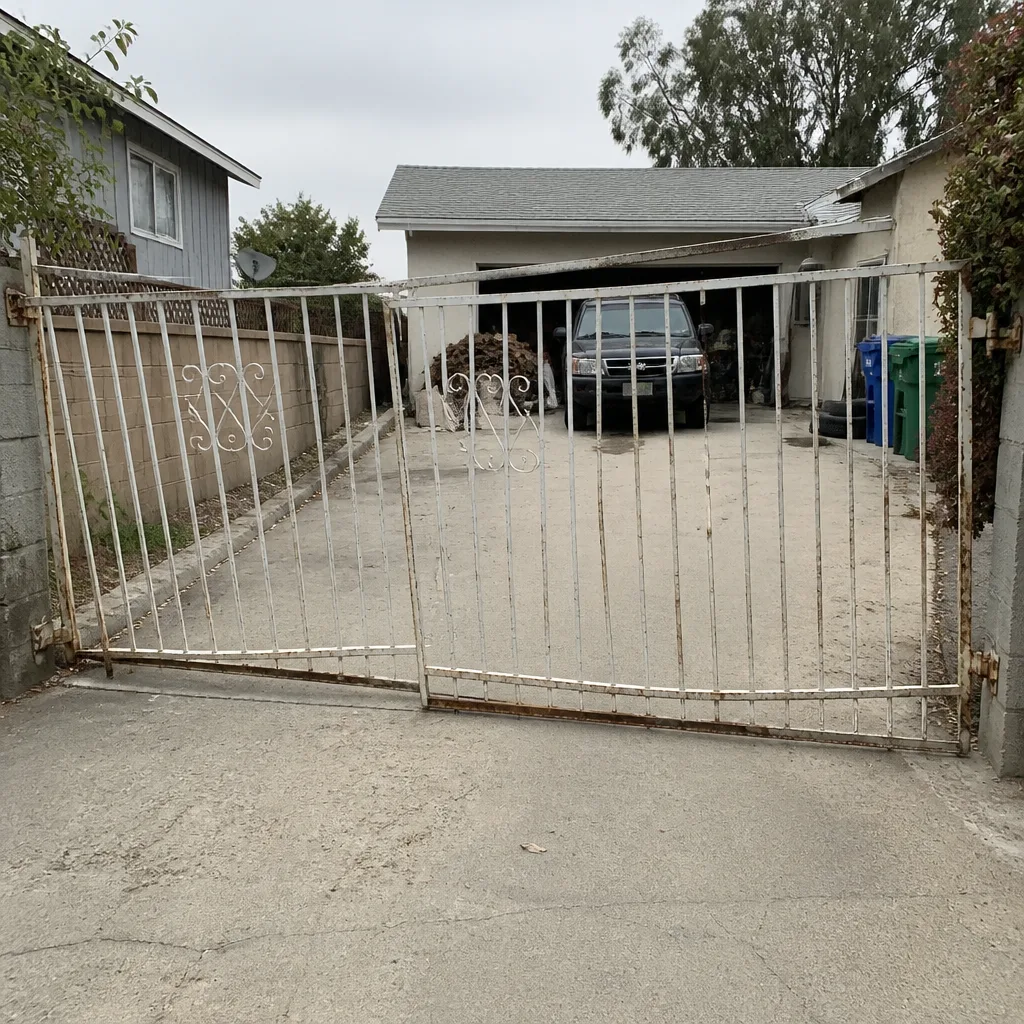 Before
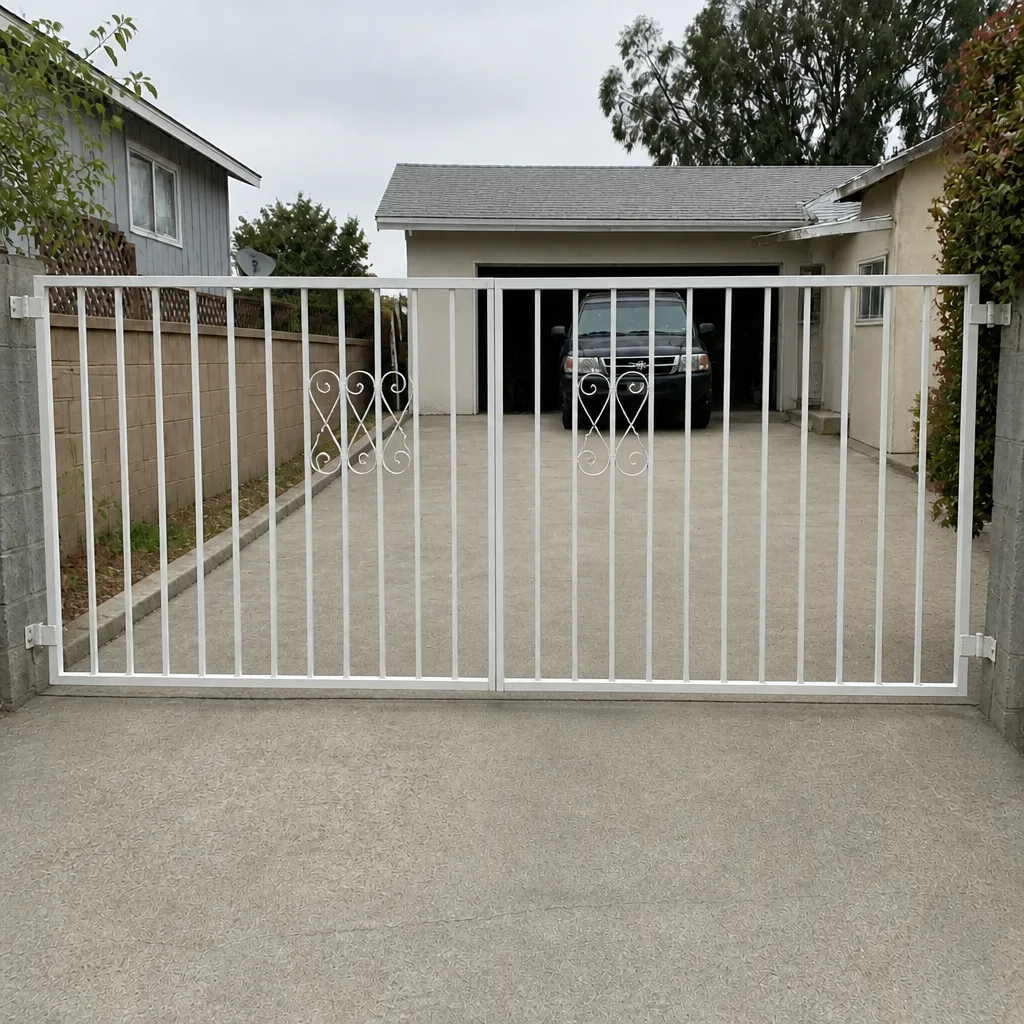 After
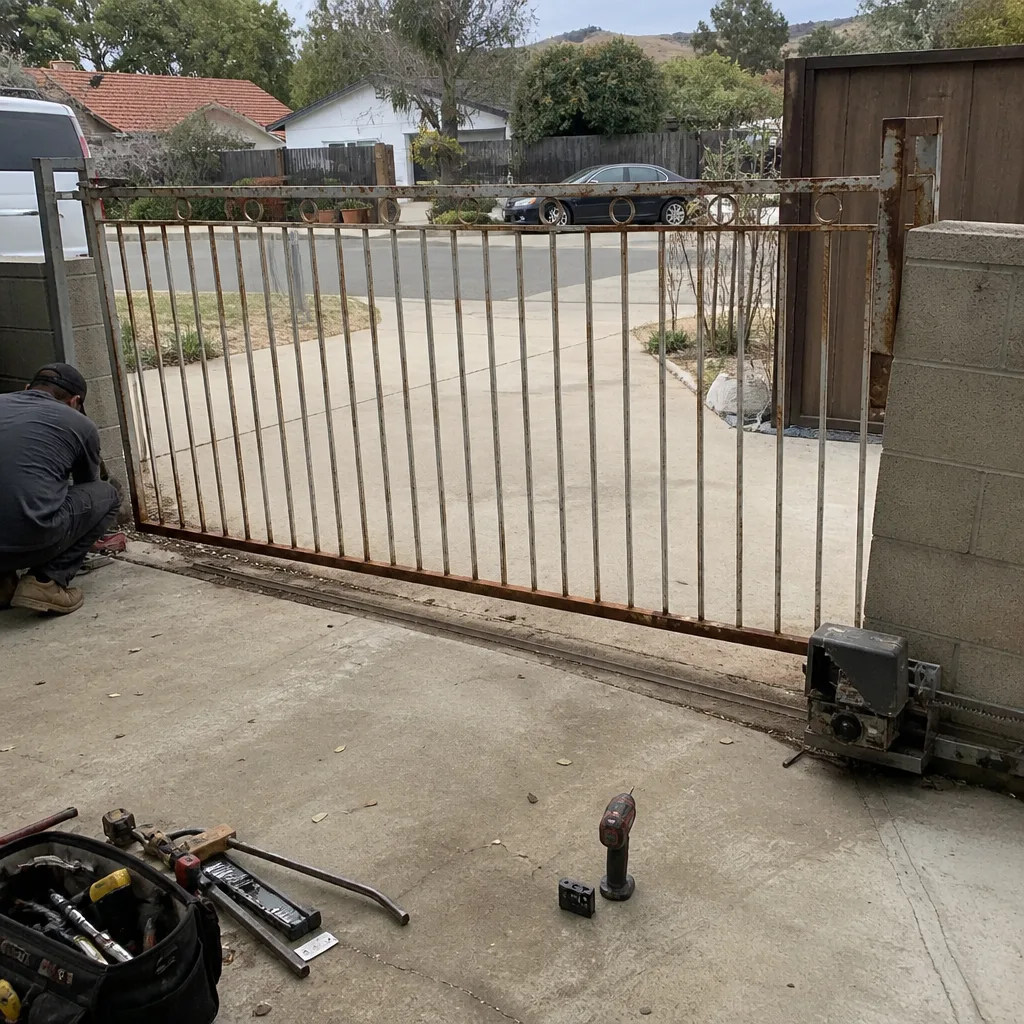 Before
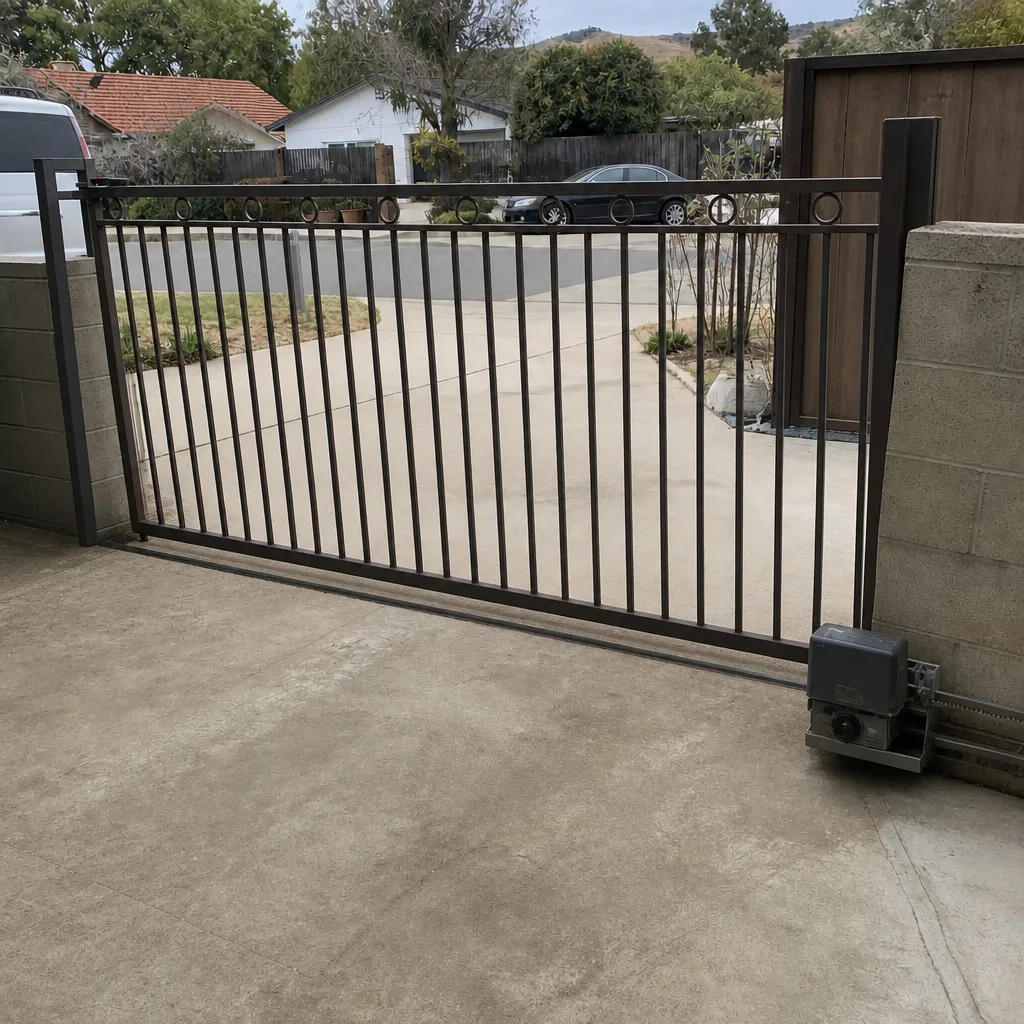 After
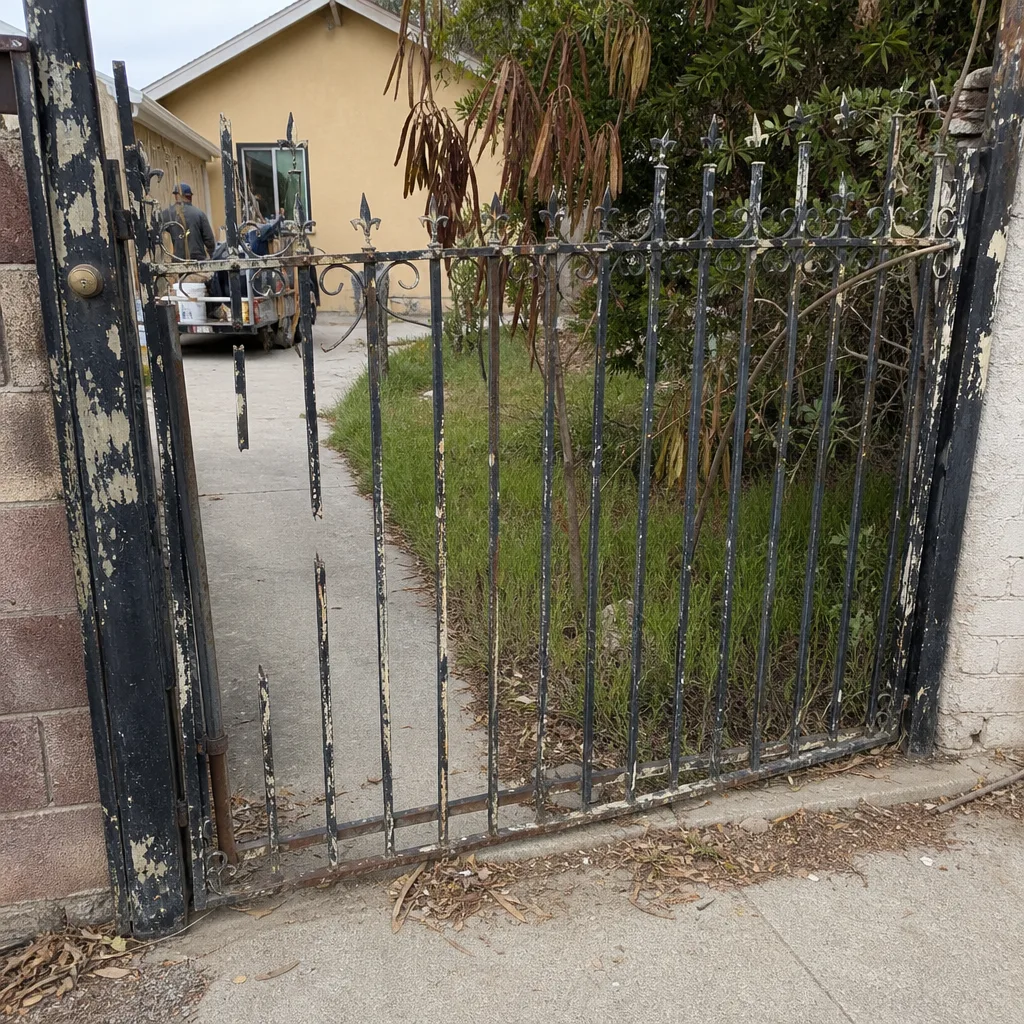 Before
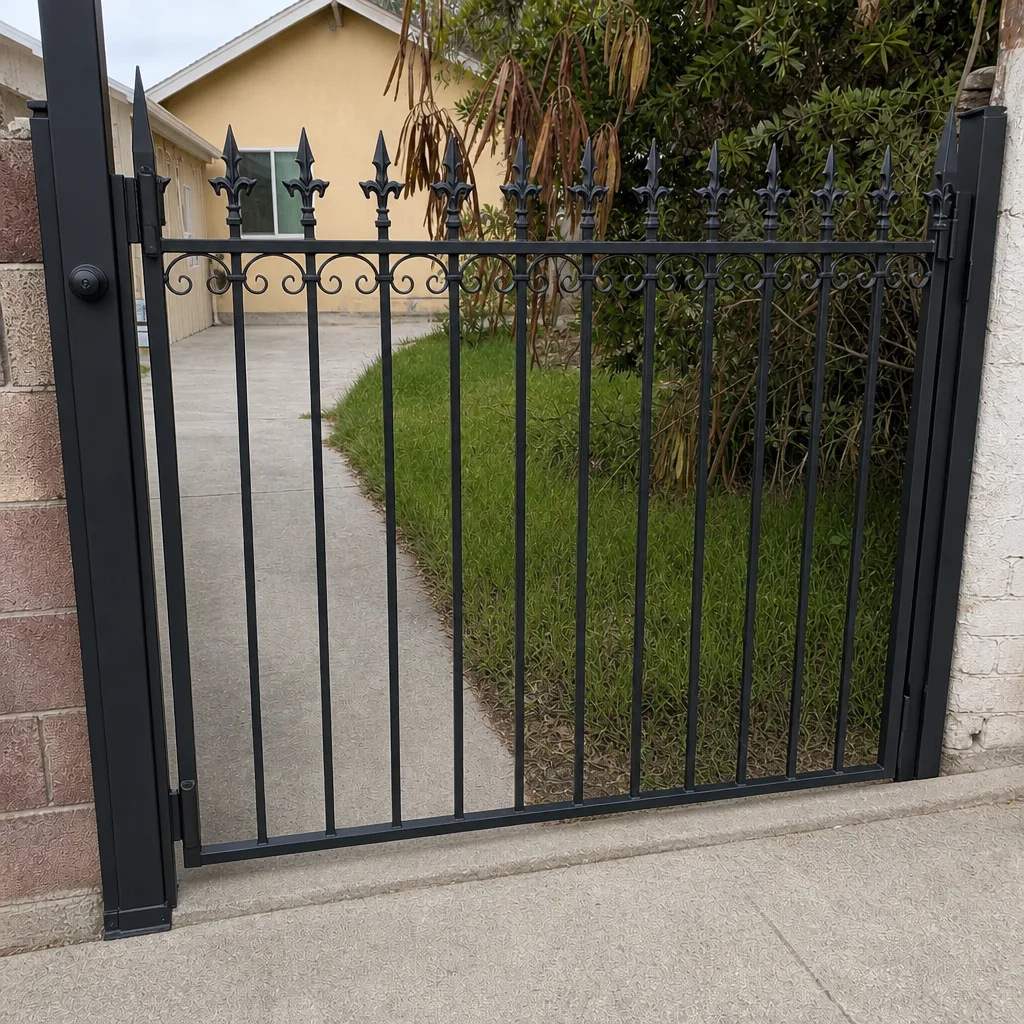 After
When to Call a Professional
You need a gate specialist when a gate is failing in a way that affects safety or access, when you’re planning new automation and want to know what the permit process actually involves, or when you’re facing a correction or a failed inspection on work someone else did. If your gate won’t close, reverses at random, or drops when it moves, don’t diagnose it over the phone – have a specialist look at it. If you’re prepping a sale and you suspect unpermitted work, have that assessed before escrow starts, not after. Ventura Gate Repair offers free estimates in Ventura. Call (833) 361-4971. We answer 24/7 and dispatch fast from 7am to 7pm, Sunday through Friday.
Frequently Asked Questions
Usually no, if you’re replacing an operator with a new unit of the same class, in the same location, on an existing permit-approved installation. A like-for-like swap is typically treated as routine service. If you’re changing the operator class, adding new electrical, or altering the gate’s structure, that’s a different job and usually needs a permit. Call (833) 361-4971 for an exact quote – estimates are free.
Yes, in almost every case. Adding automation to a manual gate means new electrical work, a new operator, new UL 325 safety devices, and a compliance obligation that didn’t exist before. The city treats this as construction, not service, and the installation needs permits and inspections. Our team walks you through what the permit involves and what the inspector will check.
UL 325 is the safety standard for automatic gate operators. For a residential gate, it requires entrapment protection – typically photoelectric sensors that stop and reverse the gate when something crosses their beam. A permit inspector verifies the sensors are installed, aligned, and functioning, and confirms warning signage and a working manual release. We test all of it before calling for inspection.
Unpermitted work usually surfaces during a buyer’s inspection or title search. The buyer may demand you permit it retroactively, reduce the price, or walk away. If the work caused an injury, your homeowner’s insurance may deny a claim. The cleanest path is to permit it retroactively before you list, so you’re not negotiating from a weak position. Call (833) 361-4971 for a free estimate on the correction work.
Contact the Ventura building department, ask what documentation they need for an as-built permit, and submit an application describing the work already done. Plan review may require corrections, and the inspection will test the safety devices just like a new install. Budget for correction work, not just the filing fee – retroactive permitting usually costs more than permitting at the time of installation.
If your property has an architectural review committee, yes. HOA approval is a separate layer on top of city permits, and it often takes longer. Some HOAs require specific operator brands, appearance standards, or access-control integration. Get the HOA approval first, then the city permit, then install. Reversing that order is one of the most common and expensive mistakes we see.
The Bottom Line
Gate permits in Ventura come down to one question: are you replacing what’s there, or adding something new? Repairs and like-for-like operator swaps are usually permit-free. Manual-to-automatic conversions, structural changes, and new installations almost always require a permit, a UL 325-compliant safety installation, and an inspection. HOA review sits on top of the city process and can be stricter than the code. Unpermitted work is fixable through retroactive permitting, but it’s cheaper and simpler to permit at the time. Whether you need electric gate repair or a full new installation, we handle the whole arc: diagnosis, repair, installation, and inspection readiness. Reach the Ventura Gate Repair team at (833) 361-4971 for a free estimate. We answer 24/7. Fast dispatch from 7am to 7pm, Sunday through Friday.
Written by the team at Ventura Gate Repair.