
Last updated November 15, 2026
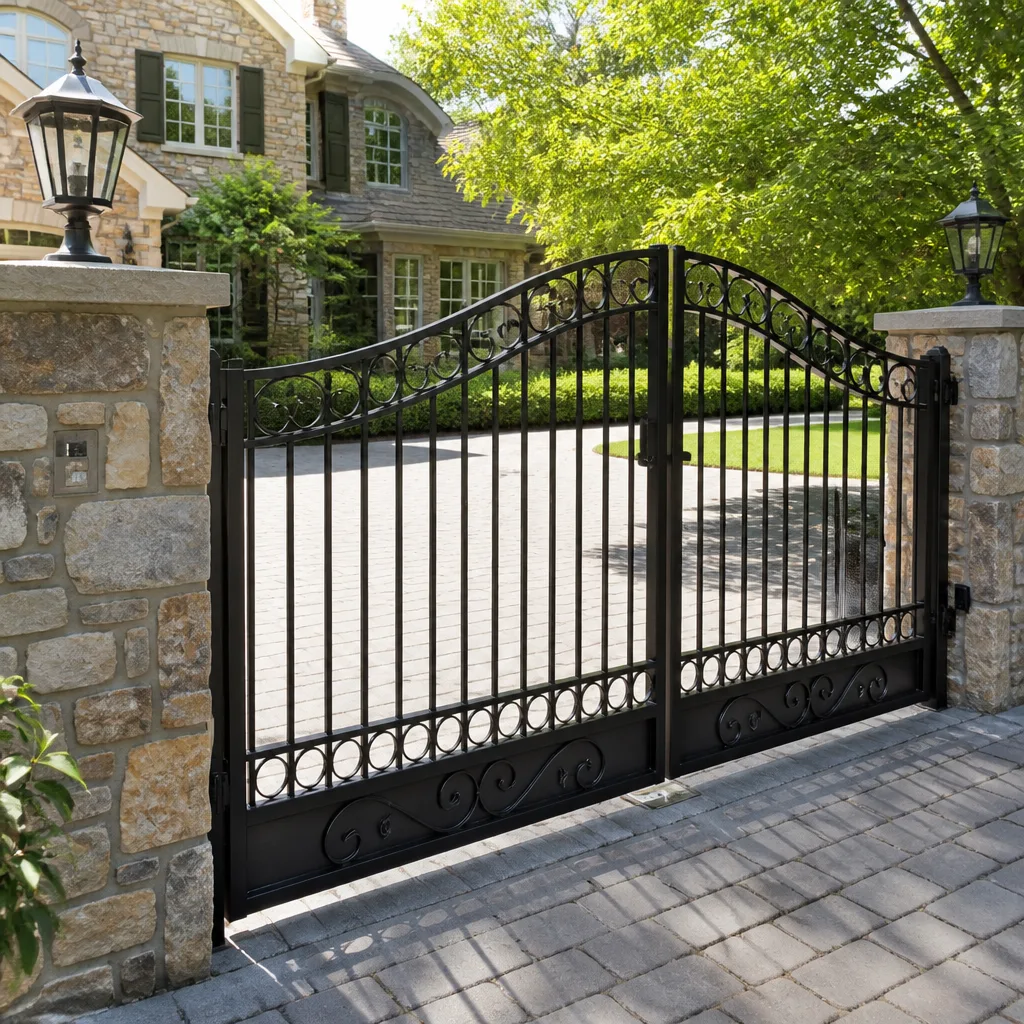 Wrought iron
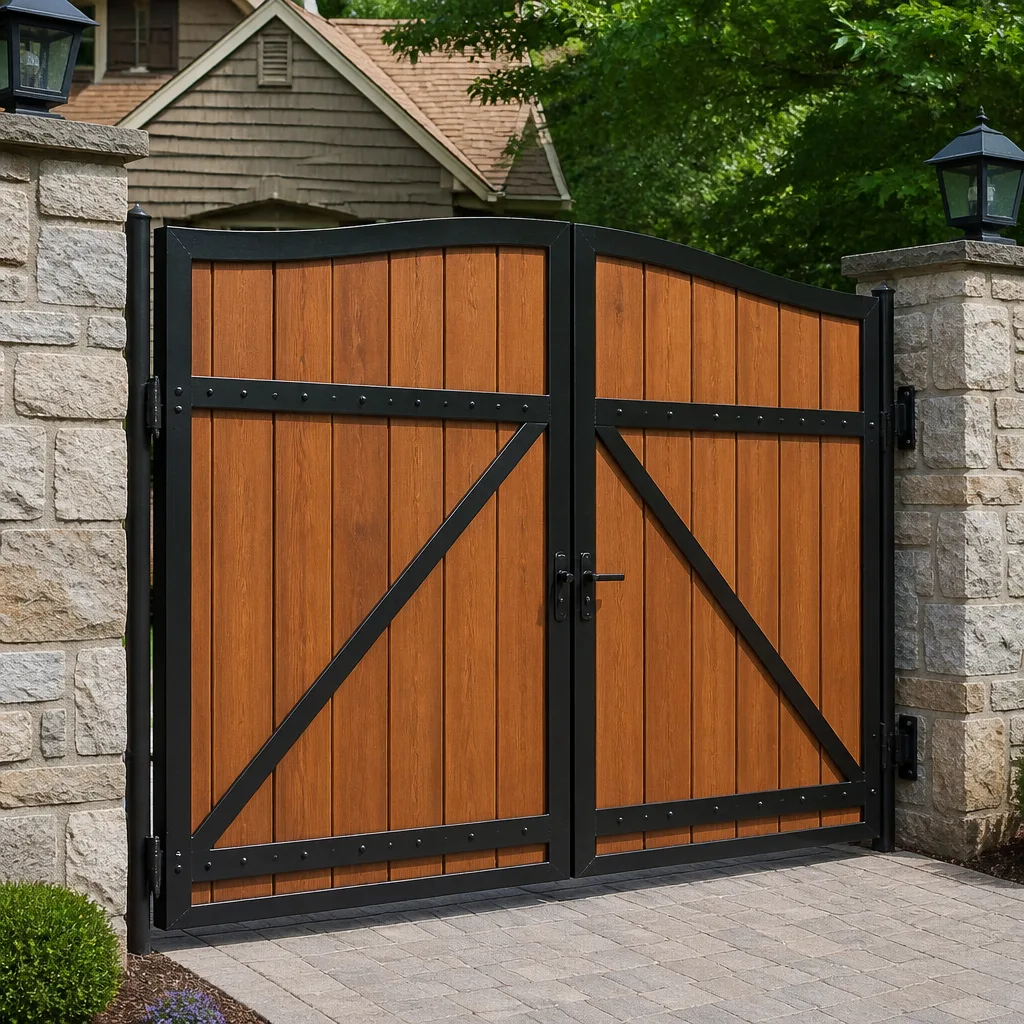 Wood & steel frame
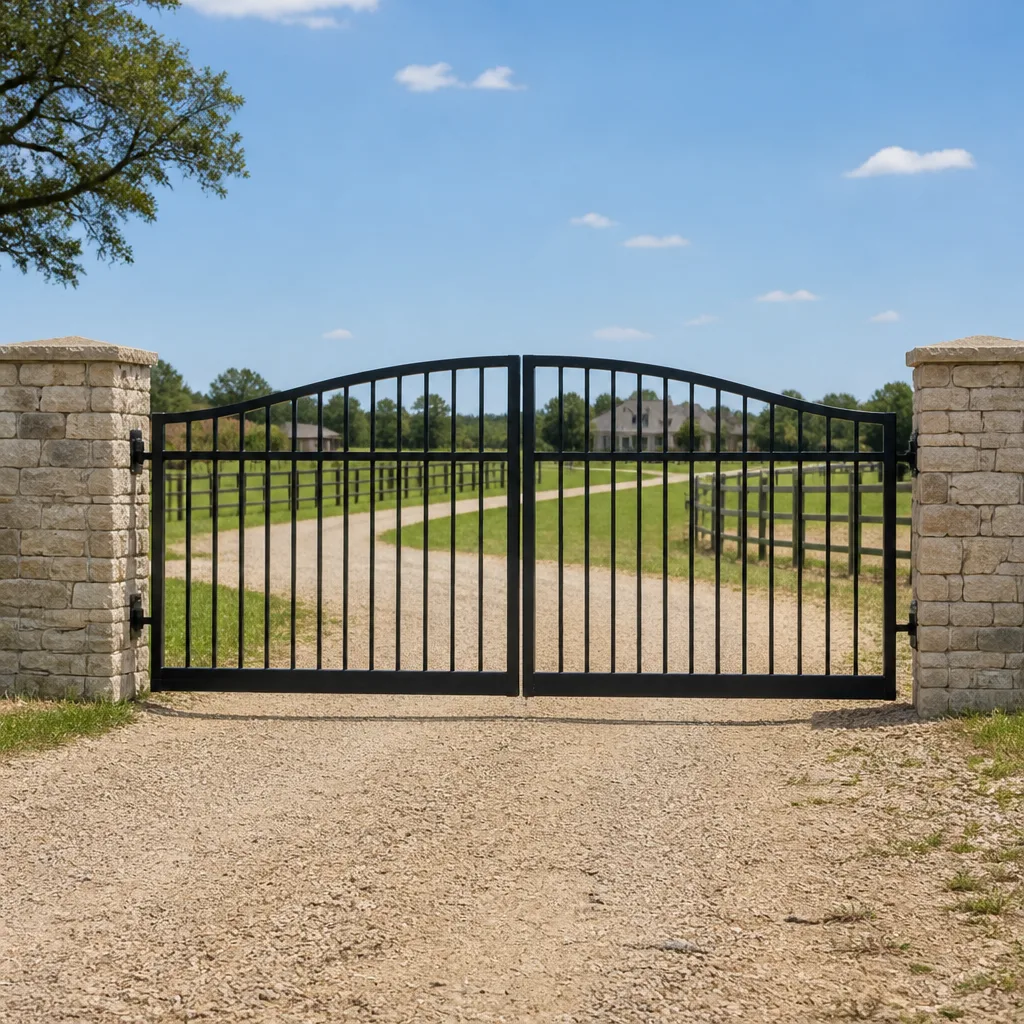 Farm & ranch
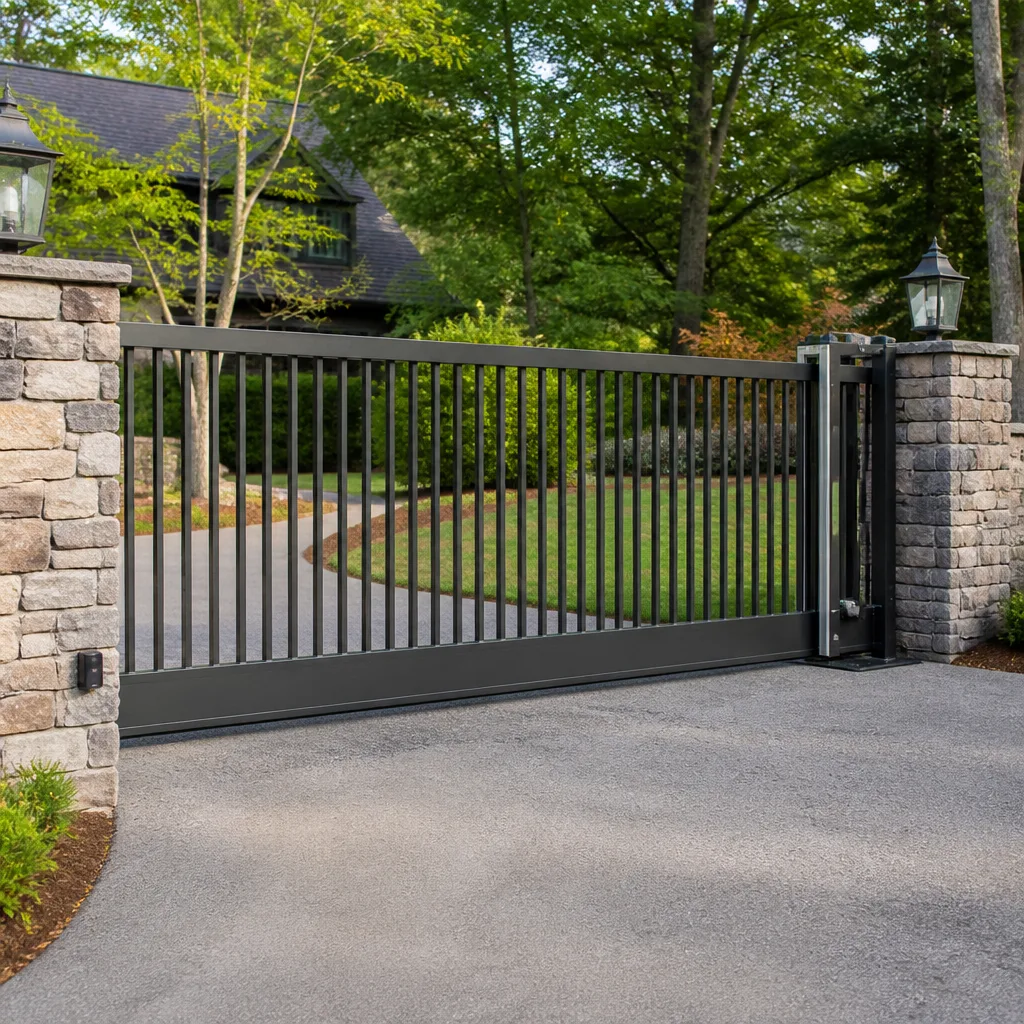 Sliding driveway gates
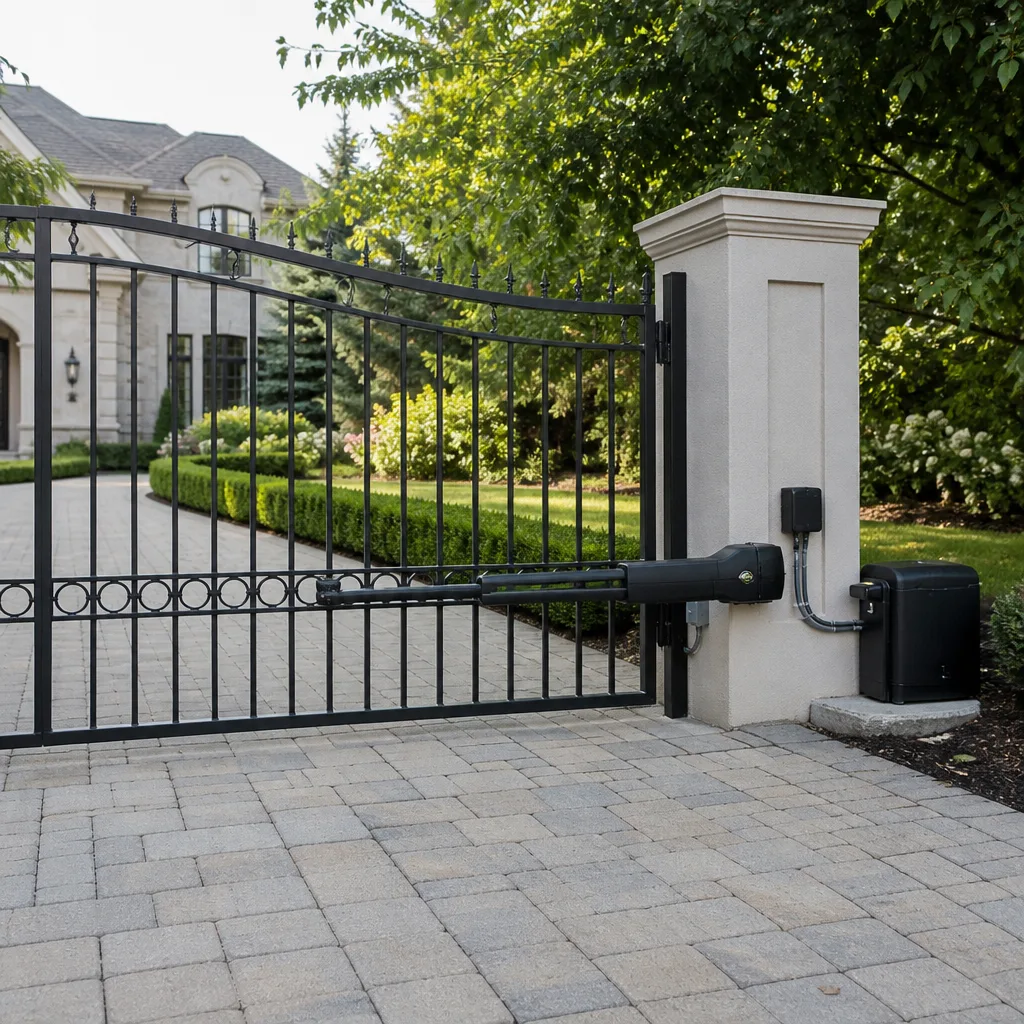 LiftMaster operators
Free on-site gate assessment - hinges, posts, and your LiftMaster or Nice gate operator checked before anything is quoted
The assessment is free and the quote is the invoice.
Get your free estimateDIY vs Professional Gate Repair: The Ventura Homeowner’s Decision Guide
Replacing a gate wheel is a legitimate DIY job. Adjusting entrapment protection settings is not, and not because the adjustment is technically difficult. It’s because incorrect safety settings create legal liability that follows the property, not the person who made the change. That distinction is the whole ballgame, and most online advice skips it entirely. This guide draws the line precisely: which gate repairs in Ventura you can safely own, which ones quietly void your operator warranty, and which ones fall under safety standards a homeowner legally cannot self-certify. By the end you’ll know exactly where your gate sits.
Quick Answer
You can safely handle lubrication, sensor cleaning, remote battery replacement, and clearing minor obstructions on your own gate. Everything that touches the operator’s entrapment protection, control board, wiring, or weight-bearing structural parts should go to a gate specialist, because those repairs fall under UL 325 safety compliance and warranty terms that a homeowner cannot self-certify. The dividing line is liability, not skill.
Styles & brands we work with
- Wrought iron
- Wood & steel frame
- Farm & ranch
- Sliding driveway gates
- LiftMaster operators
Table of Contents
- Why the DIY Question Is Really a Liability Question
- What UL 325 Means for a Ventura Gate Owner
- Safe DIY Gate Repairs You Can Handle
- Gate Repairs You Should Hand Off
- Calculating True DIY Cost vs Professional Cost
- How DIY Work Voids Major Operator Warranties
- Insurance and Liability Exposure After DIY Gate Work
- How to Choose a Gate Specialist in Ventura
Why the DIY Question Is Really a Liability Question
The usual framing of DIY versus professional repair is about difficulty. Can you physically do it, do you have the tools, how much will you save. For gates, that framing misses the actual risk. A gate is a piece of powered equipment that moves heavy metal on a property line where children and pets play. When it malfunctions, the failure isn’t cosmetic. The questions that matter are legal and mechanical at the same time: does the repair affect the operator’s ability to detect an obstruction, does it touch components governed by a safety standard, and does it create exposure for the property owner if something goes wrong later?
In our experience, the repairs homeowners regret are rarely the ones that were too hard. They’re the ones that seemed simple and quietly disabled a safety feature. Nobody notices a reversed photo-eye or a bypassed edge sensor until a gate closes on something it shouldn’t have.
There’s a second layer specific to Ventura. Auto gates here run year-round; there’s no hard winter pause that forces an inspection. Dry summer months put dust into tracks and photo-eye lenses, and the marine layer inland nights bring moisture that works on control boards and exposed wiring. Gates get a lot of cycles and not much looking-at. That makes deferred small problems common, and it’s exactly the small problems that tempt a DIY fix.
Here’s the frame to keep in mind for the rest of this guide: the question isn’t “can I do this?” It’s “if this repair fails in a way that hurts someone, whose problem is it?” For a handful of tasks, the answer stays comfortably with you. For others, it moves to the property. Knowing which is which is what separates a smart DIY decision from an expensive one.
What UL 325 Means for a Ventura Gate Owner
UL 325 is the safety standard for automated gate operators, and entrapment protection is the part of it that matters most to homeowners. The standard requires that an automated gate have at least one means of entrapment protection in each direction of travel, and it defines how that protection must be tested and maintained. Manufacturers build operators to meet it; they also write the warranty and installation instructions around it.
The legal reasoning behind self-certification being off the table for homeowners is straightforward. Compliance isn’t a product you buy and own; it’s a condition that has to be maintained and verifiable by someone who understands the standard. Photoelectric sensors, safety edges, and the operator’s internal obstruction sensing all interact, and adjusting one can defeat another. A homeowner can physically change a setting. They cannot certify that the gate as a whole still meets the entrapment protection requirement after the change, and they cannot produce documentation that it was done correctly if a claim later arises.
This is where the decision gets practical rather than philosophical:
- Tasks that affect entrapment protection belong to a professional, every time.
- Tasks that don’t touch the operator’s safety logic fall to the homeowner without concern.
- A task that seems mechanical but sits between those two belongs to a professional too, because the safe assumption is that anything wired to the operator’s logic is protection-related until proven otherwise.
If you want the deeper technical side of how these systems fail, our electric gate repair page covers motors, boards, and safety devices in detail.
Safe DIY Gate Repairs You Can Handle
These are the jobs where a homeowner holds the liability comfortably, because none of them touch the operator’s safety logic, and getting one slightly wrong doesn’t create a hazard. They’re also the tasks most likely to prevent a service call, so they’re worth doing on a schedule.
1. Lubrication of hinges, wheels, and tracks. Clean the track or roller path first, then apply a lubricant rated for outdoor use. Dry months in Ventura load gate tracks with grit, and grit is what wears rollers out early. Lubricate more often in summer than winter.
2. Photo-eye cleaning. Wipe the lenses of both sensors with a soft cloth. Dust and spider webs on the lens are a leading cause of “my gate won’t close” calls, and cleaning takes a minute. Don’t move the sensors, just clean them.
3. Remote battery replacement. Open the remote case as the manufacturer intends, replace the coin cell or AAA batteries, and re-test. Straightforward, and worth doing before assuming a remote failure means an operator problem.
4. Clearing minor obstructions. Remove leaves, gravel, toys, and yard debris from the gate’s travel path. Check that nothing has shifted into the path and that the gate isn’t dragging on something it shouldn’t.
5. Tightening visible bolts and checking hardware. Inspect the hinges, brackets, and mounting bolts for looseness and snug up anything that’s worked free. Don’t move mounts or adjust alignment; just tighten what’s there.
What all five have in common: none of them require opening the operator cabinet, changing a setting, or wiring anything. Note that limitation explicitly. A homeowner who follows that boundary will rarely create a problem.
Gate Repairs You Should Hand Off
These are the jobs where the liability genuinely transfers to the property if the work is wrong. Hand them to a gate specialist without agonizing over whether you could manage them.
1. Entrapment protection adjustment. Photo-eye alignment, safety edge repair, and obstruction sensing calibration all sit under UL 325. A wrong setting here is the exact scenario this guide opened with.
2. Control board replacement or repair. Boards are expensive and easy to damage; a miswired replacement can take out the motor next. This belongs to someone who diagnoses rather than guesses.
3. Motor and operator service. Motor brushes, gearbox wear, and operator capacity issues need a specialist’s diagnostic judgment. On a heavy commercial operator this is a different animal than a residential swing arm.
4. Wiring and power runs. Line voltage and low-voltage control wiring alike. A power run that isn’t done right is a hazard, not an inconvenience.
5. Structural repairs. Bent gate frames, failed hinges, sagging panels, and a slide gate that’s come off its track. Heavy panels can crush; this is not a solo job.
6. Operator replacement or a new installation. Sizing an operator to a gate, matching it to the duty cycle, and setting it up correctly is a measured, ordered, scheduled job. Nobody should install one by guesswork.
If you’re in the thick of one of these and need to know what the repair involves, our gate repair page lays out the diagnostic process.
Calculating True DIY Cost vs Professional Cost
The cost comparison most homeowners do is “part price vs repair quote,” and that comparison is almost always wrong. A fair calculation includes three things people leave out: parts markup on retail purchases, tool rental for jobs that need a tool you don’t own, and the value of your own time. It also has to account for the chance you call a professional anyway after a failed attempt, which means the part money is gone and the repair is still ahead.
Here’s the honest way to frame it:
- Parts. Retail is typically higher than what a professional pays for the same part, so the DIY savings on the part itself is smaller than it looks.
- Tools. A multimeter, a socket set sized for the operator, and sometimes a torque wrench. If you own them, that cost is zero. If not, that’s rental or purchase money.
- Your time. Fair to value at what your hours are worth to you, including trips to the hardware store and the return trip to the part you bought wrong.
- The attempt risk. The percentage chance you end up calling a professional after all, which erases the savings entirely.
Run that math and the picture changes by task. Lubrication and remote batteries are overwhelmingly DIY. Entrapment protection work looks cheap on parts and expensive on risk, because a wrong setting doesn’t get fixed by spending more on parts; it gets fixed by a technician who knows the standard. The professional quote on those jobs isn’t priced against the part. It’s priced against the diagnosis, the correct installation, and the warranty that comes behind it.
On price: every repair is quoted per job by a written estimate, so the number you’re comparing against is confirmed before any work starts. The estimate is free, and the written figure is the price.
How DIY Work Voids Major Operator Warranties
Operator manufacturers write their warranties around installation and adjustment by qualified technicians. When a non-certified person changes a setting or replaces a component, the manufacturer’s default position is that the adjustment voided the warranty on the parts it affected, and often on the operator as a whole. This is where DIY on an expensive operator gets genuinely costly: you can void the coverage on a several-thousand-dollar commercial unit while replacing a part that cost a fraction of it.
The brands we work with are specific about this. DoorKing operators used on shared and commercial gates, FAAC and BFT heavy-duty units, and Linear residential operators all carry terms that tie warrantability to correct installation and adjustment. Viking operators on older swing gates are no different. And the residential-grade brands many Ventura homeowners have on entry gates – Mighty Mule and Ghost Controls chief among them – have their own terms, which don’t get more generous because the operator is smaller.
We don’t claim to be a manufacturer’s authorized service provider for any of these; we’re independent, and we’re experienced with all of them. What matters for your warranty decision is narrower: which actions the manufacturer’s terms typically cover, and which they don’t. The pattern is consistent:
- Adjustment by an unqualified party typically voids the affected warranty.
- Wiring changes, bypassed safety devices, and field-altered control boards almost always do.
- Routine care the manual calls for, done as the manual describes, generally doesn’t.
Read your operator’s manual before you start. If what you’re considering isn’t on its “owner maintenance” list, treat it as a professional job and protect the warranty you paid for.
Insurance and Liability Exposure After DIY Gate Work
This is the part that determines whether a repair is worth doing yourself, and it’s the part nobody looks up until it matters. If a gate you worked on later closes on a visitor, a delivery driver, or a child, the question of who did the work becomes central. Homeowners insurance responds to negligence claims for bodily injury on your property to a point, but it does not respond to a claim that the property owner knowingly disabled a mandated safety feature, and it may deny or reduce coverage if the repair was outside what you were reasonably capable of handling correctly.
In a Ventura context, that exposure plays out mainly in two settings. The single-family entry gate is lower-stakes but still real, because kids and pets move through gates constantly. Multi-unit or shared-drive gates are higher-stakes, because the property is used by tenants, visitors, and delivery people, and the operating equipment usually sits in a space no one individually maintains. A property manager who lets a tenant “fix” a sensor has taken on a corresponding liability question.
The mitigation is simple and it’s the reason we emphasize documentation. Repair records from a gate specialist establish who did what, when, and that the entrapment protection was verified afterward. If a claim later arises, those records matter more than any other factor. For a homeowner who wants a straight answer on where the risk sits, start with a written assessment of the gate’s current condition and the repairs it needs, then decide what you’ll do yourself from that list.
Our Ventura service page covers the areas we serve across the city.
How to Choose a Gate Specialist in Ventura
A specialist does gate work every day; a general contractor does it occasionally and looks up the manual on site. The difference shows up as faster diagnosis, correct parts on the first trip, and an accurate answer about brand-specific quirks. Here’s how to tell them apart before you hire one:
- Ask what share of their work is gates. A gate specialist will name the operators they work on routinely; a generalist will name gate repair as a line item among many.
- Check the brand coverage. If your operator is a FAAC, BFT, DoorKing, Linear, Viking, Ghost Controls, Mighty Mule, LiftMaster, or Elite system, the company should recognize it immediately and know its common failure points.
- Ask whether they handle both automated and manual gates. The answer should be yes, and the commercial-versus-residential split shouldn’t faze them.
- Get a written estimate before any work starts. Confirm it covers diagnosis, parts, and what happens if the repair turns out to be larger than expected.
- Ask how entrapment protection will be verified. A specialist will have a clear answer about testing the photo-eyes and edges as part of the job.
One more thing to ask: what happens after the repair. A company that handles emergency repair, ongoing service, and installation of a new gate means you don’t have to find a second vendor when your needs change. We handle the full arc for both residential and commercial gates in Ventura.
Common Mistakes to Avoid
- Adjusting photo-eyes to stop nuisance trips. If a gate reverses on you repeatedly, the sensor isn’t the problem; alignment, wiring, or a failing board usually is. Adjusting around the symptom removes the safety feature and hides the fault.
- Buying an operator by price alone. A residential-grade operator installed on a heavy commercial gate underperforms from day one and fails early. Match the operator to the gate, not the shelf price.
- Ignoring a slide gate that’s come off its track. A heavy panel off its track can crush; stop running it and get it looked at before it gets worse.
- Assuming a dead remote means a dead operator. Batteries die, and a remote issue is one of the cheapest things to check. Test a second remote first.
- Skipping lubrication in the dry months. Ventura summers load gate tracks with grit, and grit accelerates wear. A minute with a lubricant saves a wheel replacement.
- Letting a tenant “fix” a shared gate. On a multi-unit property, every repair you don’t document is a liability question waiting for a reason to be asked.
- Treating the warranty as an afterthought. Check the operator’s owner maintenance list before any repair. If the task isn’t on it, leave it to a specialist.
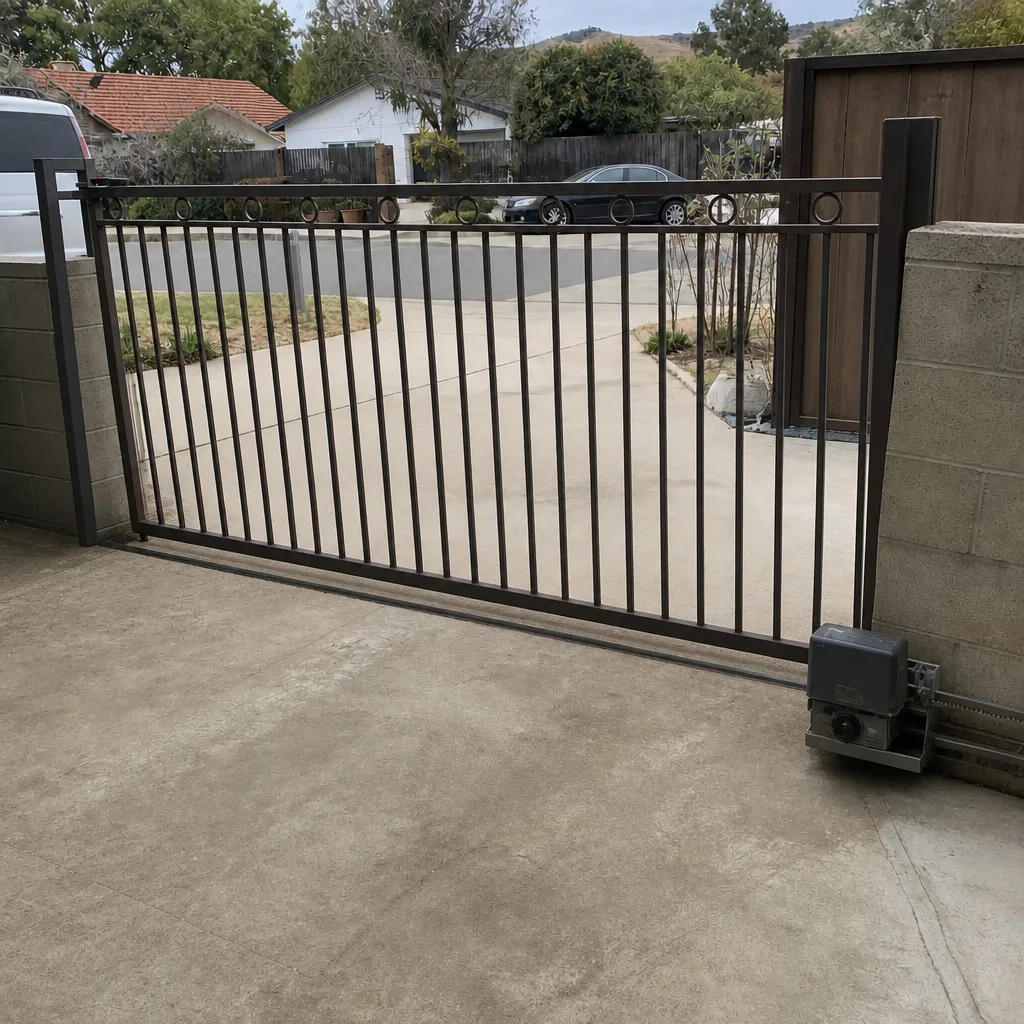
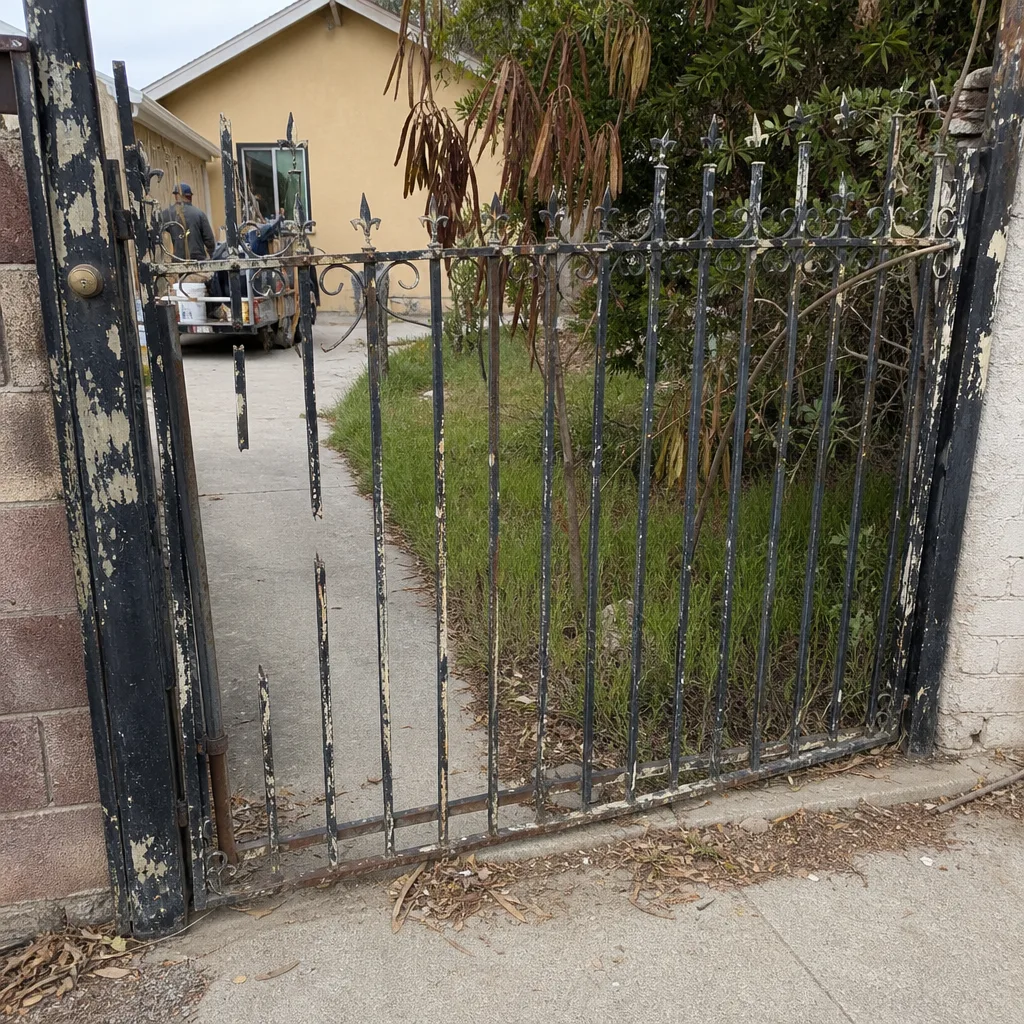
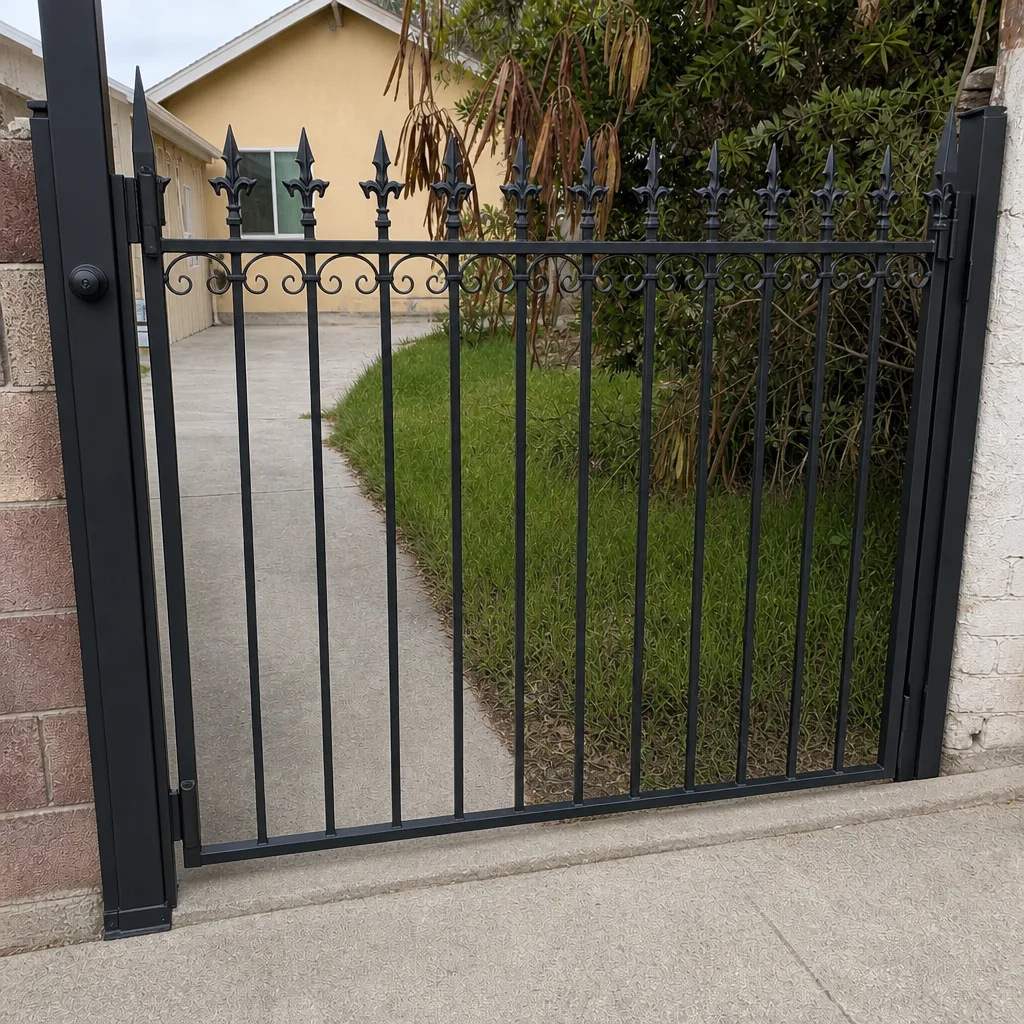
See the difference
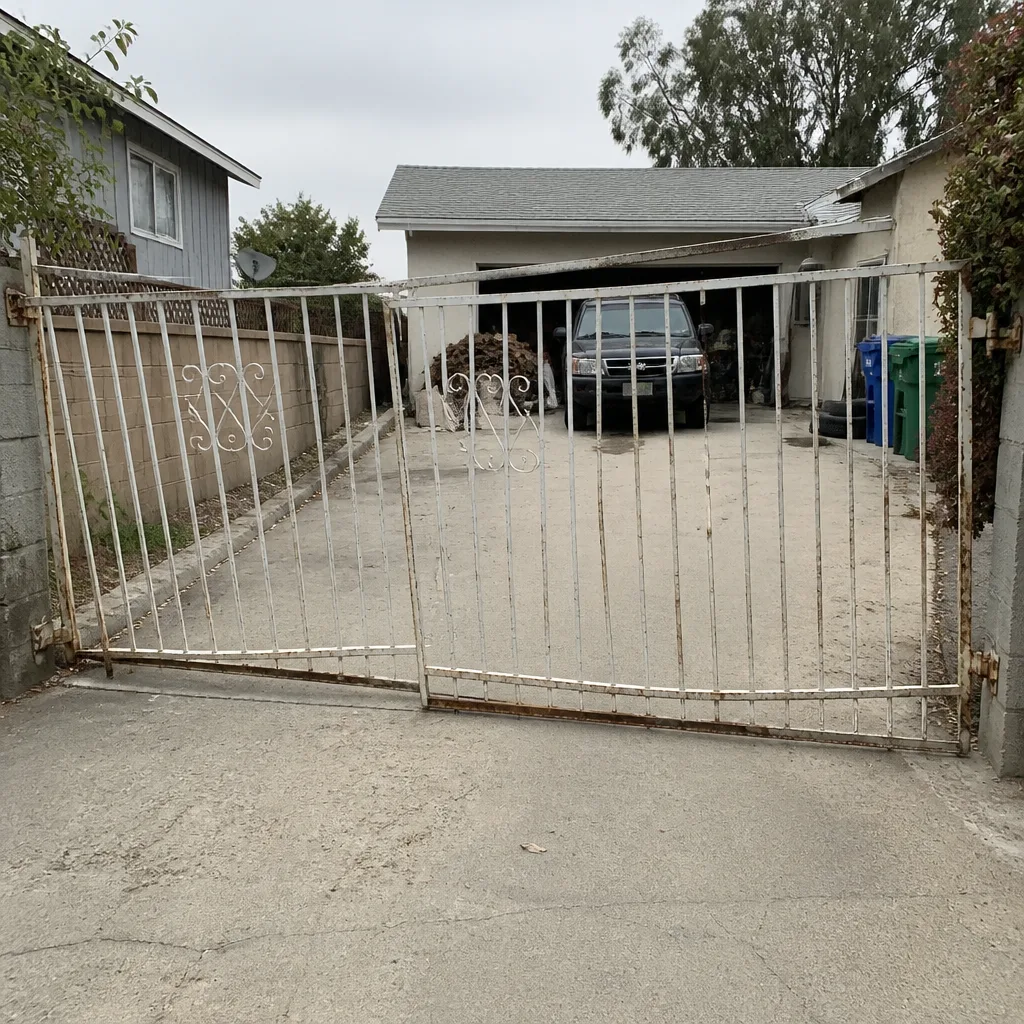 Before
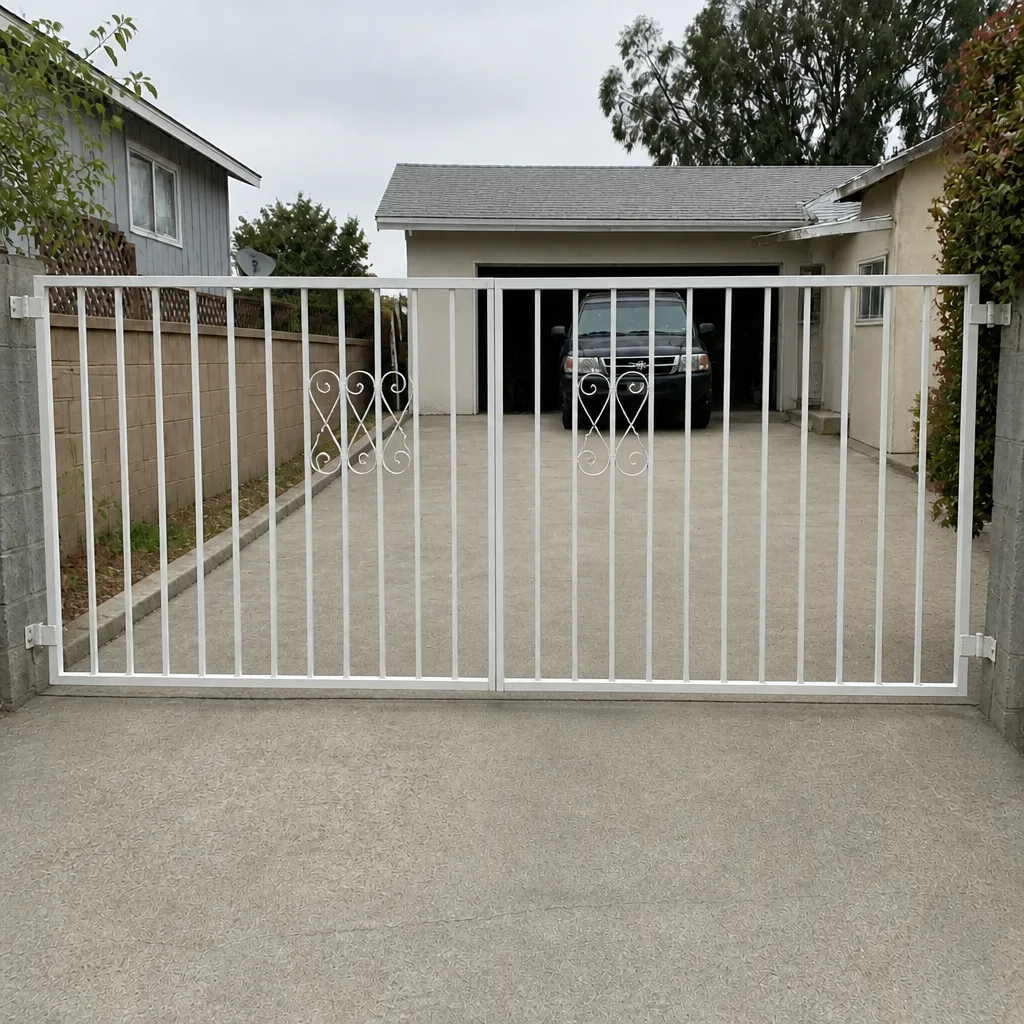 After
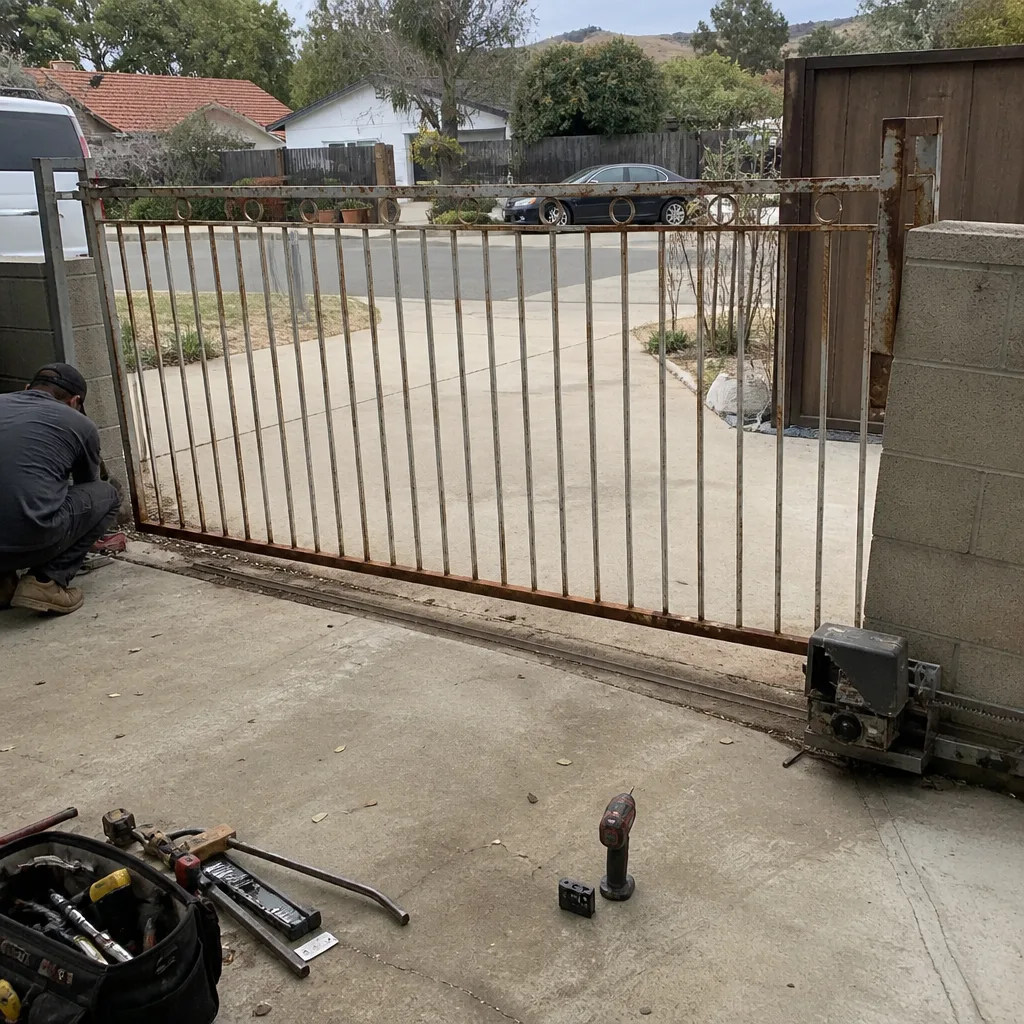 Before
 After
 Before
 After
When to Call a Professional
Call a specialist when a repair touches the operator’s safety logic, wiring, motor, or the structural parts of the gate itself. Those are the jobs where the liability moves off you and onto the work: entrapment protection adjustments, control boards, operator replacement, and any slide gate off its track or panel that’s bent and heavy. Call sooner if the gate is repeatedly reversing on a clear path, if it’s a commercial operator on a shared drive, or if a repair has already failed once. Each of those means the next attempt should be diagnostic. Ventura Gate Repair offers free estimates in Ventura – call (833) 361-4971. We answer 24/7. Fast dispatch from 7am to 7pm, Sunday through Friday.
Frequently Asked Questions
You can look without touching anything electrical, but don’t adjust anything inside. Photo-eye alignment, obstruction sensing calibration, and any control board work sit under entrapment protection requirements a homeowner cannot self-certify. If something’s clearly wrong inside, call a gate specialist and get a written estimate before anyone works on it.
Usually, yes, on the parts the adjustment affected and often on the operator as a whole. Manufacturers write their warranty terms around installation and adjustment by qualified technicians, and that applies to Linear, DoorKing, FAAC, BFT, Viking, Mighty Mule, Ghost Controls, LiftMaster, and Elite operators alike. Check your manual’s owner maintenance list before starting anything.
Clean the photo-eye lenses and clear the track first. Those are the two most common causes and both are free. If neither fixes it, you’re dealing with alignment, wiring, or a control board issue, and the cheapest correct path is a diagnostic call rather than a part-by-part guess. Call (833) 361-4971 – estimates are free.
The property owner typically faces the claim, because the repair happened on the property. Homeowners insurance responds to negligence claims to a point, but it may deny or reduce coverage if a mandated safety feature was disabled. The repair records from a specialist showing what was done and verified are what protect you in that scenario.
No. A heavy gate panel off its track can crush, and the fix involves lifting and realigning weight you shouldn’t take on alone. Stop running the gate immediately and get a specialist out. Call (833) 361-4971 to schedule a look.
Not for the basics. Lubrication, photo-eye cleaning, remote battery replacement, and clearing the travel path are all homeowner-level tasks and won’t void an operator warranty. Anything wired to the operator or involving the gate’s structure needs a specialist. A one-time visit to check the whole system is priced per job after the gate is assessed.
Ask what proportion of their work is gates and have them name the operators they see routinely. A gate-only specialist will recognize your operator and its common failures immediately. A generalist will treat gate repair as one line among many and consult the manual on site. Our team at Ventura Gate Repair works on gates exclusively, and our technicians have up to 8 years of experience for automated and manual systems, residential and commercial.
The Bottom Line
The DIY versus professional question for gate repair comes down to liability, not skill. Lubrication, sensor cleaning, remote batteries, and clearing obstructions are genuinely worthwhile DIY tasks and carry no entrapment protection risk. Everything touching the operator’s safety logic, control board, wiring, motor, or the gate’s structure should go to a gate specialist, because those repairs fall under UL 325 compliance and warranty terms a homeowner cannot self-certify. If a repair goes wrong after DIY work, the liability follows the property, not the person who made the change. The records from a specialist repair are what protect you when it matters. That line is the whole decision.
If you’re in Ventura and not sure which side of the line a repair falls on, we’ll tell you plainly. Call (833) 361-4971 for a free estimate. We answer 24/7. Fast dispatch from 7am to 7pm, Sunday through Friday.
Written by the team at Ventura Gate Repair.