
Last updated November 15, 2026
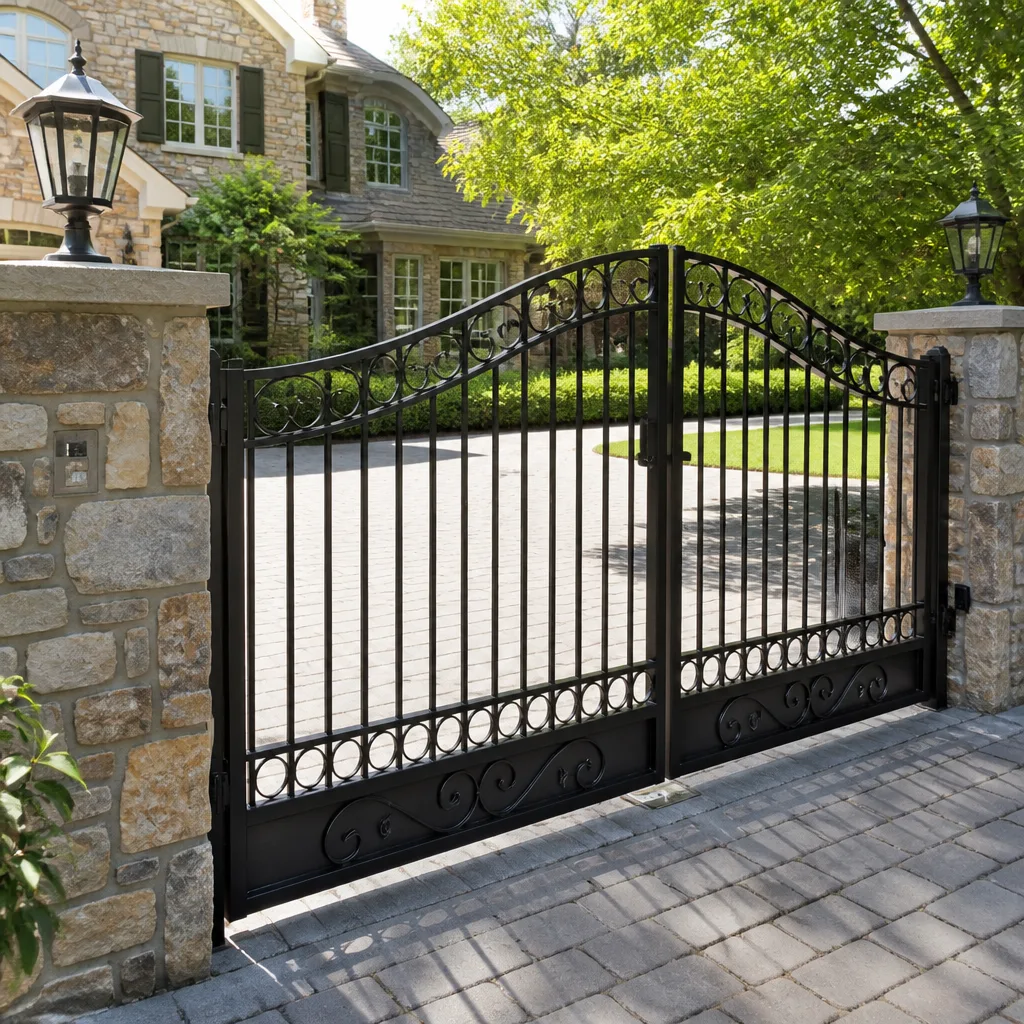 Wrought iron
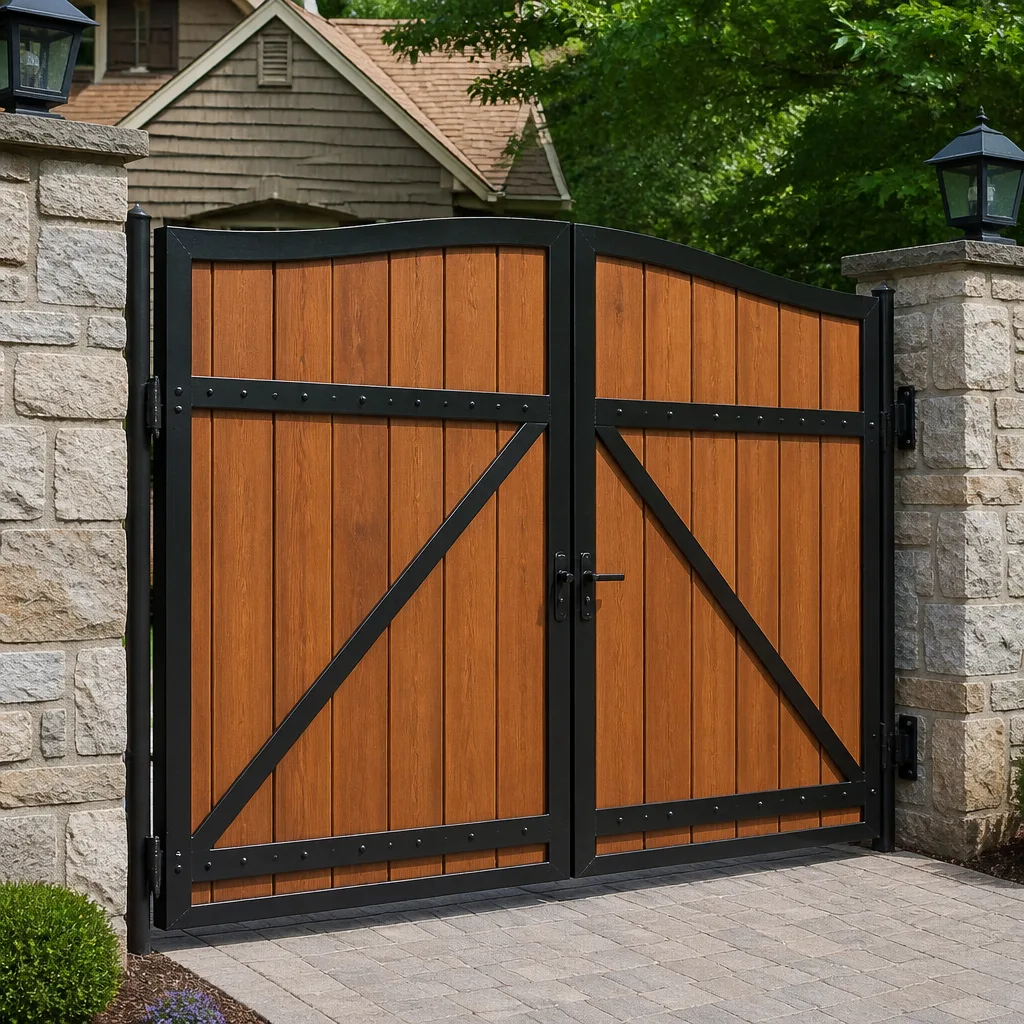 Wood & steel frame
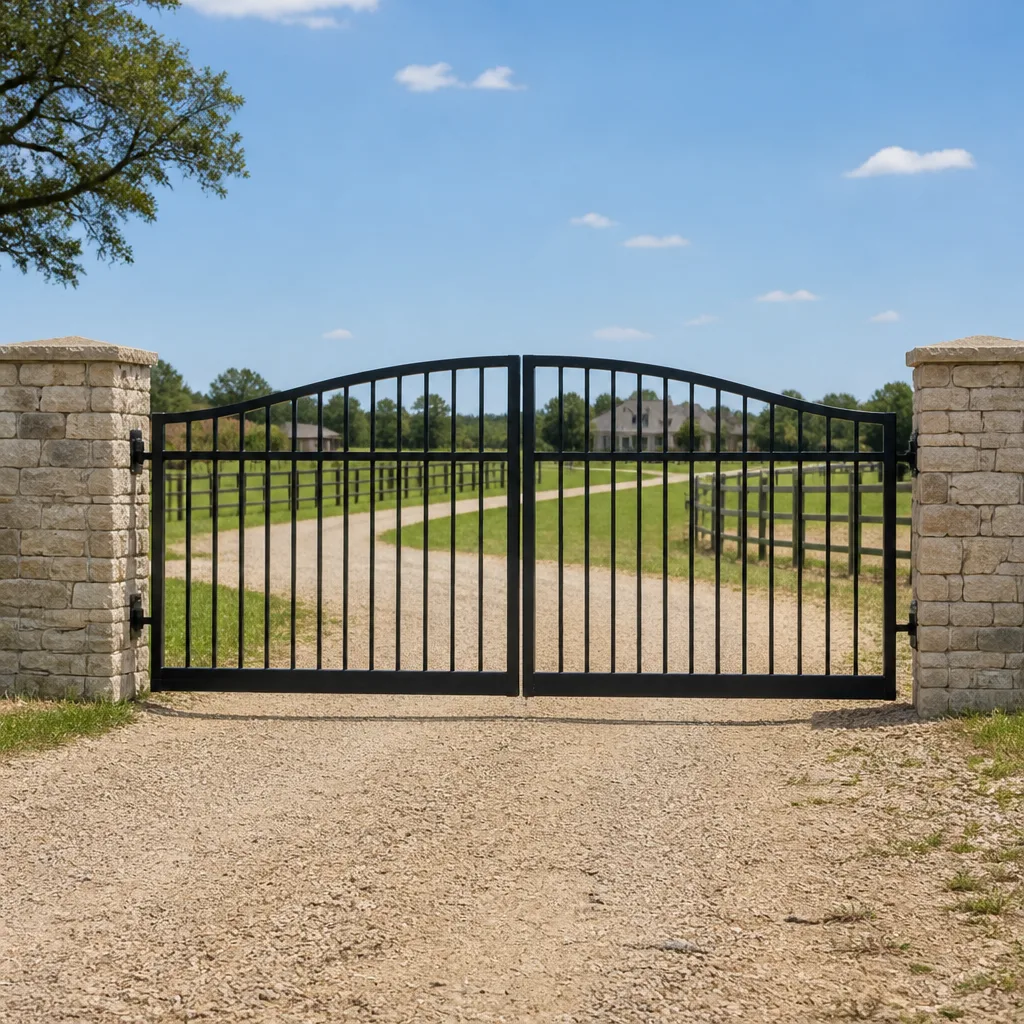 Farm & ranch
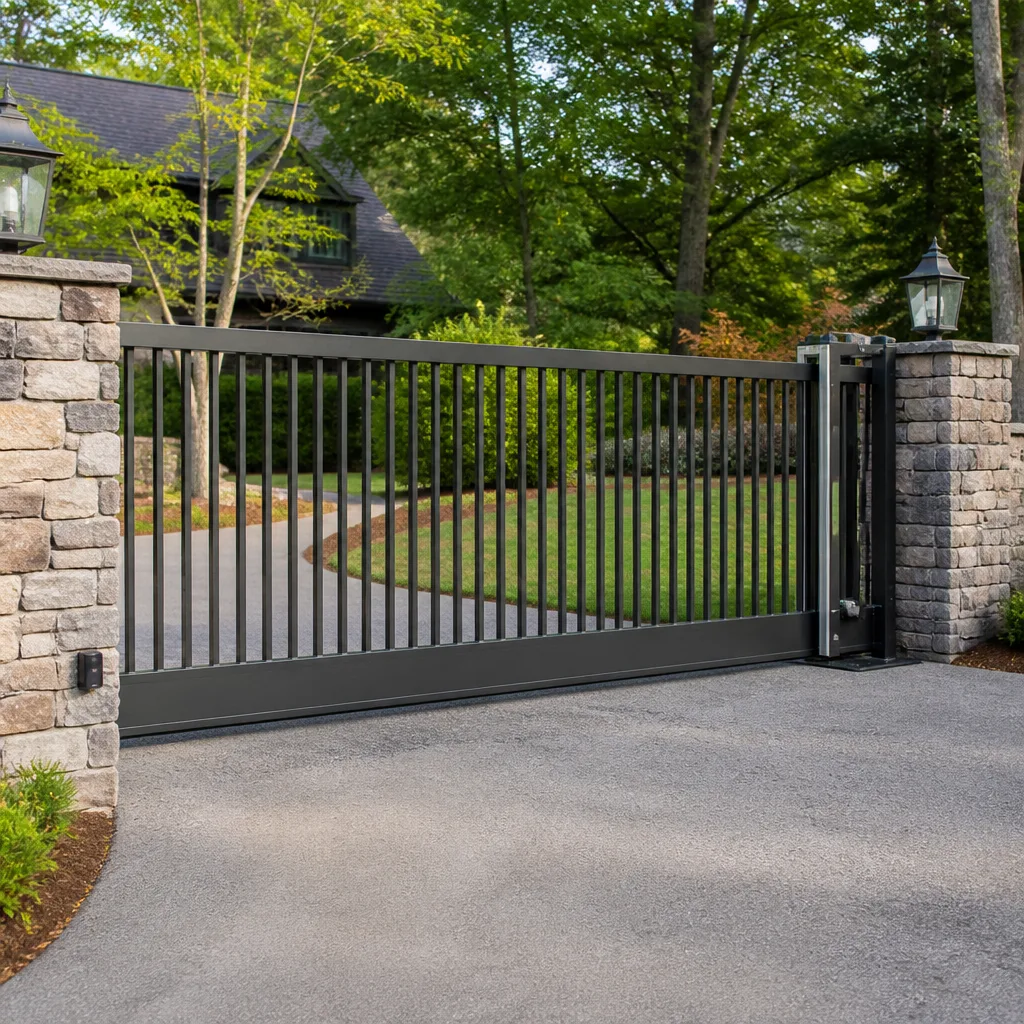 Sliding driveway gates
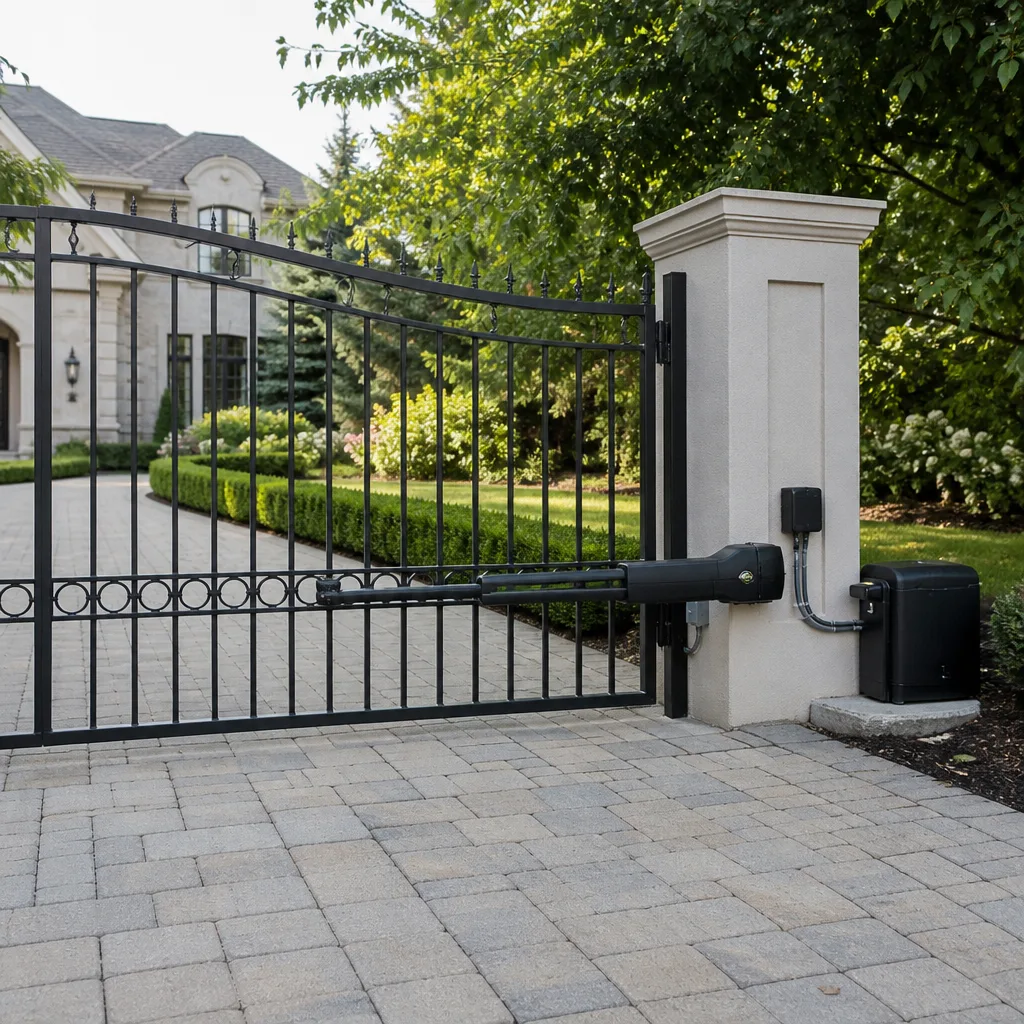 LiftMaster operators
Free on-site gate assessment - hinges, posts, and your LiftMaster or Nice gate operator checked before anything is quoted
The assessment is free and the quote is the invoice.
Get your free estimateHow to Hire a Gate Repair Contractor in Ventura: A Step-by-Step Guide
Ask a contractor which gate operator brands they stock parts for in their truck. If the answer is one or two, that contractor will be guessing on anything else, and billing you for the guessing time. Most homeowners in Ventura hire on price and availability, then discover the technician has never opened a BFT control panel or a Linear receiver. Gates are their own discipline. A garage-door company that lists gate repair as a sideline is a generalist with a clipboard. This guide walks you through the exact questions, insurance checks, and estimate-reading skills that separate a gate specialist from a generalist, so the person who shows up already knows your operator.
Quick Answer
Hire a gate repair contractor in Ventura by confirming three things before anyone comes out: that they specialize in gates rather than garage doors, that they work on your specific operator brand, and that they carry proper liability insurance and workers’ compensation. Then get a written, line-item estimate so you know exactly what you’re paying for before work starts. A specialist will answer brand questions on the phone without hesitating. A generalist will ask you to send a photo and “take a look.”
Styles & brands we work with
- Wrought iron
- Wood & steel frame
- Farm & ranch
- Sliding driveway gates
- LiftMaster operators
Table of Contents
- Why Gate Specialists Beat Generalists
- Three Phone Questions That Reveal a Specialist
- Licensing, Insurance, and UL 325 Knowledge in California
- How to Read a Gate Repair Estimate
- Why the Lowest Bid Is the Riskiest Bid
- Red Flags in Online Reviews
- A Step-by-Step Hiring Checklist
- Common Mistakes to Avoid
Why Gate Specialists Beat Generalists
A gate is not a garage door. It swings or slides, runs on a different type of operator, and uses control boards, safety loops, and in-ground or rack-mounted hardware that a garage-door technician may see only a few times a year. When a generalist shows up, the first 20 minutes are often spent reading a manual, tracing a wiring diagram, or calling someone else to ask how a particular board behaves. You pay for that learning curve.
A gate specialist walks up already knowing what a Ghost Controls board does when the safety edge trips, or how a Viking slide operator behaves when the limit switch drifts. That knowledge comes from repetition. In our experience, a technician who works on gates week after week diagnoses faster because they recognize patterns: the symptom that points to a failing receiver, the voltage reading that confirms a worn motor arm, the loop wire that looks fine until you put a meter on it.
There’s a parts angle too. A generalist orders the board, waits for delivery, comes back, and bills you for the return trip. A specialist has relationships with suppliers built around gate hardware and knows which parts fail on which systems. The Ventura Gate Repair approach is gate-only: every technician, every tool, and every diagnostic step is aimed at gates. That focus matters more in Ventura than in a city where gate systems are rare, because homes here sit on hillsides, canyon lots, and tight residential streets where a front gate is often the primary access point. When that gate stops, the property stops.
Before you call anyone, think about what your gate actually does for you. Is it a residential swing gate at the top of a driveway? A commercial slide gate at a property entrance? A manual gate with a tired latch? The answer changes which kind of contractor is right for the job, and a specialist will ask you that question before you ask them.
Three Phone Questions That Reveal a Specialist
You can separate a specialist from a generalist in about two minutes on the phone, before you book anything. Ask these three questions in order and listen to how the answers come back. A specialist answers with specifics. A generalist answers with promises.
- “Which gate operator brands do you work on regularly?” Listen for actual brand names, not “all of them.” A gate-focused company should name residential systems like Ghost Controls and Mighty Mule alongside commercial-grade equipment like FAAC, BFT, and DoorKing, because those brands sit in different worlds and require different knowledge. If the person pauses or says “we can work on anything,” they’re telling you they don’t have deep experience with any of them.
- “If my gate opens but won’t close, what would you check first?” There’s no single right answer, but there is a right kind of answer. A specialist will ask you a follow-up: does the gate reverse immediately, does it move partway and stop, is there a safety edge or photo eye involved? A generalist will say they need to come out and look. One asks diagnostic questions; the other books a service call.
- “Do you handle the safety devices and the operator board yourself, or do you sub that out?” Safety loops, photo eyes, safety edges, and control board work are gate-specific skills. A company that subs out the electrical or the board work is a middleman, and you’re paying two companies instead of one. For electrical gate troubleshooting, you want the same people who diagnose the motor to handle the safety circuit.
One more tell: ask whether they carry gate-specific parts or order them. A specialist will describe the process honestly, but they’ll do it in the language of gate systems, not generic home repair. If you want to test deeper knowledge before calling, read up on what electric gate repair actually involves. A contractor who can’t explain their own workflow is a contractor who’s still learning it on your property.
Licensing, Insurance, and UL 325 Knowledge in California
Gate work involves electrical components, heavy moving panels, and pinch points. That combination makes verification non-negotiable. Before you hire anyone in Ventura, confirm three things.
- A valid contractor license. California requires a license for construction work above a threshold, and gate installation in particular sits in territory where a license is expected. Ask for the license number and verify it yourself through the state’s contractor lookup. Don’t take a business card as proof.
- General liability insurance. Ask for a certificate of insurance showing coverage that’s active during your project. If a gate panel or operator gets damaged, or someone is injured on your property during the work, you want the contractor’s policy in the conversation, not your homeowner’s policy.
- Workers’ compensation coverage. If someone is hurt on your property and they’re not covered, the exposure can reach you. Ask directly and get it in writing.
On top of the paperwork, ask about UL 325. It’s the safety standard for automated gate operators, and it governs things like entrapment protection, safety edges, and photo-eye devices. A gate specialist should be able to talk about UL 325 without looking it up. They should understand why safety devices exist, how they’re supposed to be set up, and what happens when a homeowner or a previous installer bypassed them. If you hear “that standard isn’t really relevant” or blank silence, that’s your answer, and it belongs on the red flag list.
Permits are their own question. Most cities require a permit for new gate installation or significant electrical work, so ask your city’s building department and ask the contractor whether they pull permits. A contractor who dodges that question is a contractor who will leave you holding the compliance problem. For a fuller picture of local service, visit our Ventura page before you start calling around.
How to Read a Gate Repair Estimate
A legitimate gate repair estimate is itemized. You should see what part is being replaced, what labor is involved, and what the total is, before anyone picks up a wrench. A vague one-line estimate (“gate repair: $X”) tells you nothing and invites arguments later. Here’s how to read the difference.
Legitimate line items
- Parts, named specifically. “Linear receiver,” “safety edge,” “control board,” “motor arm.” A part listed by brand and function means the contractor knows what they’re replacing. “Gate part” means they don’t yet.
- Labor broken out or clearly bundled. One line for labor is fine; it just needs to match the work described.
- The diagnostic finding. A good estimate tells you why the part is being replaced. “Receiver not responding to remotes, confirmed with meter test” is the kind of line you want.
- Any additional work flagged separately. If the technician noticed the safety edge is also worn, it should appear as a separate item you can approve or decline, not silently folded into the total.
Charges that signal padding
- A single lump-sum number with no parts named.
- “Diagnostic fee” that turns into a new charge after the fact. The estimate should be free and the price set per job by the written estimate.
- Parts priced well above what the same part sells for, with no explanation.
- Line items that appear only after the work is finished.
The rule is simple: the price is quoted and agreed before any work starts. If a contractor won’t put it in writing, they’re asking you to trust the invoice instead of the estimate, and that’s backwards. If you’re not sure whether your gate needs a repair or a replacement, that’s a separate conversation, and it’s covered in our guide to gate repair.
Why the Lowest Bid Is the Riskiest Bid
On a gate operator, the lowest bid is often the most expensive in the long run. The reason is parts substitution. A bid that comes in well below the others usually got there by swapping a named part for a cheaper equivalent: a different control board, an off-brand receiver, a motor arm that doesn’t match the operator’s specifications. It works for a few months, then fails in a way that costs more than the original repair.
There’s a labor version of the same problem. A quote that’s suspiciously low may not include the safety devices, the wiring check, or the testing that a proper repair requires. You get a gate that opens, then find out later it opens without the safety edge working. That’s not a cheaper repair. It’s an incomplete one.
Gate operators are systems, not parts bins. The motor, the board, the safety loop, and the remote all have to talk to each other. A matched part keeps that conversation going. A substituted part breaks it. In our experience, the estimates that come in significantly below the field are the ones most likely to involve a substitute part, a missing step, or a “we’ll fix it properly next time” plan.
None of this means you should hire the highest bid. It means you should read the bid, not just the number. A middle-of-the-field estimate with named parts and a clear scope beats a low estimate with a lump sum every time. And if you’ve got two bids that are close but one has a detailed line-item breakdown, that one is telling you more about how the job will actually go.
Red Flags in Online Reviews
Reviews are useful, but only if you read them for the right signals. The goal is to spot a generalist pretending to be a specialist. These patterns give them away.
- Reviews that mention multiple unrelated services. If the same company gets praise for garage doors, gates, and “general handyman work,” their gate skills live in the margins.
- Reviews that praise the person but not the diagnosis. “Nice guy, came out fast” is friendly, but it doesn’t tell you whether the gate was fixed properly. Look for reviews that mention the specific problem and the specific outcome.
- Reviews that mention a return visit for the same problem. One return is normal. Two or three returns for the same gate means the diagnostic step was skipped.
- Reviews with no brand mentions at all. A gate specialist’s happy customers tend to name what was fixed. “They replaced the Viking board and it’s been solid since” is a specialist signal. “Gate works now” is not.
- Reviews that mention a different trade as the primary business. If the company’s main listing is garage doors and gate repair appears as a secondary category, that’s the pattern you want to avoid.
Read the negative reviews too, and read them for cause, not tone. A negative review that says “they told me the part was back-ordered and gave me a date” is a different situation than one that says “the gate failed again two weeks later.” The first is a supply reality. The second is a diagnostic failure. For a deeper dive into what a real gate repair call looks like, our Ventura Gate Repair team’s gate repair page lays out the process step by step.
A Step-by-Step Hiring Checklist
Here’s the sequence we recommend for Ventura homeowners, landlords, and property managers. Work through it in order and you’ll end up with a contractor who’s actually qualified for the job, not just available.
- Define the problem in one sentence. “The gate opens but won’t close” or “The remote only works from 20 feet.” A clear symptom leads to a faster diagnosis and a better estimate.
- Identify your operator brand. Look on the motor housing or the control box. Knowing you have a Ghost Controls, BFT, Linear, or Viking system lets you ask brand-specific questions on the phone.
- Call two or three contractors and ask the three diagnostic questions. Note who answers with specifics and who defers to a site visit.
- Verify license and insurance. Ask for the license number and a certificate of insurance. Confirm the license through the state lookup. Don’t skip this step because the contractor seems nice.
- Ask about UL 325 and safety devices. A specialist will explain what safety features your gate should have and why. A generalist will move on quickly.
- Get a written, line-item estimate. Parts named, labor broken out, diagnostic finding described. No lump sums.
- Confirm the price is agreed before work starts. If the contractor can’t say that clearly, walk away.
- Ask about the follow-up. What happens if the same problem comes back? A specialist will stand behind the diagnosis and the part.
That’s the whole process. It takes an afternoon and saves you from the cycle of hiring, paying, and re-hiring. For landlords and property managers in Ventura, run this checklist once and keep the results on file. The right contractor is worth re-using.
Common Mistakes to Avoid
- Hiring on price alone. The lowest bid is often the one with the substituted part. Read the estimate, not just the total, and remember the price is set per job by the written estimate.
- Not asking about the operator brand. A contractor who doesn’t recognize your brand on the phone is going to meet it for the first time at your gate. Ask before you book.
- Skipping the insurance check. A friendly technician with no liability coverage is a risk you’re taking on your own property. Ask for the certificate before the visit.
- Accepting a verbal estimate. “About $400” is not an estimate. It’s the start of an argument. Get it in writing, itemized.
- Ignoring the safety devices. A gate that opens and closes but has a bypassed safety edge is still broken. Ask whether the safety circuit will be tested.
- Hiring a garage-door company because the listing says “gates too.” A secondary listing is a secondary skill. Look for a company where gates are the primary business.
- Not asking about permits. New installs and significant electrical work may need a permit. Ask the contractor and your city’s building department before work begins.
See the difference
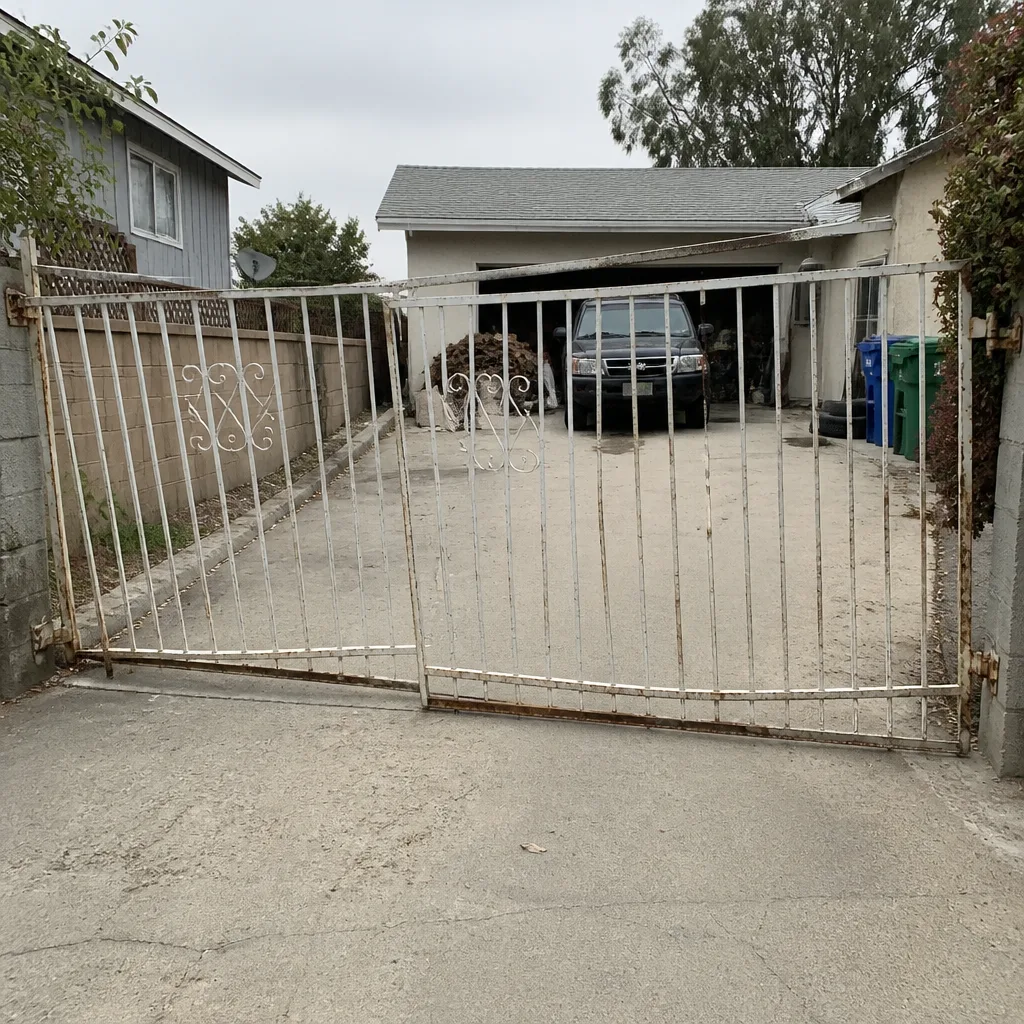 Before
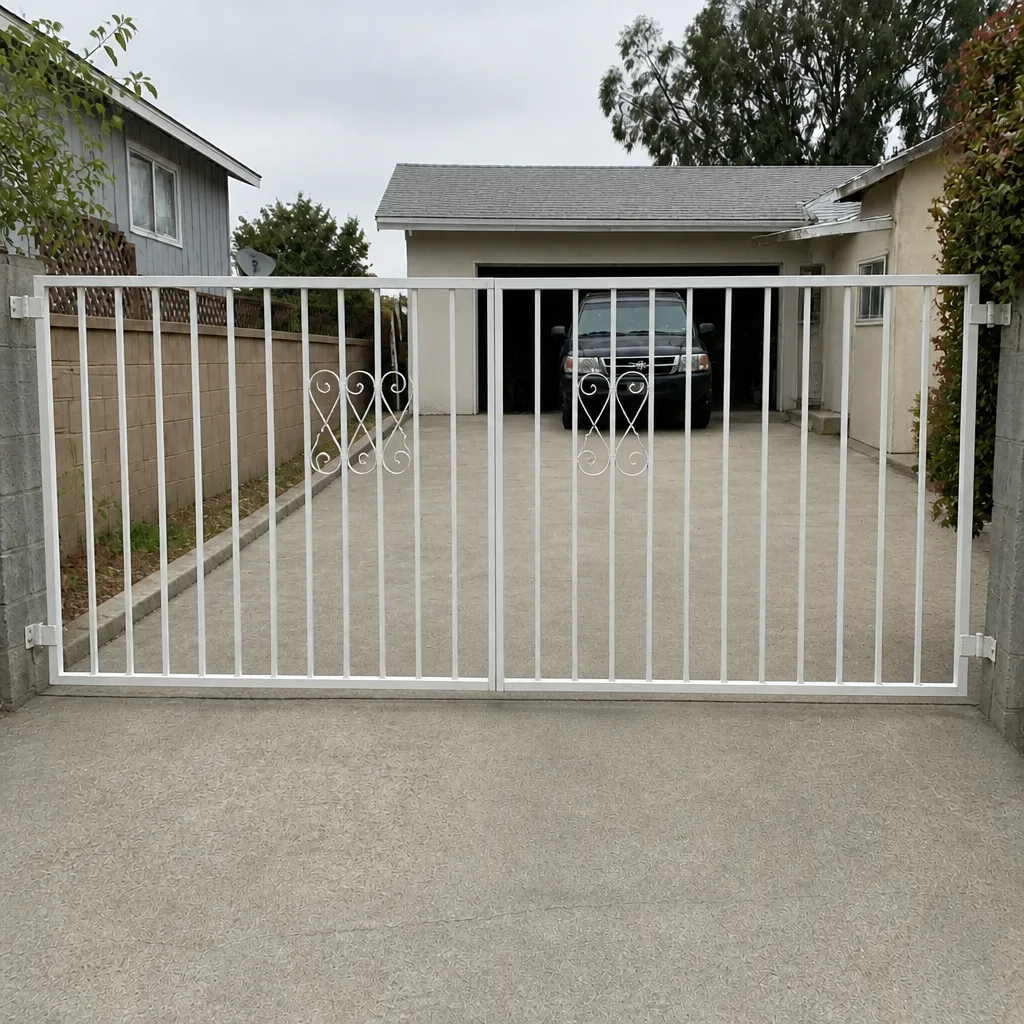 After
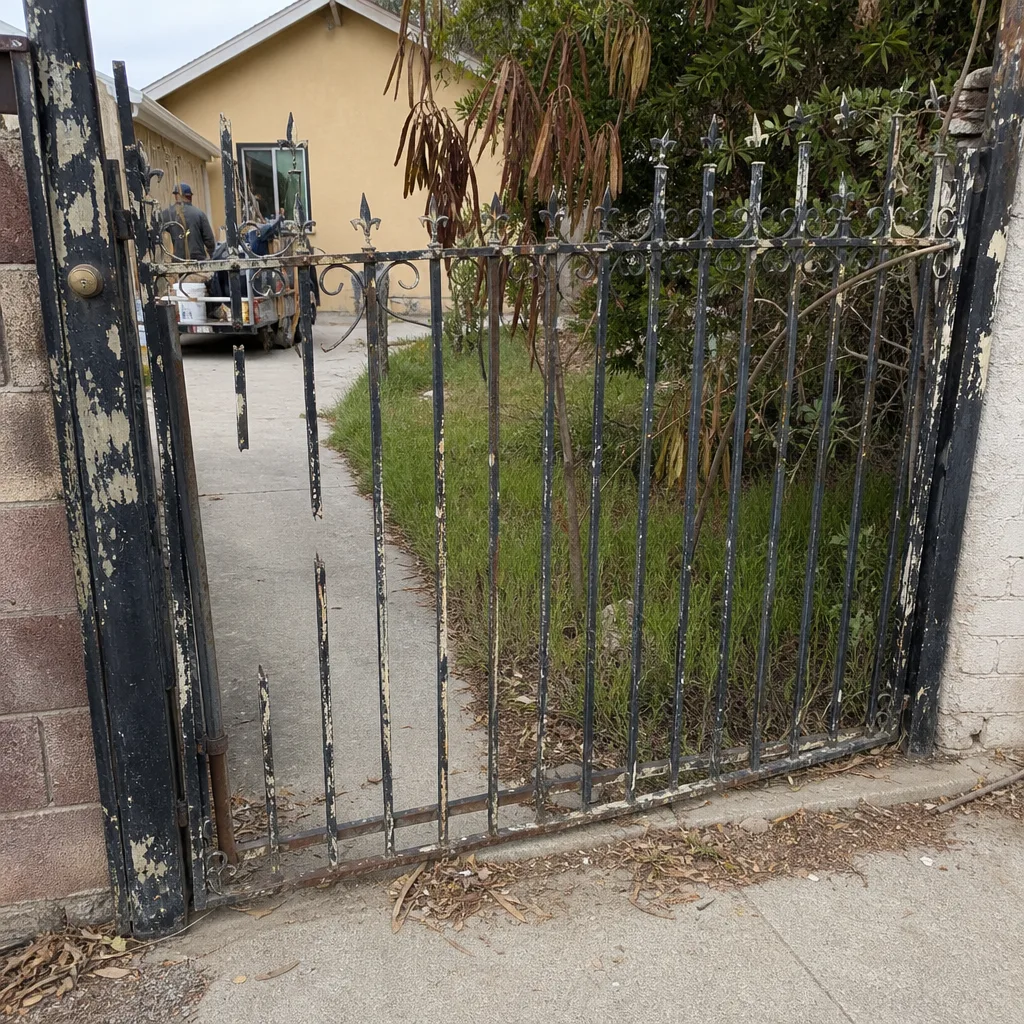
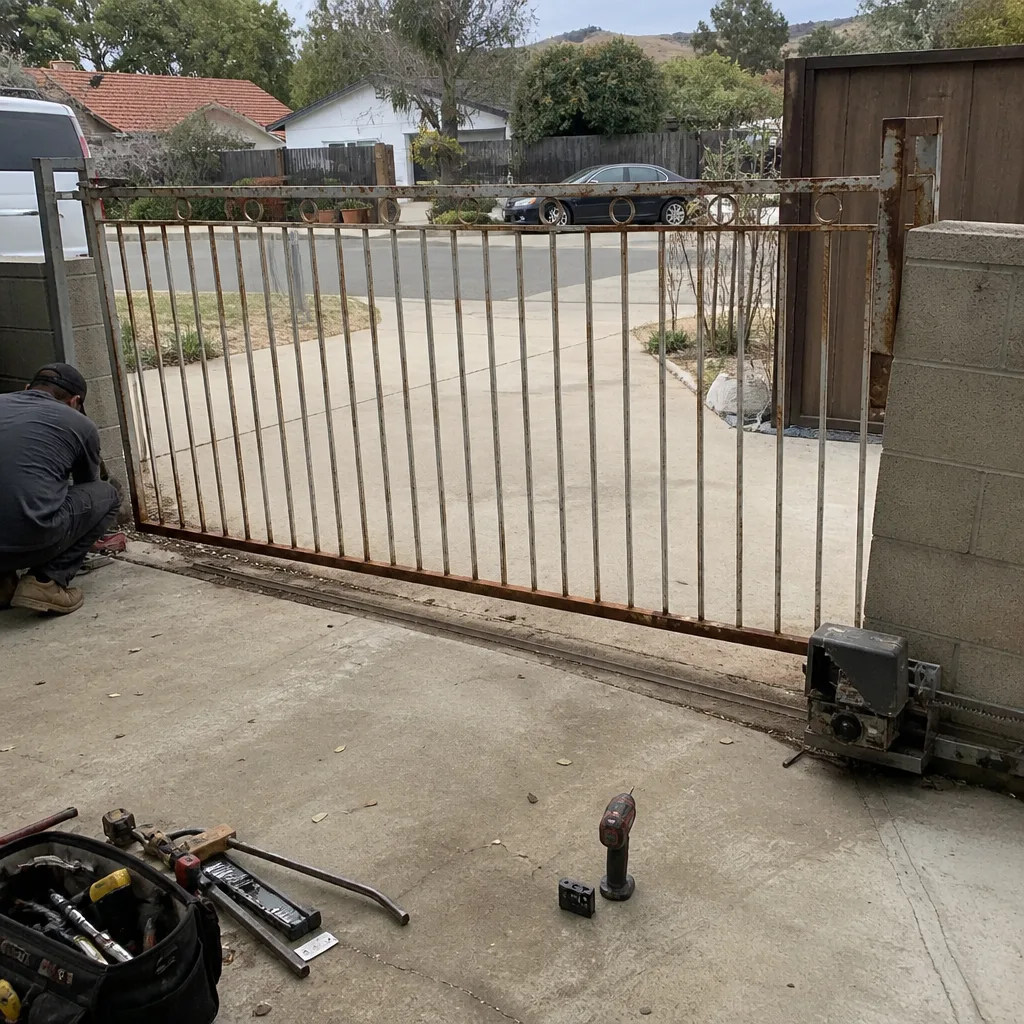 Before
 After
 Before
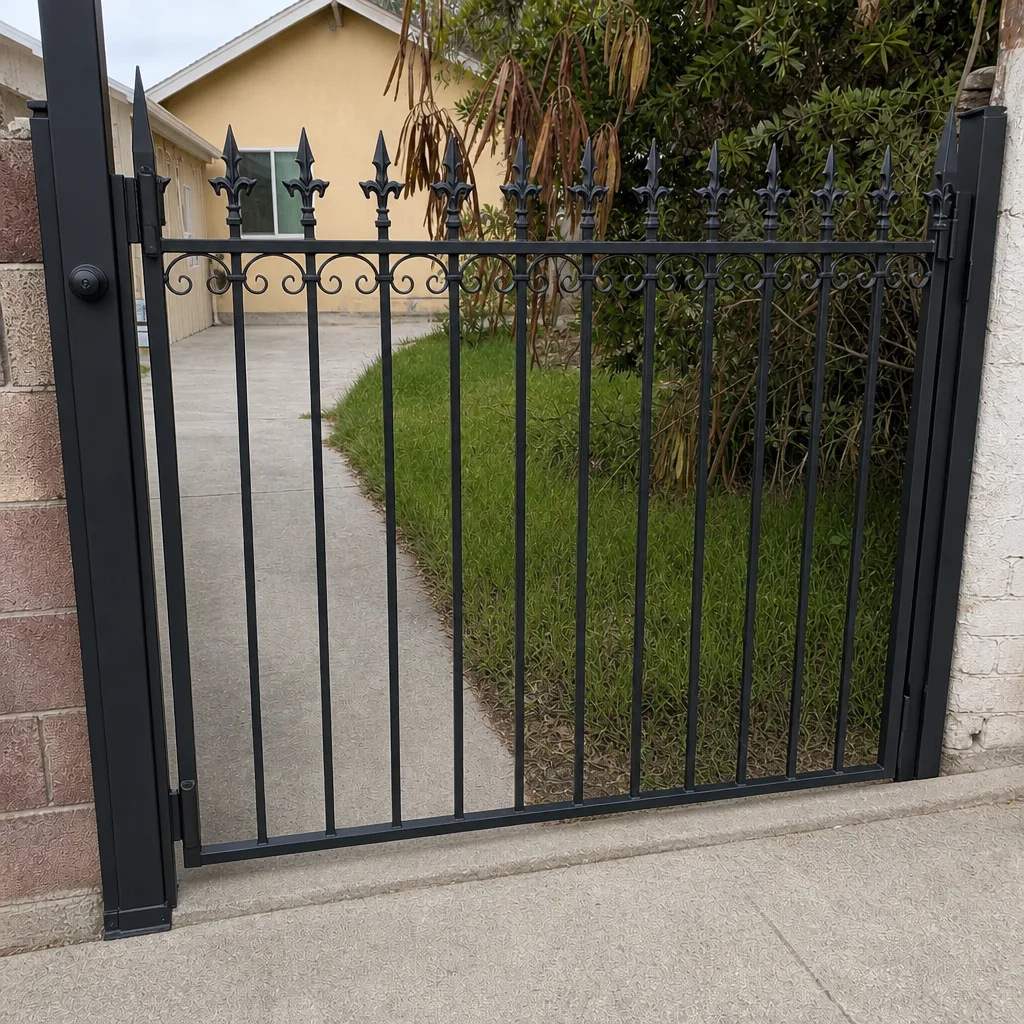 After
When to Call a Professional
Some gate problems are genuinely dangerous to touch. If a gate panel has come off its track, if a slide gate is sagging, if the operator’s wiring is exposed, or if the safety edge has failed, stop and call a professional. The heavy moving parts and the electrical components are the two things that put people in the hospital, and neither one is a homeowner fix.
Other situations where a call makes sense: the gate opens partway and stops, the remote works only intermittently, the gate reverses on its own, the operator hums but doesn’t move the gate, or the control board shows a fault you can’t identify. Any of these could be a simple fix or a sign of a failing component, and the diagnosis is where a specialist earns their keep. Ventura Gate Repair offers free estimates in Ventura. Call (833) 361-4971. We answer 24/7. Fast dispatch from 7am to 7pm, Sunday through Friday.
Frequently Asked Questions
Ask which operator brands they work on and how they’d diagnose a gate that opens but won’t close. A specialist names specific brands like Ghost Controls, BFT, or Linear and asks you diagnostic follow-up questions. A generalist offers to come out and take a look. The phone conversation usually settles it in under five minutes.
California requires a license for construction work, and gate installation and repair generally fall within that scope. Ask for the license number and verify it through the state’s contractor lookup. Also ask for a certificate of insurance covering general liability and workers’ compensation, and confirm both are active for your project.
UL 325 is the safety standard for automated gate operators, covering entrapment protection, safety edges, and photo-eye devices. A qualified gate contractor should understand it without hesitation and should be able to explain how your gate’s safety devices are supposed to work. If a contractor can’t discuss UL 325, that’s a sign they don’t work on automated gates often enough.
It depends on the age and condition of the operator, the availability of parts, and whether the failure is isolated or systemic. A single failed receiver or board is usually a repair. A motor, board, and safety circuit all failing within a short window usually points to replacement. A specialist will give you a written estimate for both paths so you can compare, and the price is quoted before any work starts.
Gate repair pricing depends on the part and the diagnosis, so the honest answer is that it varies by job. The estimate is free, and the price is set per job by the written estimate, which you approve before work starts. Call (833) 361-4971 for an exact quote.
Yes. Residential entry gates on operators like Ghost Controls and Mighty Mule and heavy-duty commercial systems like FAAC, BFT, and DoorKing are both within our scope, along with manual gate hardware. The diagnostic approach is the same; the parts and the safety requirements differ.
Call (833) 361-4971. We answer 24/7. Fast dispatch from 7am to 7pm, Sunday through Friday.
The Bottom Line
Hiring a gate repair contractor in Ventura comes down to three things: specialization, verification, and a written estimate. Specialization means the contractor works on gates as their primary trade and knows your operator brand by name. Verification means the license and insurance are real, current, and checked by you. A written estimate means the parts and labor are itemized and the price is agreed before any work starts. Skip any of the three and you’re paying for guesswork. Do all three and you’ll have a gate that works, a contractor you can call again, and no surprises on the invoice. Our technicians have up to 8 years of experience, and we work on your brand across residential and commercial systems, automated or manual.
Call (833) 361-4971 for a free estimate in Ventura. We answer 24/7. Fast dispatch from 7am to 7pm, Sunday through Friday. Whether you need a repair today or a plan for an installation, the conversation starts with a call, and the estimate comes before any work starts.
Written by the team at Ventura Gate Repair.