
Last updated November 15, 2026
 Wrought iron
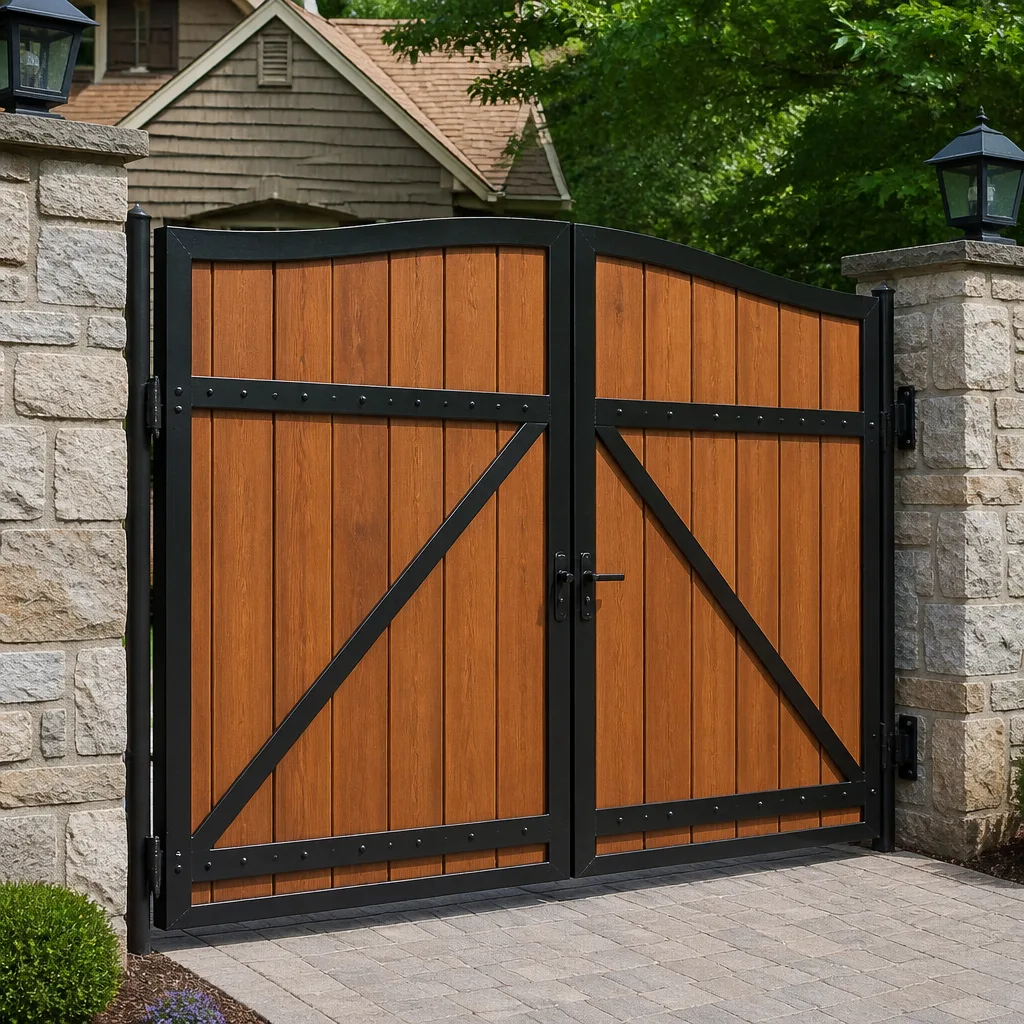 Wood & steel frame
 Farm & ranch
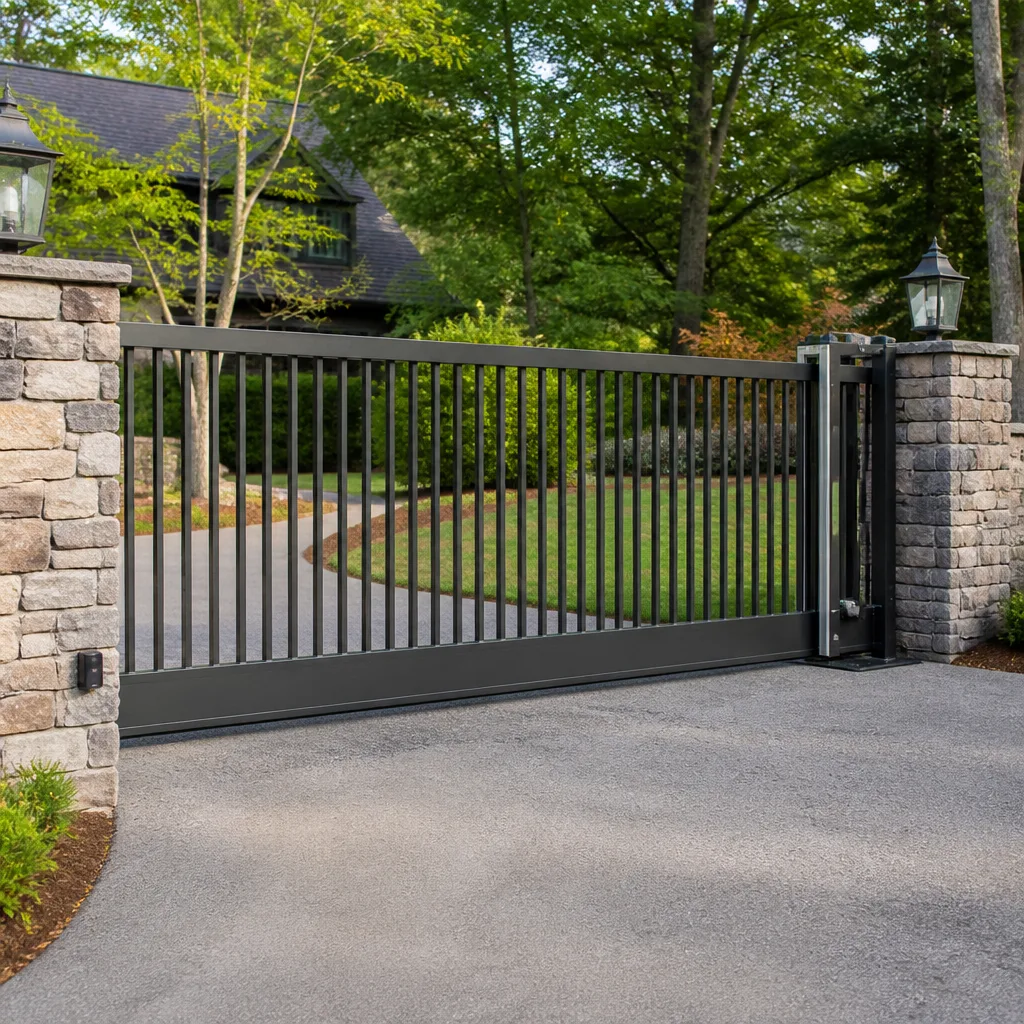 Sliding driveway gates
 LiftMaster operators
Free on-site gate assessment - hinges, posts, and your LiftMaster or Nice gate operator checked before anything is quoted
The assessment is free and the quote is the invoice.
Get your free estimateSeasonal Gate Repair Care for Ventura: Year-Round Homeowner’s Guide
October in Ventura doesn’t feel like fall. The light shifts, the evenings cool, and then the wind starts. That’s when we get the calls that should have been September inspections: a slide gate that drags and jams halfway, a swing arm that stops short of closing, an operator that clicks but won’t cycle. Santa Ana winds push debris straight into drive tracks, rollers, and hinge points, and the voltage dips that ride in with them stress control boards in ways you don’t notice until the gate quits. Most homeowners open this page because their gate is already broken. This guide is meant to be read before that happens: we’ll map every maintenance task for automated and manual gates to Ventura’s real climate calendar – the wind season, the wet season, the dry-heat stretch – so a gate specialist never has to tell you the operator failed from something you could have caught in an afternoon.
Quick Answer
Seasonal gate care in Ventura follows three real seasons, not four: a pre-wind checklist in September (August through October is peak Santa Ana season), wet-season drainage and hardware checks through the winter, and dry-heat attention to rubber, grease, and solar operators in summer. Split across a calendar, that’s about two focused inspection sessions and one or two small tasks a month. Most private entry gates used daily reward that routine with fewer stuck gates, fewer false safety reversals, and far fewer operator failures.
Styles & brands we work with
- Wrought iron
- Wood & steel frame
- Farm & ranch
- Sliding driveway gates
- LiftMaster operators
Table of Contents
- Why a National Maintenance Schedule Fails a Ventura Gate
- The September Pre-Wind Checklist
- Winter Wet-Season Tasks for Ventura Gates
- Spring: Post-Rain Hardware and Sensor Checks
- Summer Dry Heat: Rubber, Grease, and Solar Operators
- Manual Gates vs. Electric Gates: Different Calendars
- What Brand-Specific Care Looks Like
- How to Build a 12-Month Ventura Gate Calendar in One Afternoon
Why a National Maintenance Schedule Fails a Ventura Gate
Generic gate maintenance advice assumes four seasons with a hard freeze and a wet spring. Ventura doesn’t work that way. Our year runs on wind events, a wet stretch, and a long dry-heat season, and each one attacks a gate differently. Santa Ana winds drive fine grit and plant debris into slide tracks and swing-arm linkage. Winter rain brings the year’s first real moisture to hardware that’s been dry since spring. Summer bakes rubber seals, stiffens grease, and can overheat a solar-charged operator mounted in direct sun.
Here’s the practical difference. A gate scheduled on a national template might get its “spring tune-up” in April – after the wet season has already loosened hinge bolts and clogged drains. A gate scheduled for Ventura gets checked in September, before the wind season can jam a track that was already half full of grit. Same gate, same homeowner, very different failure profile.
Two truths hold for every Ventura gate:
- Wind and debris are the leading cause of avoidable repairs. A slide track with grit in it wears rollers fast, and a swing gate banging against a stop under wind load shakes bolts loose over a season.
- Water finds every gap. Rain pooled at a post base, a control box with a tired gasket, or a photo-eye sitting in a puddle will each cause intermittent faults that look electrical and are actually about drainage and mounting.
None of this is about buying more parts. It’s about timing. We work on gates across Ventura, and the maintenance questions we get are almost always the same three: what should I check, when should I check it, and what should I leave to a technician. The rest of this guide answers all three in order.
The September Pre-Wind Checklist
September is the single most valuable maintenance month for a Ventura gate. Santa Ana wind events peak in the fall, and a gate that’s clean, tight, and correctly limited going into that stretch has a far better chance of coming out the other side working. This is a homeowner-friendly inspection that you can do safely, plus a short list of items a technician should handle.
What you can check yourself:
- Clear the drive path. Sweep and blow out the full length of a slide track, both rails if your gate has them, and the roller pockets. Work on manual gates or with a powered operator switched off at the breaker – a gate that surprises you with a cycle is a hazard.
- Check the hinges and hinges’ hardware. Look for looseness, missing bolts, or a hinge that sits proud of its mount. Wobble at a hinge under wind load turns into a gate that sags within the season.
- Inspect the operator housing. Look for gaps at the cover, cracked seals, or a control box that’s lost a screw or a gasket. Ventura dust and wind-driven grit find every opening.
- Look at the photo-eyes and safety edges. Clear leaves and cobwebs away from both lenses of any safety pair and the full length of the gate edge. A dirty photo-eye is the most common cause of a gate that reverses for no apparent reason.
- Note, don’t fix, the limit switches. Mark where the gate opens and closes fully. If it stops short or over-travels, write it down – limit adjustment is a technician task.
- Test the battery backup if your operator has one. With the operator shut off at the breaker or isolated per the manual, a backup battery should carry the gate through a cycle or two. A weak battery that fails in a wind-driven outage is a gate stuck open or closed.
What to have a technician handle before the wind season:
- Verifying and resetting the open and close limit switches on the operator.
- Load-testing a battery backup and confirming the charge circuit is working.
- Checking the torque or force setting so the gate responds correctly to an obstruction without overworking the motor.
- Tightening or replacing any loose hinge, roller bracket, or anchor that you flagged.
This is exactly the kind of diagnostic work gate specialists do. If the operator has been fussy or the gate has been balking for weeks, an inspection in September is far cheaper than a repair in November. Call (833) 361-4971 to schedule a pre-wind inspection. Free estimates, and the written estimate is agreed before any work starts.
Winter Wet-Season Tasks for Ventura Gates
Ventura’s wet season is short but decisive. The first soaking rain of the year is often the moment a control board that’s been dry since spring suddenly faults, a mounting plate rusts fast, or a photo-eye sits in a puddle that shouldn’t be there. Winter care is about moisture management and catching corrosion early, not winterizing a gate for snow it will never see.
Drainage is the first task. After the first heavy rain, walk the gate line and look for standing water or saturated soil at any post base, under any operator housing, and around any buried control box or junction. A post foundation sitting in a puddle all winter will loosen and shift. Fixing drainage – regrading a slope, clearing a swale, or lifting a control box off the ground – is far cheaper than rebuilding an anchor. If standing water is chronic, it’s a job for a landscaper or a technician who can assess the gate’s footing depth.
The second task is inspection for corrosion after that first wet season. Look for:
- Rust bleeding at welds, bolts, and the base of any steel post.
- A white or green crusting on electrical terminals, junction boxes, and the operator’s wiring entry points.
- Water tracking inside a control box you can see through the cover – condensation or a failed gasket.
- Peeling or chalking paint that’s revealing bare metal underneath.
The third task is the operator itself. Wet-season intermittent faults are commonly electrical: a wiring entry point that’s taking on water, a photo-eye connector that’s corroding, or a battery backup that’s draining faster in the cold. If your electric gate repair needs have been seasonal – working all summer, flaky in the rain – that pattern points straight at a moisture or wiring problem, not a dead motor. A technician can trace it with a meter in a single visit instead of swapping parts.
A note on the wind that rides in with winter storms: a gate left partly open during a storm is a wind sail. Make sure your gate’s open and close positions are correct so it fully seats against its stops and doesn’t vibrate or drift in gusting wind. If the gate won’t seat fully, that’s a limit or alignment issue worth fixing before the next storm.
Spring: Post-Rain Hardware and Sensor Checks
Spring in Ventura is the season of consequences. Whatever the wet season loosened, swelled, or saturated shows up now: hinge bolts that have backed off, rollers that no longer turn freely, a photo-eye that’s misaligned, or a gate that’s started to drift open by itself. This is the third inspection of the year, and it’s the one that catches the small things before summer heat compounds them.
Work through the following in order:
- Re-check every hinge and roller. A roller that won’t spin or a hinge with movement in its mount is a wear item that’s about to fail. On a slide gate, test that the gate rolls freely by hand (with the operator isolated) – if it takes effort, the track, rollers, or alignment need attention.
- Inspect the gate hardware that takes the most load. Latch plates, stops, and the arm or linkage on a swing gate all carry stress through the wet season. Look for bends, cracks, and missing fasteners.
- Check vegetation encroachment. Spring growth is fast. Vines and shrubs can reach through a gate’s swing path, clog a slide track, or grow into a photo-eye’s line of sight. Trim back hard and keep a clear zone around both the gate’s travel and any safety sensors.
- Confirm the solar panel is still doing its job. If your operator runs on solar, look for shading from spring growth across the panel and check for a film of dust or pollen. Even a partly shaded panel can drop the charge enough to stress the battery in a long summer.
- Clear the sensor paths. Make sure leaves, spider webs, and debris aren’t blocking any safety beam or edge sensor that runs the gate’s reversal logic.
- Test the gate under load. Cycle the gate several times with the operator and watch that it starts, stops, and reverses smoothly. Any chatter, hesitation, or slowdown is a signal, not a quirk.
If you notice the operator surging, the gate reversing for no reason, or the motor running hot, stop and call. Cycling a gate that’s binding wears the motor and the gearbox – two of the more expensive parts on the system. A gate repair call in spring is the moment to correct alignment, limits, and hardware before the dry season arrives.
Summer Dry Heat: Rubber, Grease, and Solar Operators
Ventura summers are long, dry, and sunny. For a gate, that means rubber components age faster than the rest of the system, grease thickens and can stop doing its job, and any operator in direct sun runs hotter. This is the season when small material failures show up as a gate that’s suddenly noisy or slow.
Rubber and elastomer parts are the first to feel the heat:
- Safety edge and bumper rubber. Check for cracking, hardening, or a safety edge that no longer squishes and springs back. A hardened edge can fail to register contact.
- Operator housing seals and gaskets. Sun and heat dry them out. A cracked cover gasket is how a control board gets a surprise in the first fall rain.
- Tire-style rollers on slide gates. Rubber rollers harden and can flat-spot or crack in sustained heat. Hardened rollers rumble and wear the track.
- Remote and keypad battery contacts. Heat cycling is hard on battery terminals; a keypad that goes flaky in August often needs nothing more than a fresh battery.
Grease and lubricant viscosity change with temperature. A heavy grease that’s right for a cooler climate can stiffen and drag in a Ventura heat wave; a light grease can run off in the heat. The right answer is the lubricant the operator’s manufacturer specifies, applied to the right points (hinges, rollers, and pivot points on a manual gate, and whatever the manual calls out for the operator). Never grease a track – it collects grit. Keep the track dry and clean; use dry silicone on the rollers if the manufacturer allows it.
Solar operators are especially sensitive to summer. A panel in direct sun runs hot, and a panel that’s dusty or partly shaded can’t keep up, which means the battery works harder. Keep the panel clean, free of shading, and confirm the operator is reaching and holding a full charge. If a solar operator starts stalling or running slow in July and August, the panel and battery are the first places to look, not the motor.
Finally, watch for the indirect effects of heat: gate posts on the sunny side expand, hinge clearances change, and a gate that was perfectly aligned in May can start to drag in August. If the gate suddenly rubs or won’t seat, an alignment check is in order. Call (833) 361-4971 for a summer adjustment before a small drag becomes a bent roller.
Manual Gates vs. Electric Gates: Different Calendars
Not every Ventura gate has a motor, and the seasonal work for a manual gate is different from an automated one. Both benefit from wind, moisture, and heat care, but the inspection focus shifts. Getting the distinction right keeps you from overworking one gate and under-maintaining the other.
For manual gates, the calendar leans on mechanical hardware and swing:
- Hinges and pivots take the season’s biggest beating. Check for play, sag, and a gate that no longer sits square in its frame. A sagging gate grinds its latch and swings heavy.
- Latch and lock hardware loosen with use and vibrate loose under wind. A latch that’s misaligned is a security issue as much as a nuisance.
- Wheels and tracks on a manual slide gate need the same grit clearing as a powered one. Manual tracks are often neglected because there’s no motor whine to remind you to look.
- Paint and finish protect the gate through the wet season. Touch up bare metal in early fall so winter rain doesn’t get a foothold.
For electric gates and operators, the calendar adds the electrical and control side:
- Safety devices – photo-eyes and safety edges – need verification every season. These are the parts that protect people and vehicles and should never be assumed working.
- Battery backup and charging circuit deserve a load test before wind season and a charge check in summer heat.
- Control boards and wiring are the parts that fail from moisture and voltage swings, so wet-season inspections should focus here.
- Limit switches and force settings drift with temperature and wear; a technician should verify them each season, especially in spring and fall.
A specialist’s eye makes the difference on electric systems. Between Ventura Gate Repair and the wide range of operators we see across the county, we can tell from the gate’s behavior whether an issue is a limit, a sensor, a battery, or a board – quickly, without guessing. If you’re not sure which category your gate falls into, start by checking its manual, or call (833) 361-4971 and describe what the gate is doing.
What Brand-Specific Care Looks Like
Gate operators are not interchangeable, and the seasonal care tasks shift a little with the brand. We work with nine of the industry’s leading brands, and we’ve built the routines below around the ones homeowners and property managers ask about most. Our technicians have up to 8 years of experience across residential, commercial, and HOA-grade systems.
FAAC and BFT. These are common heavy-duty brands for commercial and HOA gates. The seasonal focus here is on the control board environment – keeping the housing sealed through the wet season – and on the mechanical linkage that takes heavy load. FAAC and BFT operators are built to work hard, which makes limit and force checks in the fall especially worthwhile.
Linear. Common on residential driveways. Linear operators reward consistent limit verification and a clean track. Cleaning the slide track before wind season and confirming the reverse sensitivity in spring prevents most false reversals we get called about.
Viking. A residential and light commercial operator with a strong reputation for reliability. The main seasonal tasks are battery backup load testing in fall and keeping the housing clear of debris. Viking operators do well with a clean, aligned gate – so most of their seasonal care is really the gate’s care.
For those of you with Ghost Controls or Mighty Mule on a residential entry gate, or DoorKing on a commercial access control job, the same logic applies: clean tracks, sound hinges, working safety devices, and a healthy battery. The specifics – which fasteners to check, which lubricant to use, which sensor to clean – come from the manual, and we keep those familiar. That familiarity is what lets us diagnose a fault quickly instead of starting from a manual on the job.
If you’re not sure which operator you have, look for the label inside or under the motor housing. Once you know the brand and model, we can tell you the right care routine and whether a repair is a do-it-twice chore or a one-visit fix.
How to Build a 12-Month Ventura Gate Calendar in One Afternoon
You don’t need an app to run this. You need one page and about an hour. Here’s the framework we recommend to anyone who wants a gate that works through every season.
- Write down your gate’s details. Note whether it’s manual or electric, slide or swing, the operator brand if automated, and whether it has a battery backup or solar panel. Then note its access – is it ever used when nobody’s home, or does it need to be working at a set time?
- Mark September as your pre-wind month. That’s your full inspection: clear tracks, tighten hardware, verify limits, test battery backup, clean sensors. Schedule it as a project, not a maybe.
- Mark the first heavy rain of the wet season as a check-in. After it passes, look for standing water, corrosion, and electrical entry points taking on moisture.
- Mark spring (March into April) for post-rain hardware and vegetation. Check hinges, rollers, sensors, and the solar panel. Confirm the gate travels freely by hand.
- Mark midsummer for heat care. Inspect rubber components, check the operator’s housing seals, look at the solar panel and battery, and note any new noise or drag.
- Add a monthly five-minute walk-by. Same day each month, walk the gate line and look for anything new: a wobble, a noise, a slow start, a stuck sensor. Write it down.
- Color the calendar the same as you would a car’s service book. Green for routine checks, yellow for “check with a technician,” red for “stop using the gate.” Red means call before the next cycle.
That’s a full year of care organized in an afternoon. It’s specific to Ventura’s climate because the calendar is timed to wind season, first rain, and summer heat, not to a generic spring and fall. And it gives you a list of small issues that a technician can address in one visit instead of a list of small issues that turned into a broken operator.
Common Mistakes to Avoid
- Waiting for the gate to fail before scheduling maintenance. A gate that works now is not a gate that will work through wind season. Inspect in September, not November.
- Greasing a slide track. Grease traps grit and turns the track into a grinding paste. Keep the track clean and dry; follow the manufacturer for roller lubrication.
- Ignoring the first wet-season rain. Standing water at a post base and water at a control box entry point are seasonal warning signs, and the first rain is the best moment to look.
- Pressing buttons (remotes, keypads) without checking the gate’s physical condition. A binding gate on a working operator is a motor working against a stuck gate – which wears out both.
- Assuming a flaky electric gate needs a new board. A wet-season intermittent is often a wiring, sensor, drainage, or limit issue, all of which a technician can diagnose with a meter.
- Overlooking manual gates because there’s no motor to complain. Manual gates need hinge, latch, wheel, and finish checks every season too.
- Skipping the safety device check. Photo-eyes and safety edges protect people and cars. Testing them is a two-minute task that should happen every season, especially after wind.
See the difference
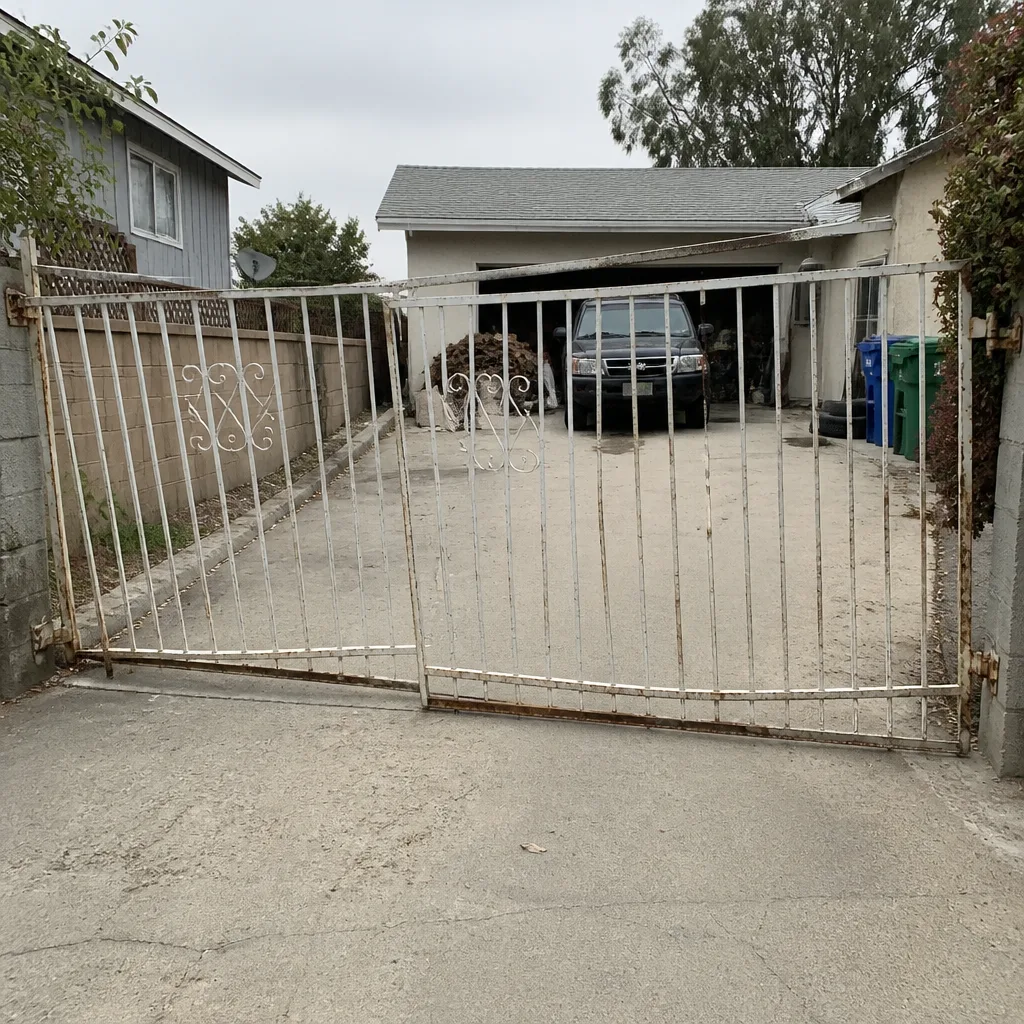 Before
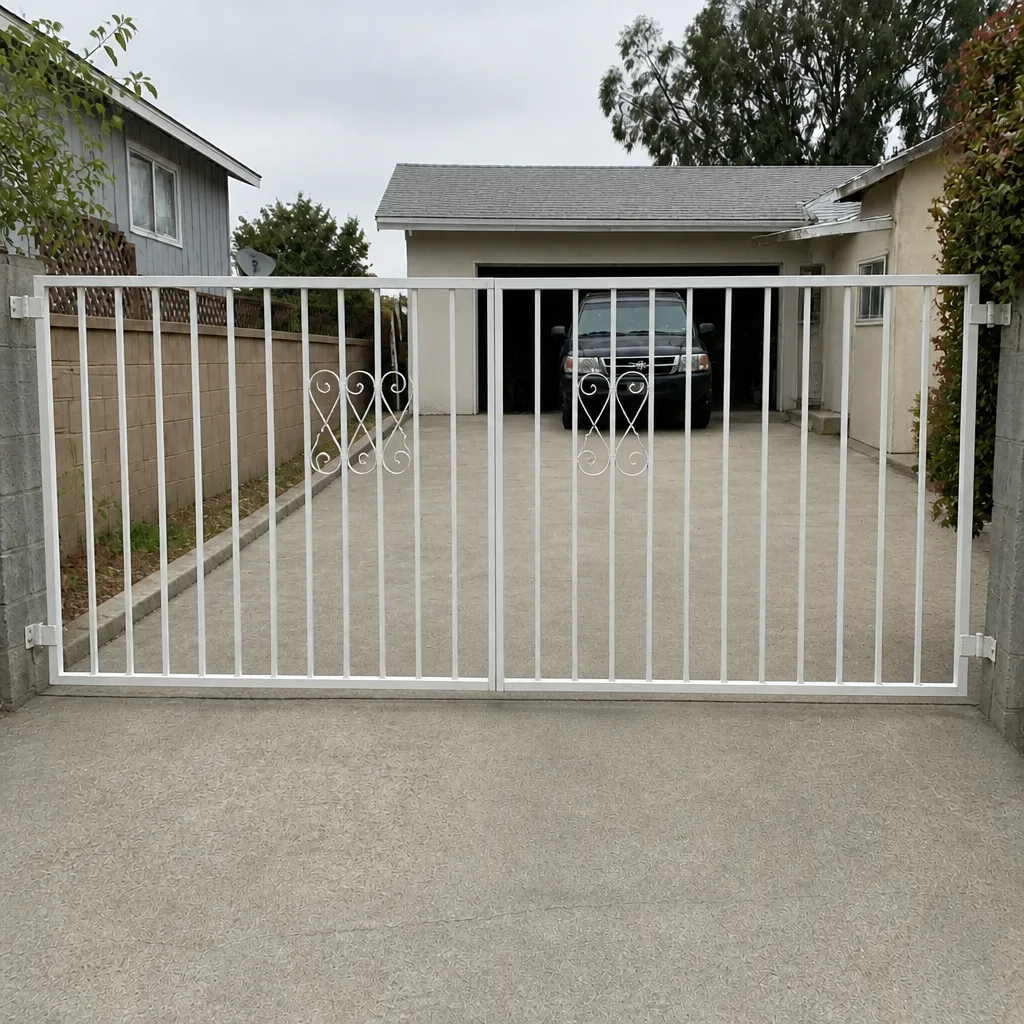 After
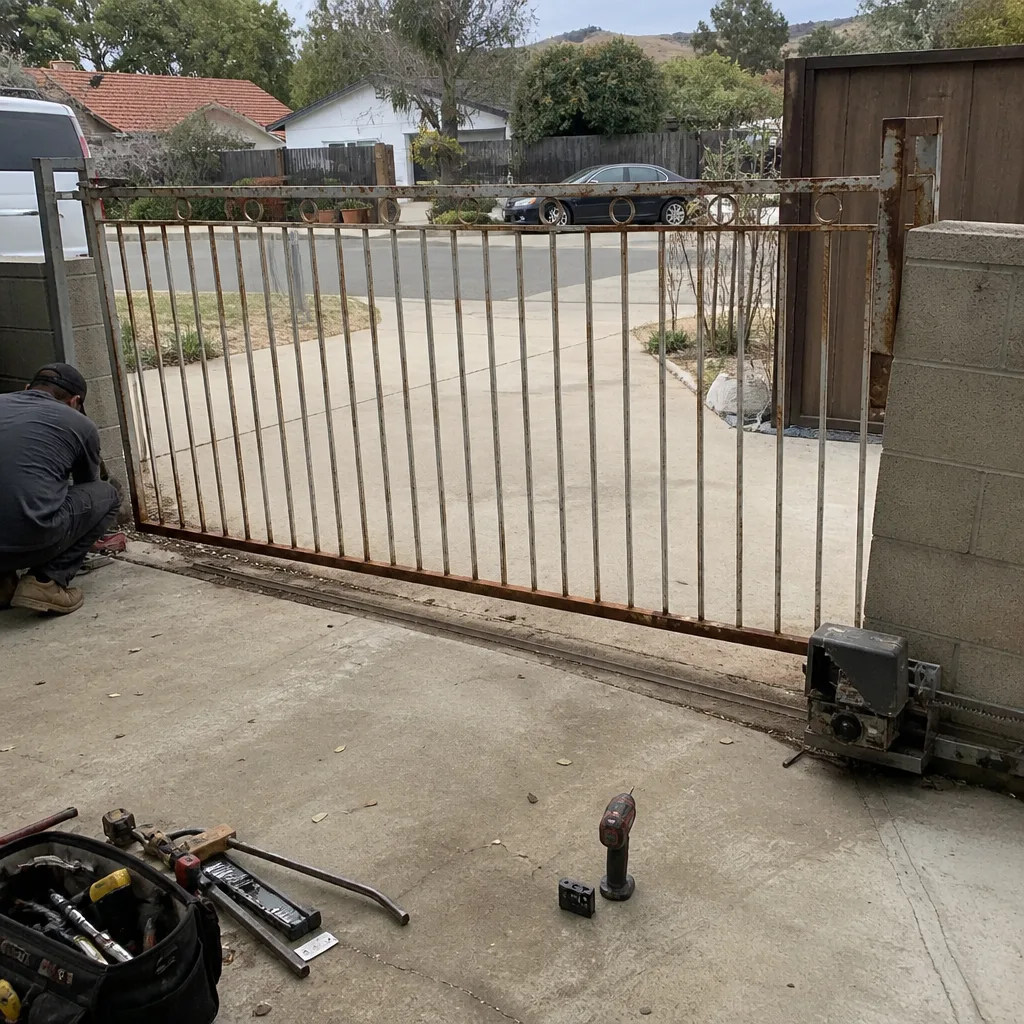 Before
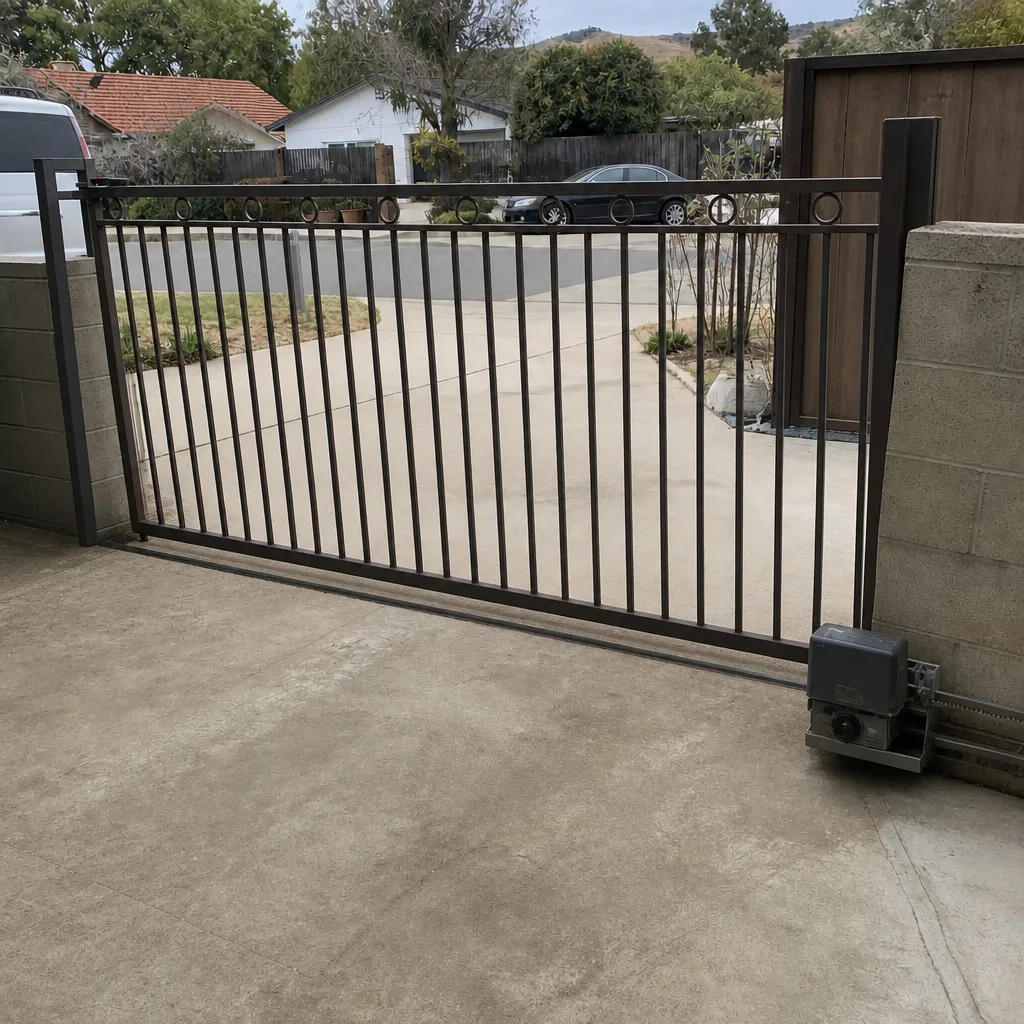 After
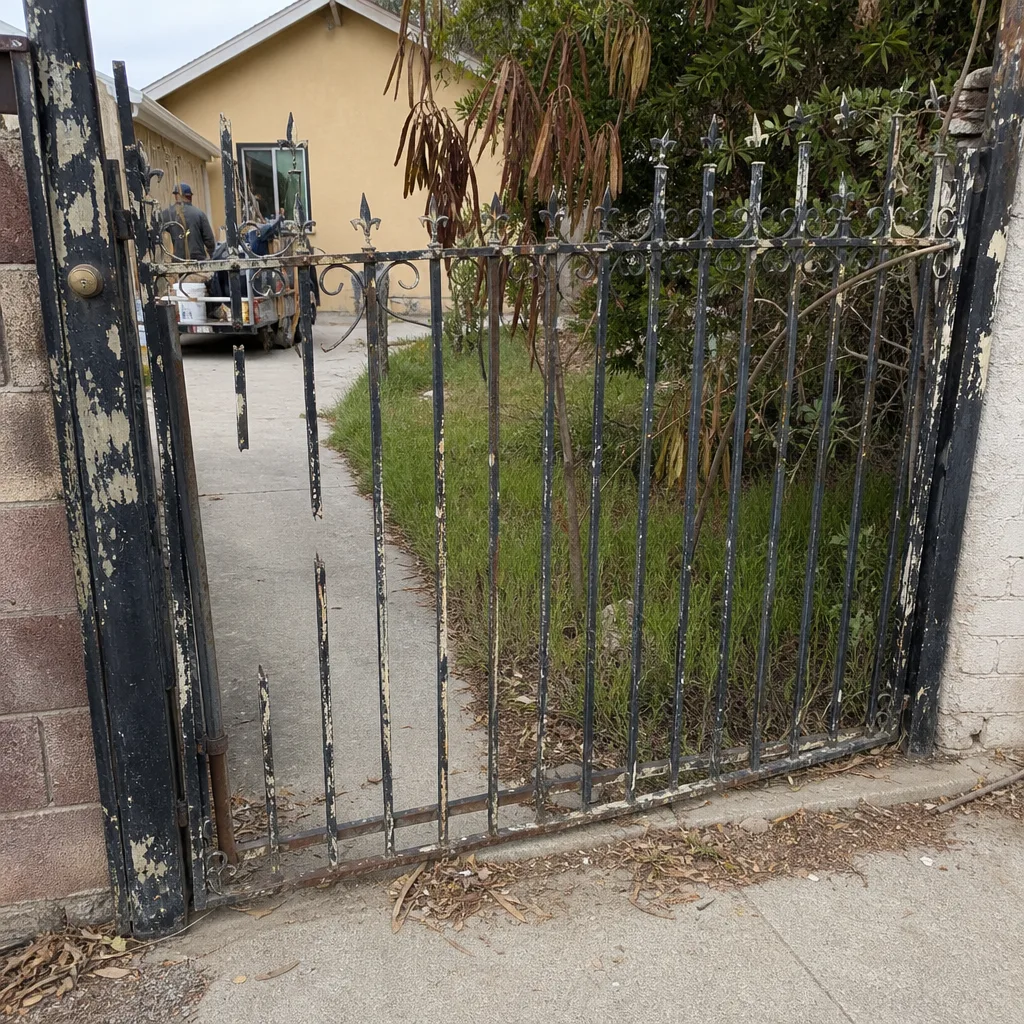 Before
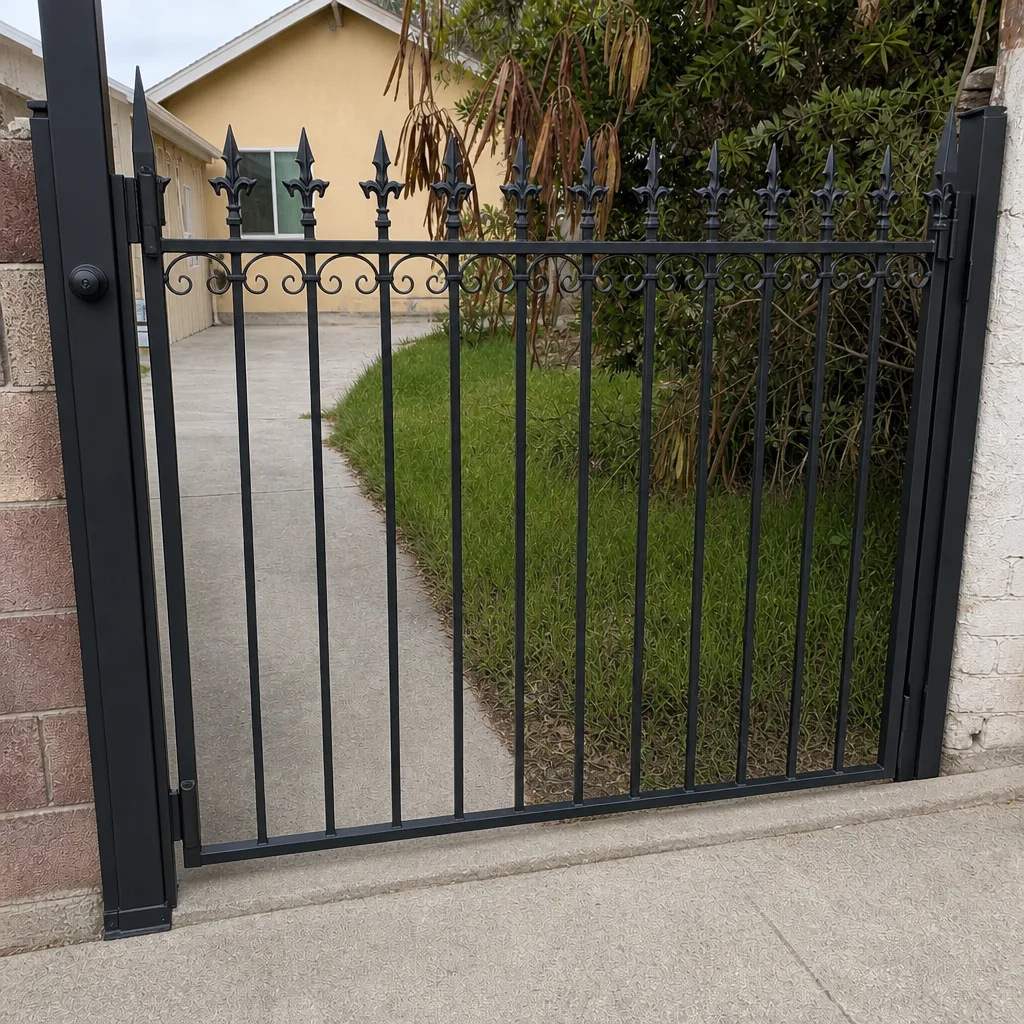 After
When to Call a Professional
Some gate tasks are homeowner checks. A few are not worth risking. Call a gate specialist when:
- The operator’s controls are involved – limit switches, control boards, force and reverse settings, or anything behind the motor housing cover.
- The gate is binding, dragging, or stopping short and you can’t find an obvious cause like a clean track or debris.
- A safety device isn’t working – a photo-eye that won’t register, a safety edge that’s failed, or a gate that won’t reverse on obstruction.
- The gate’s anchor or posts are loose or shifted, or standing water is pooling at a foundation.
- The gate is a commercial or HOA gate where downtime or a safety failure affects more than one household.
- Your gate has been flaky for weeks – the seasonal calendar is a maintenance tool, not a way to nurse a known fault.
Ventura Gate Repair offers free estimates in Ventura – call (833) 361-4971. We answer 24/7. Fast dispatch from 7am to 7pm, Sunday through Friday. The estimate is written and agreed before any work starts.
Frequently Asked Questions
Aim for two full inspections a year – one in September before Santa Ana season and one in spring after the wet season – plus a quick glance every month. Two thorough checks catch the seasonal changes that wind, rain, and heat put on the gate, and the monthly glance catches anything that’s new or getting worse between them.
Clear the slide track or swing path of debris and check that both photo-eyes are clean. Wind-driven grit in a track and a leaf-obscured sensor cause more outages than anything else we see in the fall. After that, test the battery backup and have a technician verify the limit switches before the wind gets here. Call (833) 361-4971 if you’d like a pre-wind inspection.
A gate that only faults in wet weather usually has a moisture problem at a wiring entry, a control box, a photo-eye connector, or a battery backup, not a failed motor. The rainy season is dry-season neglect showing up, so the fix is tracing that moisture path with a meter and sealing or correcting it. It’s a common and solvable diagnostic, and worth a technician visit in the wet season.
Yes – a solar operator’s battery and panel need extra attention. Spring is when you clear the panel of shading and dust, and summer is when you confirm the panel is charging properly in the heat. If a solar gate starts stalling in the dry season, check the panel and battery before assuming the motor is at fault. Call (833) 361-4971 if the charge is still low after a clean panel.
No, and we’d recommend against trying. Limit switch adjustment interacts with the operator’s force and reversing settings, and a wrong setting can let a powerful motor drive a gate into a hard stop or fail to reverse on obstruction. Limit, force, and control-board work should be done by a gate technician. Everything else on the inspection lists here – tracks, hinges, sensors, panels, rubber parts – is safe for a careful homeowner to check.
Not a different schedule, but more of it. Commercial and HOA gates cycle far more than a home driveway gate, so the same September and spring checks should happen more often, and the load-carrying hardware deserves closer inspection at every cycle. If a commercial gate is showing drag or a slow cycle in Ventura, call (833) 361-4971 to schedule a check. Free estimates.
The Bottom Line
Ventura’s gate care runs on wind, rain, and dry heat, not on four seasons. Put a September pre-wind checklist in place, watch the first heavy rain for drainage and moisture faults, check hardware in spring, and give rubber, grease, and the solar panel attention in summer. Manual gates and electric gates need the same three seasons of care, with different parts in focus. Do that, and the catastrophic failures mostly don’t happen – and when a gate does break, you’ll know it early enough to have a specialist fix it on a schedule rather than on a panic. If you’re not sure where your gate stands, a free estimate is the fastest way to find out.
Call (833) 361-4971. We answer 24/7. Fast dispatch from 7am to 7pm, Sunday through Friday.
Written by the team at Ventura Gate Repair.