
Last updated November 15, 2026
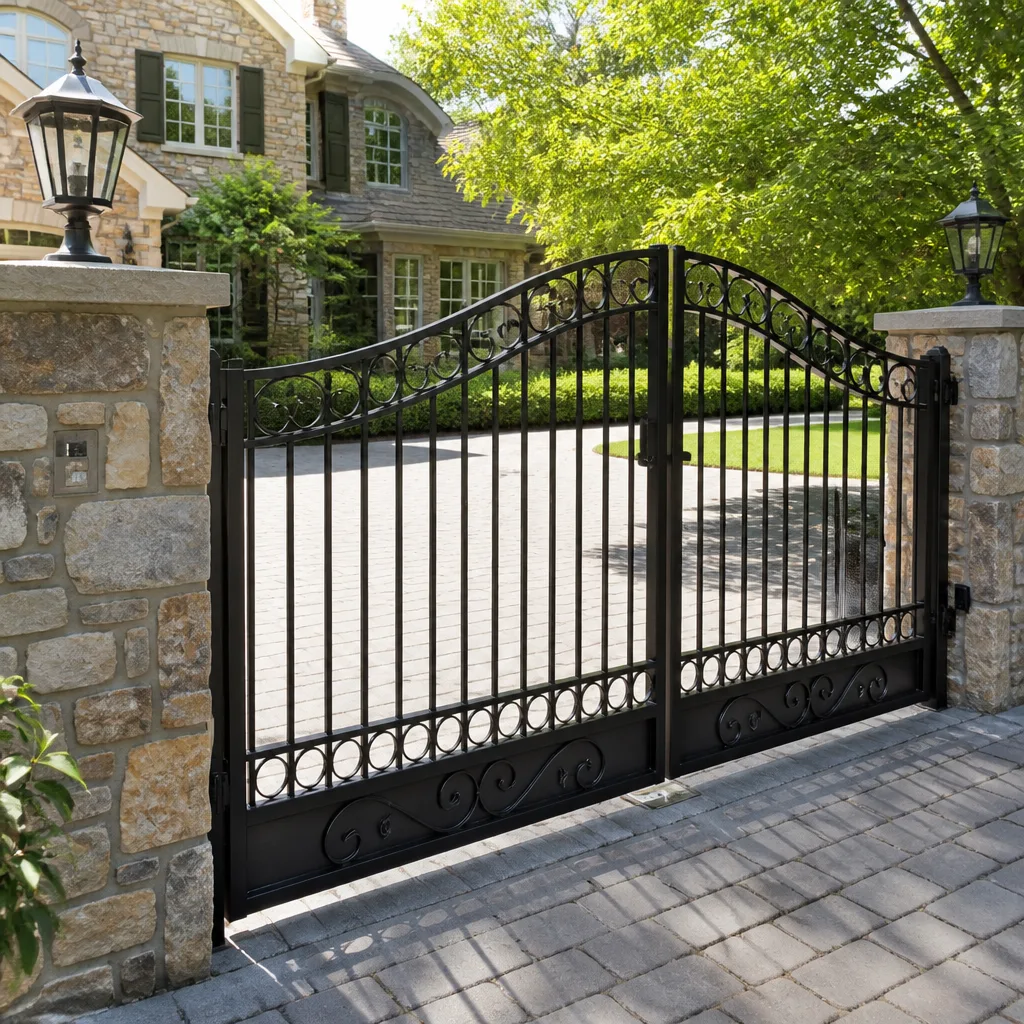 Wrought iron
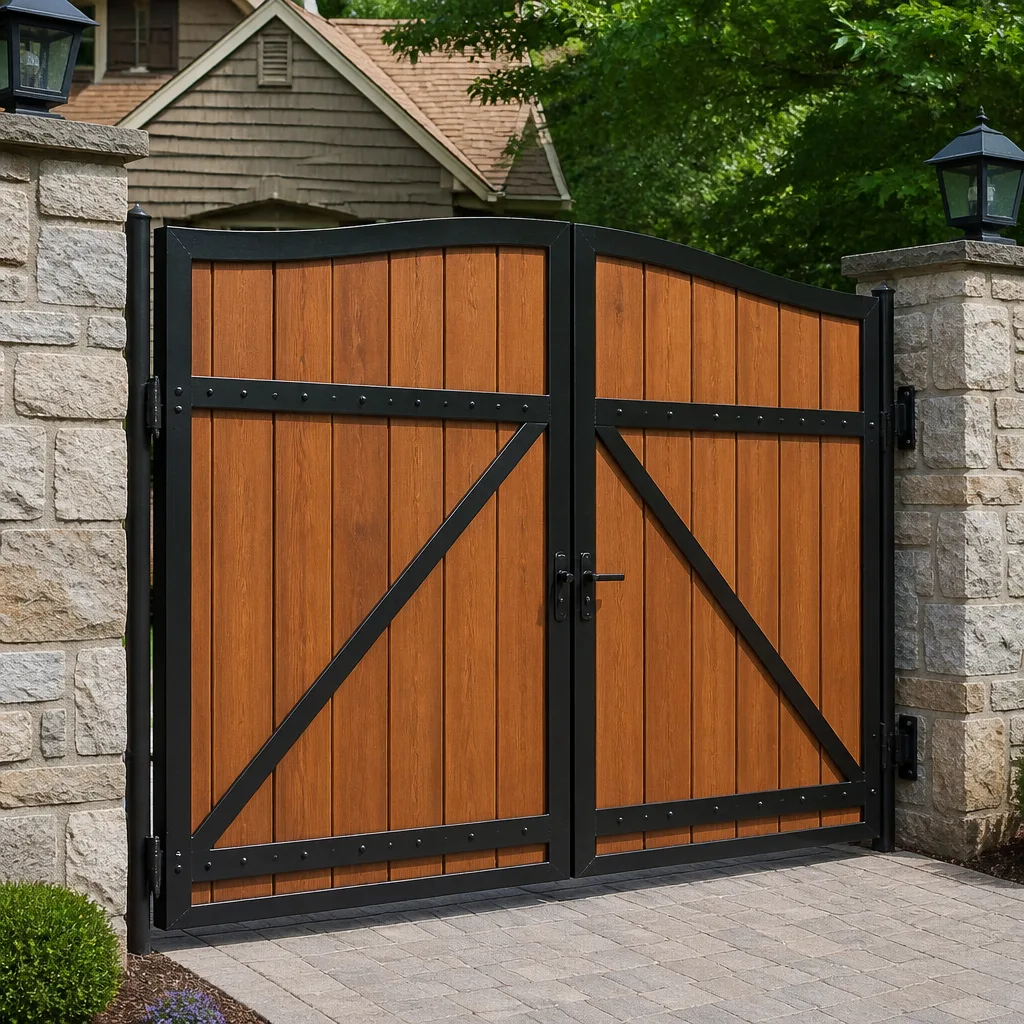 Wood & steel frame
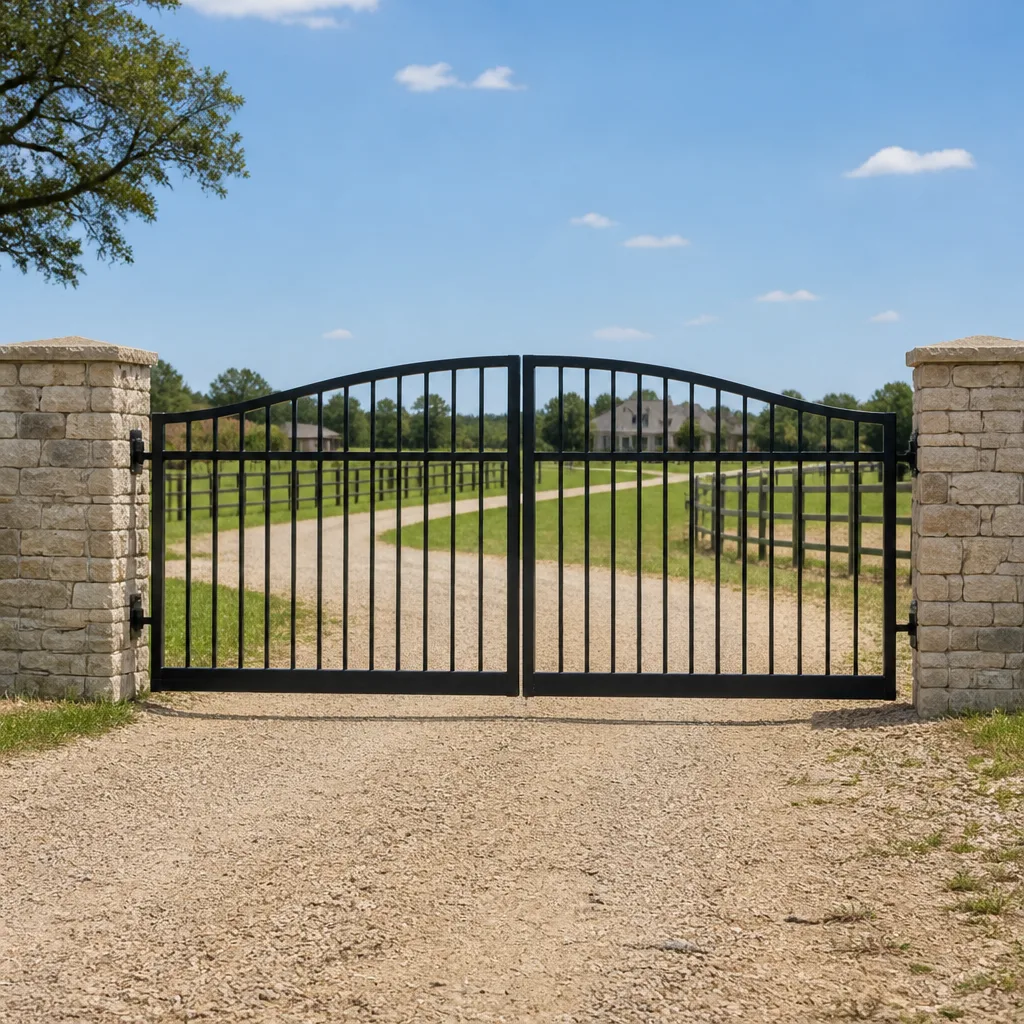 Farm & ranch
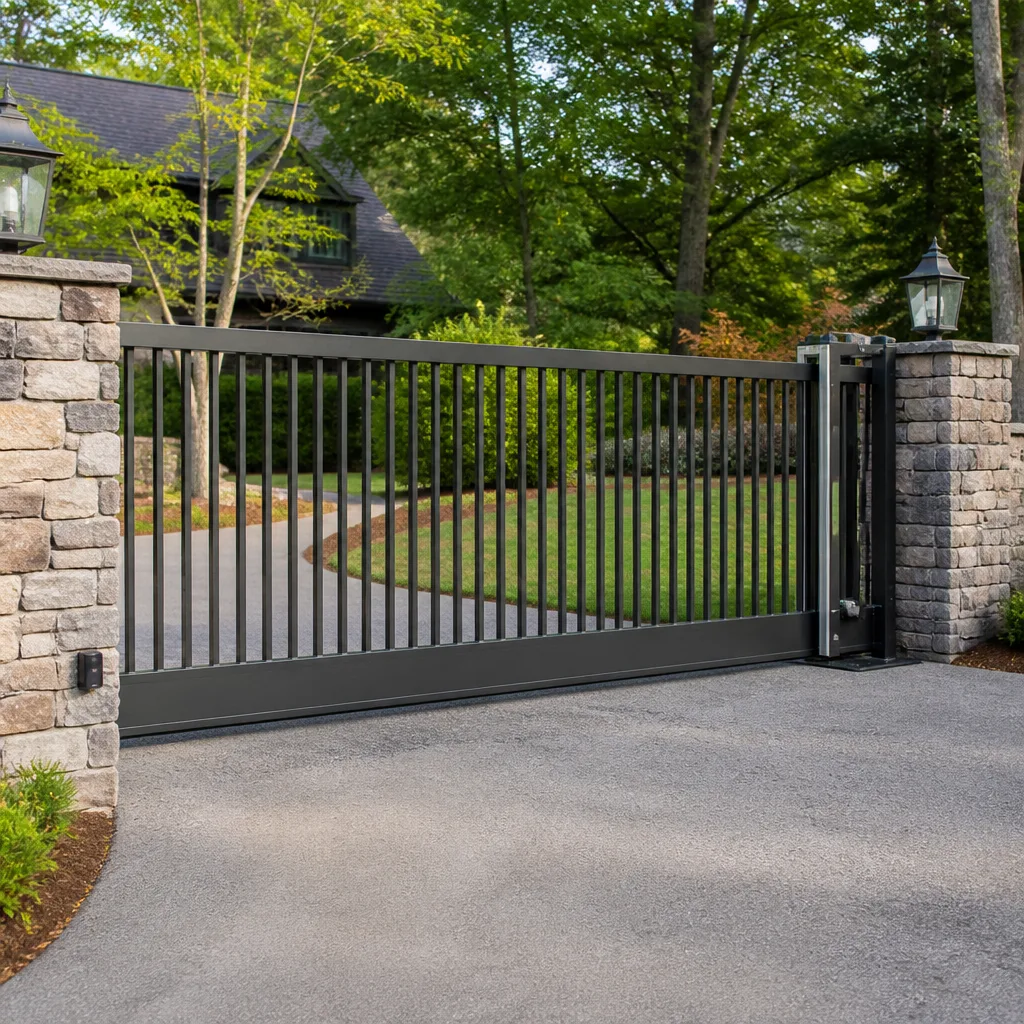 Sliding driveway gates
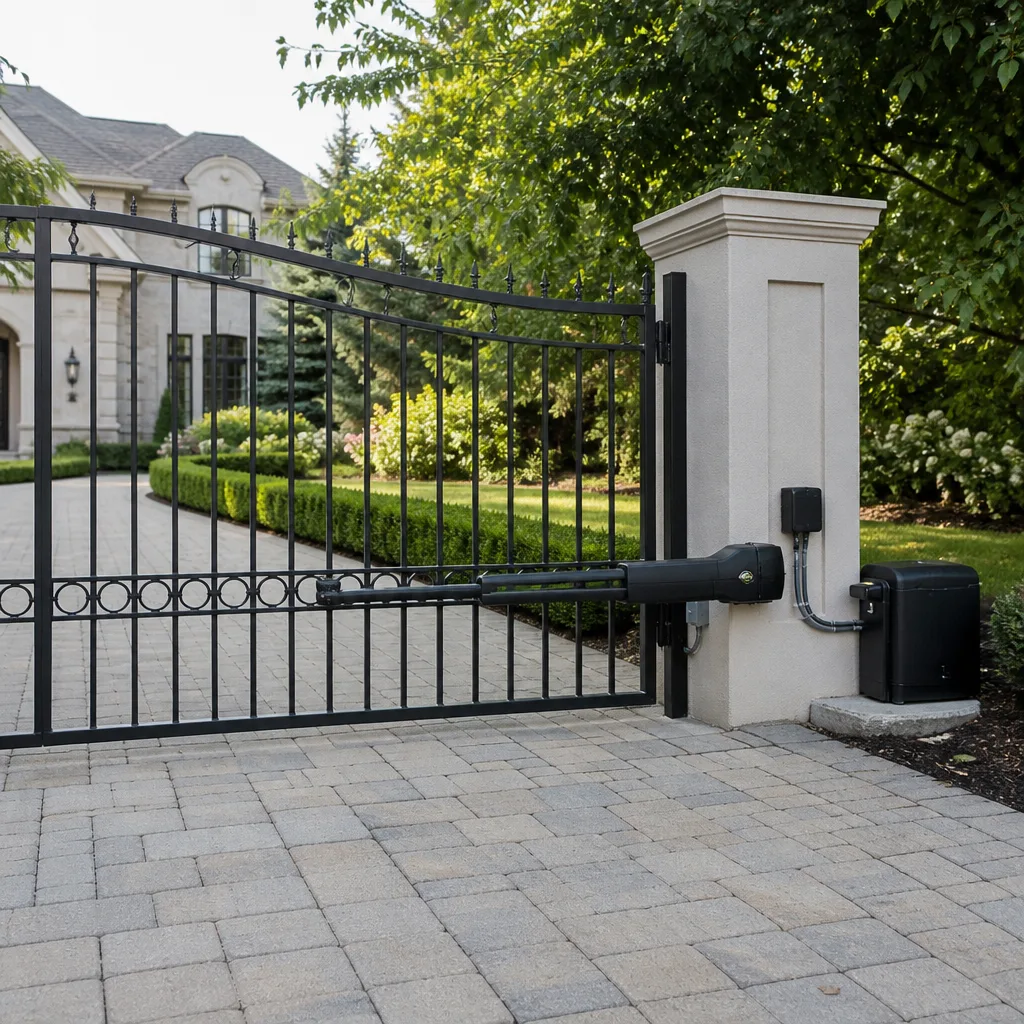 LiftMaster operators
Free on-site gate assessment - hinges, posts, and your LiftMaster or Nice gate operator checked before anything is quoted
The assessment is free and the quote is the invoice.
Get your free estimateThe Complete Guide to Gate Repair in Ventura
A gate that reverses before it closes isn’t a gate problem. Nine times out of ten it’s a sensor or a limit switch telling the operator something is in the way, and the operator is doing exactly what it was built to do. Confuse that safety behavior with a failing motor and you replace an operator that was never broken. We see the same pattern across Ventura: homeowners pay for parts they didn’t need because nobody sorted the symptom from the cause. This guide maps the four root causes behind almost every gate failure, shows you how to tell them apart before anyone touches the gate, and explains what a real repair looks like from the motor to the motor arm.
Quick Answer
Gate repair in Ventura starts with diagnosis, not parts. Nearly every gate failure traces back to one of four root causes: mechanical wear, electrical supply, the operator and control board, or structural movement in the posts and hinges. Identifying which category you’re dealing with before the first technician arrives is what separates a small adjustment from an expensive operator replacement.
Styles & brands we work with
- Wrought iron
- Wood & steel frame
- Farm & ranch
- Sliding driveway gates
- LiftMaster operators
Table of Contents
- The Four Root Causes of Gate Failure
- How to Tell Them Apart Before Anyone Touches the Gate
- What Ventura’s Climate Does to Gate Hardware
- Which Repairs Reset the Safety Compliance Clock
- Repair vs. Redesign: When the Gate Is the Wrong Gate
- How to Document Your Gate Before You Call
- Operator Brands and What They Tell You
- What to Expect at a Free Estimate
The Four Root Causes of Gate Failure
Every gate failure we diagnose falls into one of four buckets, and the repair path for each is completely different. Mechanical problems live in hinges, rollers, tracks, chains and the gate leaf itself. Electrical problems live in the power supply, the wiring run, the transformer or the low-voltage control circuit. Operator and control board problems live inside the motor housing and the logic that decides when to move and when to stop. Structural problems live in the posts, footings and mounting hardware that hold the whole system square. A technician who skips this sorting step is guessing, and guessing is how a gate gets repaired three times for the same symptom.
The categories overlap, which is what makes gate work tricky. A gate that drags on one hinge stresses the operator, the operator draws more current, and a tired control board eventually faults out. The visible symptom shows up at the operator, but the cause started at the hinge months earlier. Sorting the root cause first means the fix holds. Sorting the symptom means the fault returns.
- Mechanical: worn hinges, sagging swing arms, worn rollers, chain stretch, bent track, damaged gate leaf
- Electrical: tripped breaker, damaged underground wire, failed transformer, corroded connections, dead battery backup
- Operator/control: failed motor, faulty control board, misreading safety sensor, bad limit switch, corrupted remote receiver
- Structural: shifted post, cracked footing, loose mount, gate no longer plumb or level
How to Tell Them Apart Before Anyone Touches the Gate
You can narrow down the category yourself in about five minutes with nothing but your hands and ears, and it makes the diagnosis call far faster. The goal isn’t to fix anything. It’s to hand a specialist a clear description so they arrive with the right parts and the right expectation. Here’s the order we recommend.
- Disconnect the operator. Switch the gate to manual release so you can move it by hand. If a gate is hard to push or swing by hand, the problem is mechanical or structural, not the motor.
- Listen and feel for drag. A gate that binds at one point in its travel has a hinge, roller or track issue. A gate that moves freely by hand but won’t move under power has an operator or electrical issue.
- Check the gate for plumb and level. A post that has shifted will pull the whole leaf out of line. A gate that sags at the latch end when closed is telling you the structure has moved.
- Look at the power path. Confirm the breaker is on, the outlet has power and the operator’s display or LED shows life. No lights at all is an electrical clue.
- Test the safety devices. A gate that reverses immediately after starting, or closes then reopens, is responding to a sensor, a safety edge or a limit switch. That’s a safety behavior, not a motor failure.
- Watch the control lights. Most operators have diagnostic LEDs that blink a code. Note the pattern. It’s the fastest thing you can give a technician.
If you can tell us which of those five tests failed, the phone call is a conversation about a specific fault instead of a general description. That’s the difference between a targeted repair and a diagnostic exploration.
What Ventura’s Climate Does to Gate Hardware
Mild winters and warm, dry summers are gentle on gates overall, but Ventura’s climate still shapes what wears out first. The biggest factor is the daily temperature swing. Metal expands and contracts through the day, and every cycle works the screws, bolts and hinge pivots a little. Over months, that cycling loosens the fasteners that keep a gate square. This is why we find so many gates that swing fine but sit a quarter inch off plumb at the latch. The gate didn’t break. The hardware walked, one hot afternoon at a time.
Dust and dry-season grit also matter more here than most guides admit. Fine dust settles into exposed rollers, tracks and swing-arm pivots, mixes with whatever lubricant is present and forms an abrasive paste. That paste wears moving parts faster than clean metal-on-metal contact would. Gates near the hillsides and open ground around Ventura pick up more of it, and gates in inland neighborhoods with more wind exposure pick up more still. A dry lubricant that doesn’t trap grit holds up better here than a heavy wet grease.
The other climate factor is UV. Sun exposure breaks down rubber seals, plastic covers and older remote receiver housings. We check those parts on every gate repair call because a cracked housing lets dust and moisture into a control compartment that should stay sealed. None of this is dramatic. It’s just the slow wear that separates a gate that lasts from one that needs parts every couple of years.
Which Repairs Reset the Safety Compliance Clock
Any repair that touches the safety system or the operator’s logic restarts the clock on your gate’s safety compliance, and most homeowners never think about it. When a technician replaces a safety edge, a photo-eye sensor, a loop detector or a control board, the system’s ability to stop and reverse is being rebuilt. That work has to be verified, not assumed. The person doing the repair should test the reversal every way the gate is used: by hand, by a vehicle in the path, and by the remote. If those tests aren’t run after the repair, the gate is only half fixed.
Why does the compliance reset matter? Because a gate that no longer reverses reliably is the single most common source of gate injuries and claims. The consumer safety standard for automatic gates requires specific entrapment protections, and a repair that leaves those protections untested leaves the property owner exposed. For a commercial or HOA property in Ventura, that exposure is real. For a homeowner, it’s a family member or a visitor who gets caught in a closing gate.
- Repairs that reset the safety clock: safety edge replacement, photo-eye or sensor replacement, loop detector service, control board replacement, operator replacement, hinge or mount changes that alter gate travel
- Repairs that don’t: cosmetic work, remote programming, battery backup replacement, hinge lubrication, chain adjustment that doesn’t change limits
- What to ask for: a written confirmation that the gate was tested for reversal and that the safety device passed after the repair
Ask the question on the estimate call: “Will you test the reversal and safety devices after the repair?” A specialist will say yes without pausing. A generalist may not know the question exists.
Repair vs. Redesign: When the Gate Is the Wrong Gate
Some gates can’t be repaired into reliability because they were never designed for the site they serve. A lightweight swing gate hung on posts sized for a pedestrian fence, a slide gate mounted on a rail that doesn’t match its weight, an operator sized for a gate that gained 40 pounds of added hardware – these are design problems wearing the costume of repair problems. You’ll know you’re in this territory when the same fault returns within a season, when the gate is already at the edge of its operator’s rated capacity, or when the mount points show wear that keeps coming back no matter how many times they’re tightened.
We’ve seen this most on gates that changed use over time. A gate built for a quiet driveway starts taking daily delivery traffic. A gate sized for occasional use becomes the primary entry for a rental property. The hardware didn’t fail. The job outgrew it. Repairing those gates is a treadmill of small fixes, and each one costs money without solving anything. The honest answer is a redesign: a correctly sized operator, posts rated for the load, and a control setup built for the actual traffic.
That’s why we handle both sides of the job. We can repair what’s fixable, and when the design is the problem, we install the right system rather than patching the wrong one. The question isn’t “repair or replace” as a preference. It’s which one actually serves the property. We’ll tell you honestly which side of that line your gate falls on.
How to Document Your Gate Before You Call
Five minutes of documentation turns a 45-minute diagnostic call into a 10-minute one, and it gets you a more accurate estimate over the phone. You don’t need tools or expertise. You need a phone camera and a few notes. This is the preparation that most homeowners skip, and it’s the single biggest time-saver in the process.
- Photograph the whole gate first. One shot from each side, at the height of the gate, so the technician can see the mount and the travel path.
- Photograph the operator housing and label. The model badge, the brand name and any visible wiring will tell a specialist what they’re dealing with before they arrive.
- Photograph any light or display on the operator. Diagnostic LEDs are a code, and a photo of the blinking pattern pins down the fault.
- Note the symptom in one sentence. “Reverses before closing” is a different diagnosis than “won’t move at all.”
- Note when it started and whether it’s constant or intermittent. Intermittent faults live in wiring and connections; constant faults live in parts.
- Note the gate type. Swing or slide, single or double, manual or automated. One line covers it.
Send those photos and notes with your call and a specialist can tell you the likely category immediately. It also means the right parts come out the first time. For a security-sensitive property in Ventura, that difference can be a same-day repair instead of a return visit.
Operator Brands and What They Tell You
The brand of your operator tells a specialist a lot about the fault before the gate is even opened. We work on nine of the leading gate operator brands: LiftMaster, FAAC, BFT, Linear, Viking, Ghost Controls, DoorKing, Elite and Mighty Mule. Each has its own control logic, its own diagnostic codes and its own set of known wear points. Residential systems like Ghost Controls and Mighty Mule tend to show limit-switch and remote-receiver issues first. Commercial and HOA-grade systems like DoorKing, FAAC and BFT are built heavier but commonly fail at the safety loop, the control board or the gate’s mechanical mount. Linear and Viking sit in between and reward regular adjustment.
Knowing the brand isn’t a shortcut around diagnosis. It’s a shortcut around the wrong diagnosis. A technician who has to pull the manual on the job is reading the same generic troubleshooting steps you can. A specialist who has worked on Linear and DoorKing systems knows where those specific operators wear and what their codes mean, so the repair is targeted from the first minute. If you’re not sure what brand you have, the badge on the housing is usually the fastest answer.
What to Expect at a Free Estimate
A free estimate for a gate repair in Ventura should tell you three things: what the problem is, what the repair involves and what it’s going to cost. Not a range, not a ballpark. A written price for the job. We arrive, diagnose the root cause using the four categories above, explain what we found in plain terms, and then put the repair and its price in writing. Nothing gets touched until you agree to it.
The estimate is free and the price is set per job. That last part matters because gate repair isn’t a menu of flat prices. A hinge adjustment is not the same job as a control board replacement, and a repair that also requires correcting a shifted post is a bigger job than one that doesn’t. What we can promise is that the price you agree to is the price you’ll pay for the work described. If we open the operator and find something the estimate didn’t anticipate, you hear about it before anything changes.
For electric and automated systems, we also walk the safety devices during the estimate. We test the reversal, check the sensors and confirm the safety edge is doing its job. If a repair is going to touch those devices, you’ll know that the compliance test is included. For repair and emergency work we offer same-day service when the schedule allows, and we’re set up to come out fast for gates that are down. Installation and redesign work is scheduled after the estimate because that work is measured and ordered. Same number for both. Call (833) 361-4971.
Common Mistakes to Avoid
- Replacing the operator before sorting the cause. A gate that reverses or won’t move is often telling you a sensor or limit switch has tripped. Replace the operator without checking those and you’ll spend big money on a part that was never the problem.
- Greasing a gate that’s picking up dust. Around Ventura’s dry-season grit, a heavy wet grease turns rollers and tracks into an abrasive paste. Use a dry lubricant that doesn’t trap dust and the parts last longer.
- Ignoring a gate that’s off plumb. A quarter inch of sag at the latch is easy to live with until it stresses the operator. Left alone it wears the motor and control board, which is a much bigger repair.
- Assuming a new remote will fix a control issue. If the gate won’t respond, the problem might be the receiver, the board or the power. A new remote only helps when the old one is the failing part.
- Skipping the safety test after a repair. Any repair touching the safety system has to be tested for reversal afterward. An untested gate is only half repaired, and the exposure falls on the property owner.
- Hiring a generalist to work on a commercial operator. A DoorKing or FAAC system has its own codes and wear points. A technician who services gates occasionally will spend the visit reading the manual.
- Waiting for a small fault to become an emergency. A sticky hinge or a slow-start motor is cheap to fix. The same fault after months of extra load is an operator replacement. Early repair always costs less.
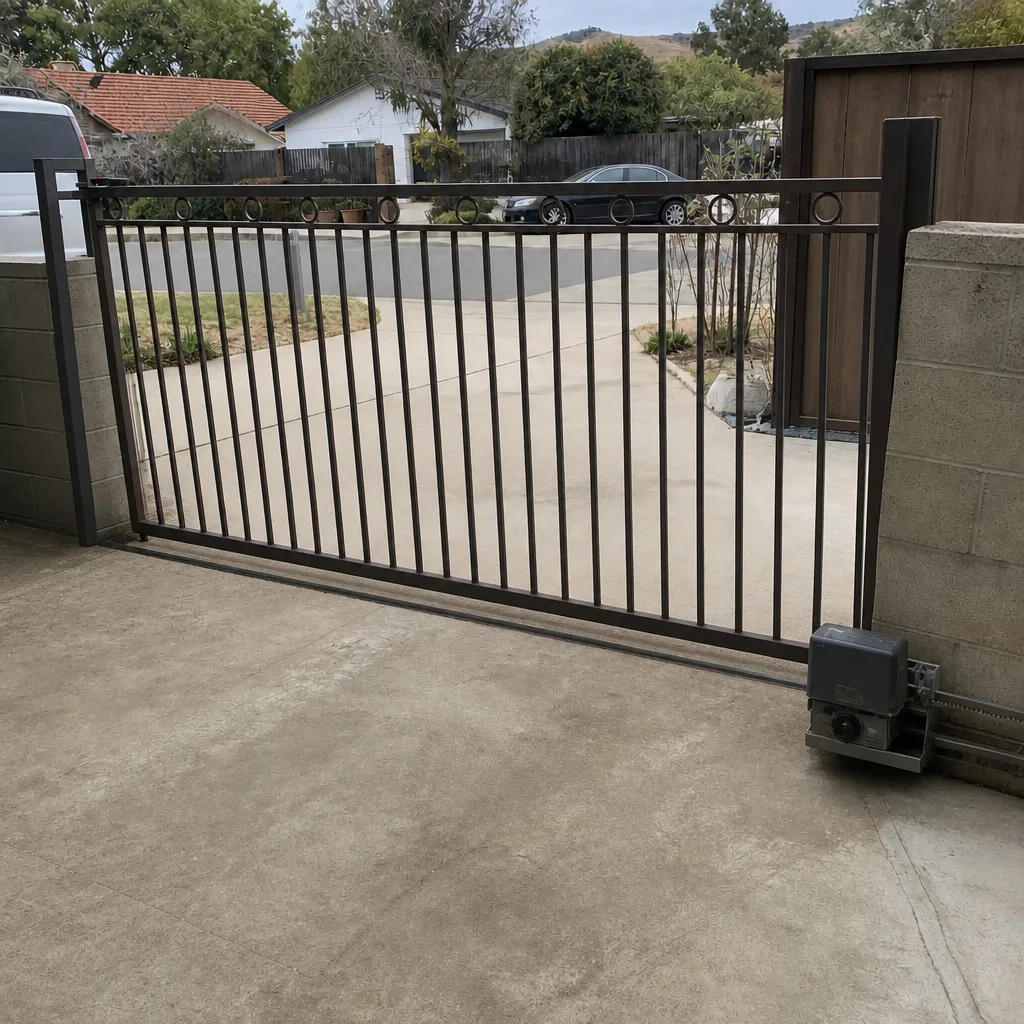
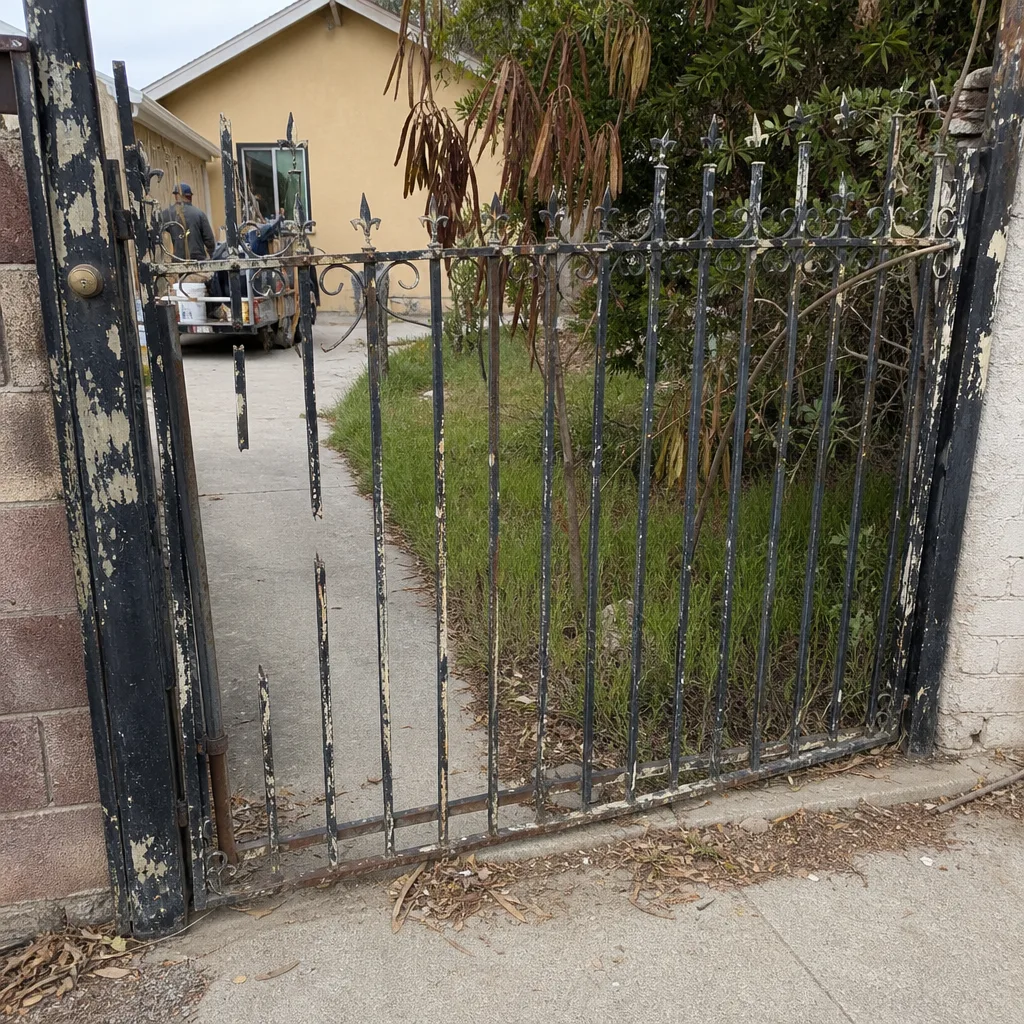
See the difference
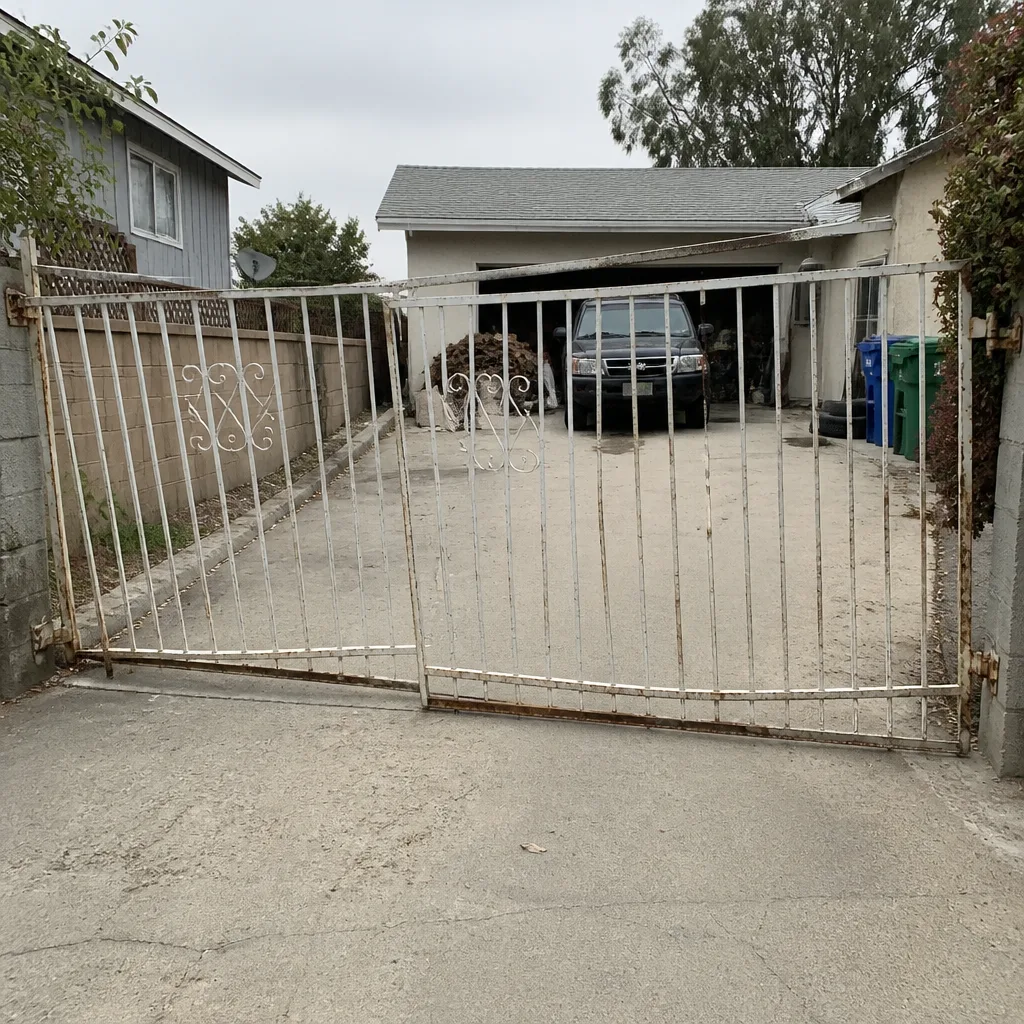 Before
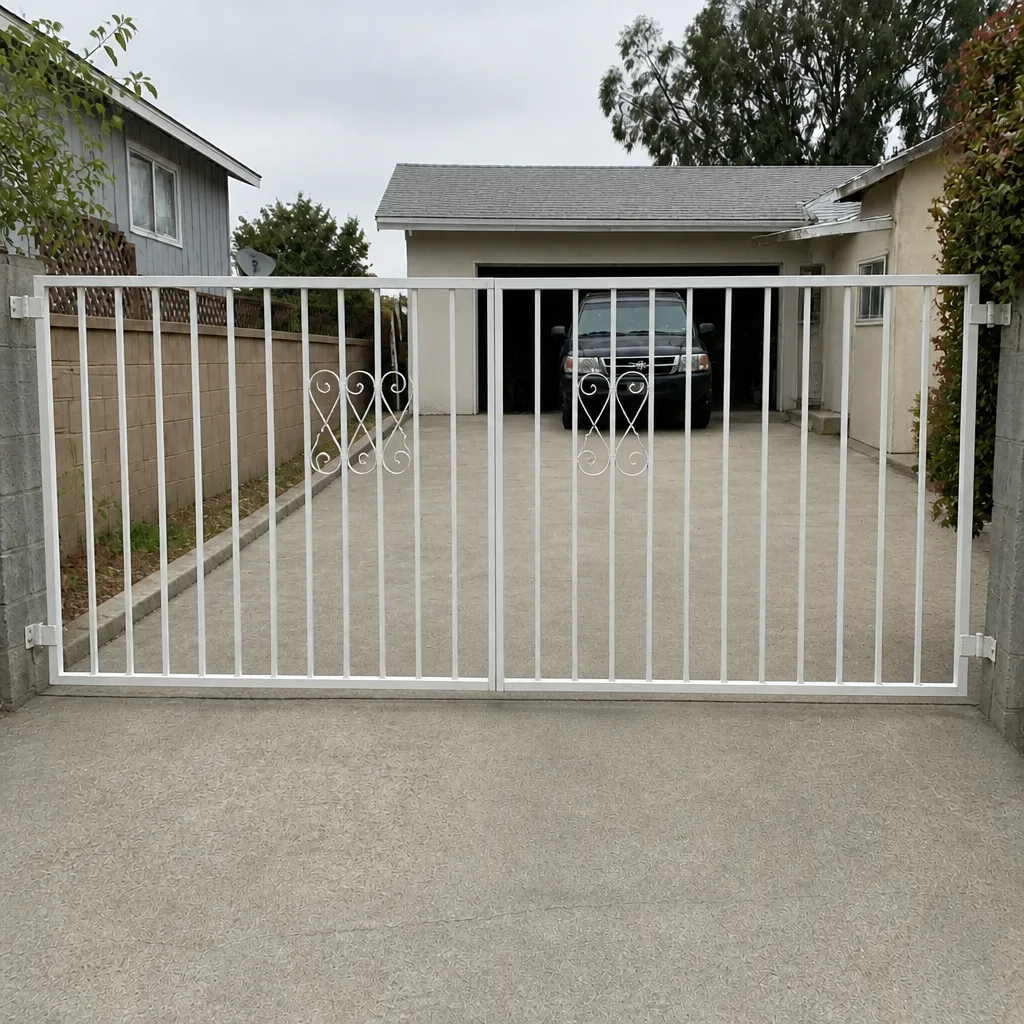 After
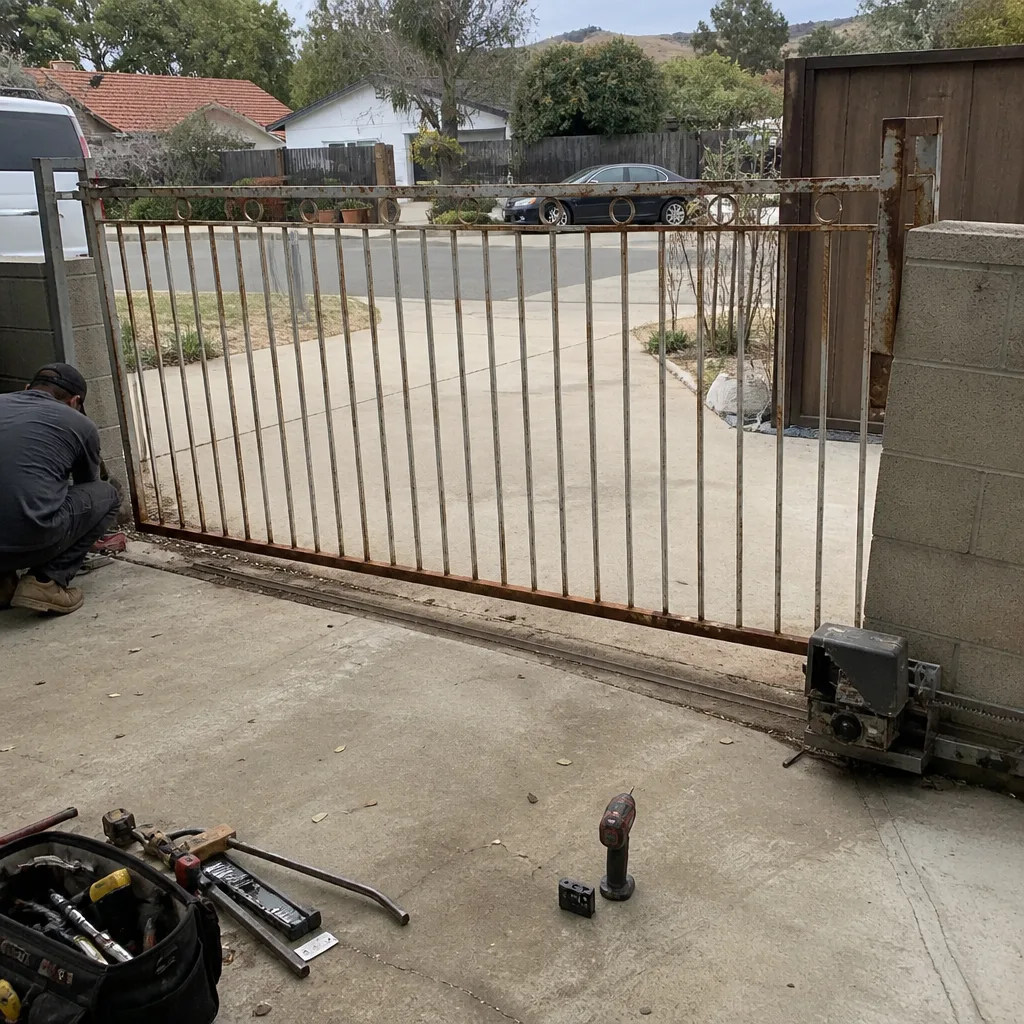 Before
 After
 Before
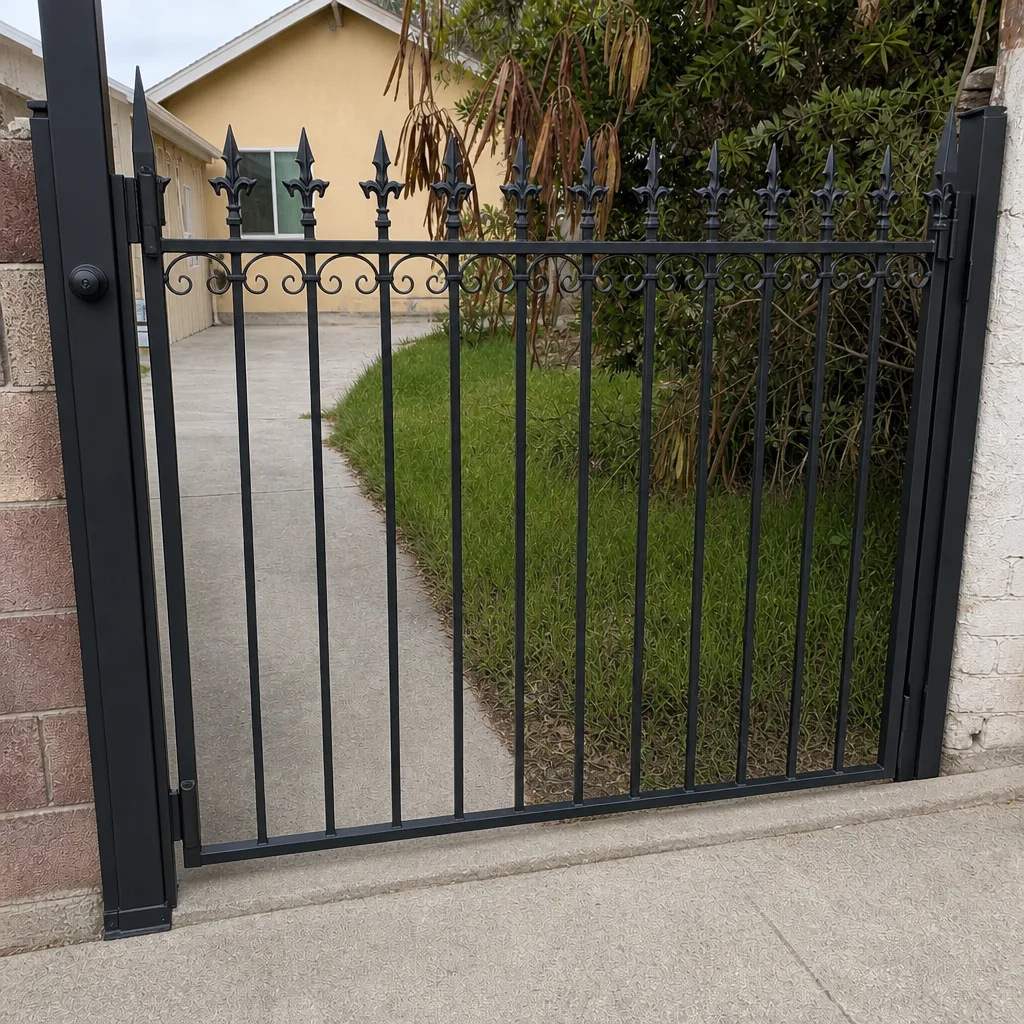 After
When to Call a Professional
Call a professional when the gate won’t move at all, when it reverses or reopens on its own, when the operator runs but the gate doesn’t, or when you see sparks, smell burning or find a tripped breaker that keeps tripping. Call when the gate has shifted, sagged or stopped latching cleanly. Call when the safety edge or sensors have been hit, damaged or are behaving oddly. Any of those signals means the fault needs to be found, not guessed at. A gate that’s a security barrier for a home or a rental in Ventura shouldn’t be left in an unreliable state. Ventura Gate Repair offers free estimates in Ventura, and we’ll tell you plainly what the problem is and what the fix costs. Call (833) 361-4971. We answer 24/7. Fast dispatch from 7am to 7pm, Sunday through Friday.
Frequently Asked Questions
Gate repair is priced per job after a free on-site estimate, and the written estimate sets the final price. That’s because the cost depends entirely on which of the four root causes is at work: a mechanical adjustment is a different job than a control board replacement. Call (833) 361-4971 for an exact quote – estimates are free.
We offer same-day service on repair and emergency work when the schedule allows. We answer the phone 24/7, and a call outside dispatch hours is booked into the next opening, Sunday through Friday, 7am to 7pm. Call (833) 361-4971 and we’ll tell you what’s available.
A gate that reverses before closing is usually responding to a safety sensor, a safety edge or a limit switch, not a failing motor. That’s the safety system doing its job. It can also be a control board logic fault. Either way, it needs diagnosis, not a new operator. Call (833) 361-4971 for a free estimate.
We work on nine of the leading gate operator brands, including LiftMaster, FAAC, BFT, Linear, Viking, Ghost Controls, DoorKing, Elite and Mighty Mule. We’re independent and experienced with all of them. Call (833) 361-4971 for a free estimate.
Yes. We work on residential entry gates and heavy-duty commercial and HOA-grade systems, automated or manual. Whether you’re a homeowner, a landlord or a property manager, the diagnosis process is the same. Call (833) 361-4971 for a free estimate.
Repair work on an existing gate usually doesn’t require a permit, but new gate installation and structural changes can. Permit rules vary by project, so check with the city’s building department before work starts. If you’re not sure, ask us during the estimate and we’ll point you in the right direction. Call (833) 361-4971.
The Bottom Line
Gate repair isn’t about replacing parts. It’s about finding which of the four root causes – mechanical, electrical, operator or structural – is actually behind the symptom. A gate that reverses, drags or won’t move is telling you something specific, and a specialist reads that message before touching the hardware. Document your gate, identify the failing category with the tests above, and get a written estimate before any work starts. For a free estimate in Ventura, call (833) 361-4971. We answer 24/7, with fast dispatch from 7am to 7pm, Sunday through Friday. From the motor to the motor arm, residential or commercial, automated or manual, we’re the gate-only specialists who work on your brand.
Written by the team at Ventura Gate Repair.