
Ghost Controls Gate Repair in Ventura: A Homeowner’s Guide
Ghost Controls gate repair in Ventura usually comes down to three things: a solar charge controller that has quietly failed, an actuator capacitor that no longer holds a charge, or a remote that lost its pairing after a power cycle. None of these show up as a dead battery on a diagnostic screen. That’s the trap. Homeowners replace the battery, the gate runs for a week, then stalls again, and the cycle repeats until someone assumes the whole system is junk. It usually isn’t. If you’d rather skip the guesswork, call (833) 361-4971 and we’ll take a look.
Why Does Replacing the Battery Not Fix a Ghost Controls Gate?
Because the battery is often the victim, not the cause. On a Ghost Controls system, the battery stores power that the solar panel collects, and the charge controller sits in the middle deciding how much current reaches the battery and when to stop. When that controller fails, it either stops charging altogether or overcharges and cooks the battery. Both outcomes look identical from the outside: the gate moves slowly, then stops, then the battery reads low.
There are two components that fail silently and get misdiagnosed as battery failure:
- The charge controller. A failed controller can pass no current, pass too much, or pass current intermittently. A panel that tests fine in full sun can still feed a battery that never gets a proper charge because the controller is the broken link.
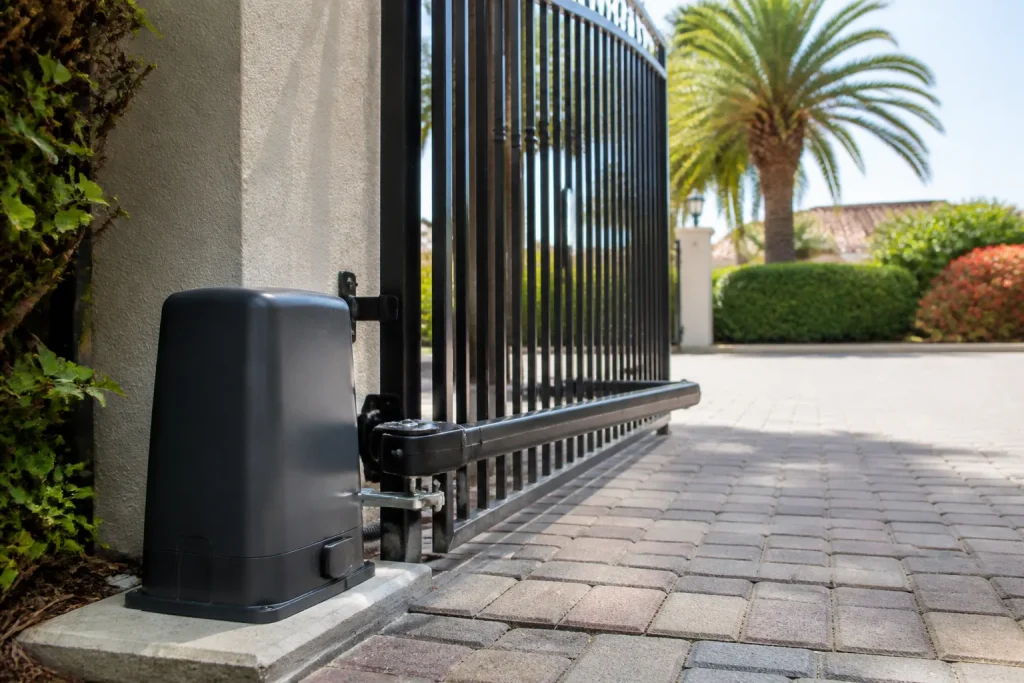
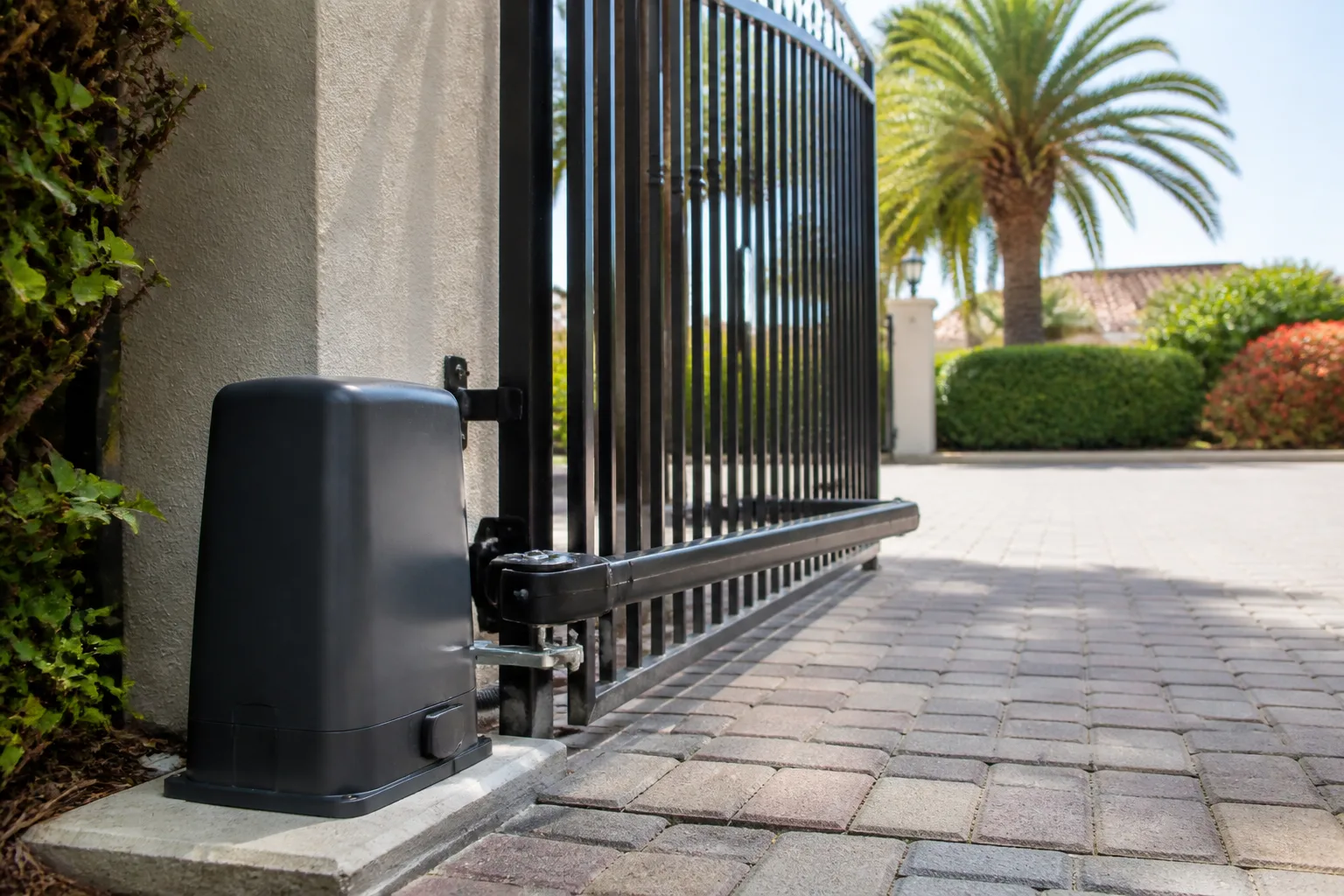
- The actuator’s internal capacitor. The capacitor gives the motor the burst of current it needs to start moving a heavy gate panel. When it weakens, the motor hums, stutters, or refuses to start on the first command. The battery is fine. The capacitor isn’t.
This is where gate-only diagnostic experience matters. A generalist sees a low battery reading and sells you a battery. We test the charging circuit and the actuator separately, because on Ghost Controls those are the parts that actually fail. Our technicians have up to 8 years of experience, and the pattern with solar-charged residential operators is consistent enough that we check the controller and capacitor before we touch the battery. Call (833) 361-4971 for a free estimate.
Why Does My Ghost Controls Remote Work Only Up Close?
Remote range loss is almost always an antenna problem, not a remote problem. Ghost Controls receivers are sensitive to antenna placement, and the antenna wire is easy to route badly during installation or knock loose during later work around the gate. A wire coiled against metal, pinched in a housing, or run parallel to the power feed will cut usable range dramatically. Repositioning the antenna clear of metal and away from the power wiring usually restores range without replacing a single part.
Ventura properties add a wrinkle. Lots here are tight, walls and fencing sit close to the gate, and a receiver tucked inside a metal housing or against a stucco wall loses signal. If the gate opens from ten feet but not from the driveway, that’s an antenna and placement issue, not a dying remote.
What to check before you buy a new remote:
- Confirm the antenna wire is connected at the receiver and routed straight, not bundled or coiled.
- Move the antenna away from metal posts, control boxes, and any power cable.
- Test range from several angles, since a single test spot can mislead you.
- Replace the remote battery only after range testing confirms the antenna is sound.
If range is still short after repositioning, the receiver itself may be the weak point. That’s a quick diagnosis for anyone who works on these systems regularly. Call (833) 361-4971 and we’ll sort out whether you need an antenna fix or a receiver.
How Do You Re-Pair Ghost Controls Remotes After a Power Cycle?
You re-pair the remote at the receiver’s learn button, not at the remote, and the sequence has to be done in the right order. After a full power cycle, some Ghost Controls receivers drop their stored remotes from memory. That’s why the most common “my remote stopped working” complaint isn’t a dead remote at all. It’s an unpaired remote after the battery was disconnected or the system lost power.
The general procedure most homeowners need:
- Restore power to the operator and confirm the system is in its normal operating state.
- Locate the learn or pair button on the receiver or control board.
- Press the learn button, then press the remote button within the pairing window the unit allows.
- Test the remote from a normal distance before you button everything back up.
The step the manual buries is that pairing happens at the receiver, and timing matters. Press the remote too late and nothing registers; you’ll press the learn button again and assume the remote is dead. If you’ve power-cycled the system and a remote went quiet, try re-pairing before you buy anything. If the pairing won’t take, the receiver may have failed, and that’s a job for a gate specialist. Call (833) 361-4971 for a free estimate.
Why Does My Gate Open but Not Close (or Close but Not Open)?
That symptom is nearly always limit screw calibration. The limit screws tell the actuator where the open and closed positions are. When they’re set wrong, the operator thinks the gate has already reached the end of its travel and stops short. The gate opens a few inches and reverses, or closes most of the way and stalls. The motor is fine. The travel limits are wrong.
Common adjustment errors we see on Ghost Controls arms in Ventura:
- Limit screws set with the gate at the wrong starting position, so the travel window is shifted.
- Screws backed out too far, so the operator never registers a hard stop.
- An arm mounted at the wrong angle, which forces the limits to compensate for a geometry problem.
- Safety sensors or loops interrupting the close cycle, which looks like a limit problem but isn’t.
Calibrating limits properly means cycling the gate multiple times and watching the arm through the full travel, then setting each screw and re-testing. It’s slow, careful work. It’s also the difference between a gate that behaves and one that acts haunted every time the wind blows. If your gate opens but won’t close, call (833) 361-4971 and we’ll calibrate it correctly.
Repair or Replace a Ghost Controls System in Ventura?
Repair makes sense when the failure is isolated. A charge controller, a capacitor, a receiver, or a set of limit screws is a straightforward fix, and the rest of the system has plenty of life left. Replace when the actuator and the solar kit are both at the end of their service life at the same time, because then you’re paying for two major components on an older system and still running the original control board.
Here’s a plain way to decide:
- Repair if the gate is otherwise sound, the actuator runs smoothly, and one component has failed.
- Repair if the system is solar-charged and only the controller or battery is the problem.
- Replace if the actuator arm is worn, the capacitor keeps failing, and the solar kit no longer holds a charge.
- Replace if you’re upgrading to a heavier gate or want commercial-grade reliability, where operators like LiftMaster, FAAC, or BFT make more sense than a residential solar unit.
We work on your brand, so we can tell you honestly whether a repair is worth it or whether replacement is the better value. From the motor to the motor arm, residential or commercial, automated or manual. Call (833) 361-4971 for a free estimate.
Why Do Generalist Technicians Struggle With Ghost Controls?
Because Ghost Controls doesn’t share the architecture of the commercial-grade operators most technicians learn on. FAAC, BFT, Linear, and LiftMaster systems follow a similar logic: line-powered, control board, safety edges, limits. Ghost Controls is a residential solar-first design, and the charge controller sits in the power path in a way that surprises people who mostly work on FAAC or BFT units. A generalist who services gates occasionally will test the battery, see it’s low, and swap it without ever testing the controller feeding it.
Gate-only specialists see these systems often enough to know the failure pattern. We check the charging circuit, the capacitor, the antenna, and the limits in order, because on Ghost Controls that’s the order they fail. Our technicians have up to 8 years of experience, and every tool and part we carry is sourced around gate systems, not split across a dozen trades. For a full breakdown of what we handle, see gate repair.
If you’re not sure what you’re dealing with, give us a call. Call (833) 361-4971. We answer 24/7. Fast dispatch from 7am to 7pm, Sunday through Friday.
When Should You Call a Pro?
Call a pro when the gate moves on its own, when the arm makes noise, when a limit adjustment doesn’t hold after re-testing, or when you’ve replaced a battery twice and the system still won’t charge. The parts that carry current in an automated gate, the operator’s wiring and power supply, and the heavy panels and slide tracks are where real danger lives. A gate panel can crush, and a slide gate that comes off its track is not something to test by hand. We don’t hand out step-by-step repairs for that reason; we diagnose and fix it safely.
If your gate is stuck, or the operator is behaving unpredictably around a heavy panel, stop cycling it and call. Call (833) 361-4971 for a free estimate. We’ll tell you what’s wrong and whether it’s worth repairing.
Related services in Ventura: for troubleshooting on automated systems, see electric gate repair. To learn more about our work across Ventura, visit our main page, Ventura Gate Repair.
The Bottom Line
Ghost Controls systems are good residential operators, and most of the failures homeowners run into are fixable: a failed charge controller, a weak capacitor, an antenna that needs repositioning, a remote that lost its pairing, or limit screws out of calibration. The catch is diagnosis. Replacing a battery without testing the circuit that charges it is how people end up on their third battery and still stuck at the driveway. If you want a straight answer on whether your Ghost Controls system needs a repair or a replacement, we’ll give you one. If you’re in Ventura and need help, Ventura Gate Repair offers free estimates. Call (833) 361-4971. We answer 24/7. Fast dispatch from 7am to 7pm, Sunday through Friday.
Frequently Asked Questions
Most Ghost Controls repairs are quoted per job by a written estimate, because the price depends on which component failed. A charge controller, capacitor, or remote re-pairing is a smaller job than a receiver replacement or an actuator swap. The estimate is free, and the price is set before any work starts. Call (833) 361-4971 for an exact quote.
Intermittent operation usually points to the actuator’s internal capacitor or a charge controller that’s passing current unreliably. Both fail in ways that look like a dying battery. Testing the charging circuit and the actuator separately identifies which one is at fault. Call (833) 361-4971 for a free estimate.
Often, yes. Many Ghost Controls failures are parts we diagnose quickly once we’re on site. We answer 24/7, and we offer fast dispatch from 7am to 7pm, Sunday through Friday. Call (833) 361-4971 to book a visit.
Repair if the failure is isolated and the rest of the system is sound. Replace if the actuator and solar kit are both worn out, or if you’re moving to a heavier gate that needs a commercial-grade operator. We’ll tell you honestly which makes more sense before you commit. Call (833) 361-4971 for a free estimate.
Written by the team at Ventura Gate Repair.
Need Gate Repair Help?
Call Ventura Gate Repair - licensed & insured, here with fast help in Ventura.
(833) 361-4971